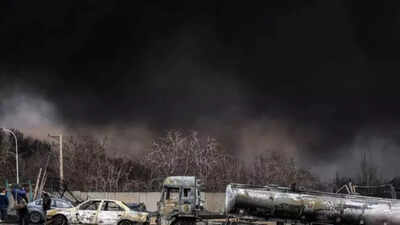
More recently, this rare scientific phenomenon received global attention after reports from Tehran in March 2026 indicated that residents observed “dark rain” following air strikes on oil storage facilities.
This led to massive fires that released thick smoke into the atmosphere. When rain clouds formed over the city, rain drops fell in the clouds, forming dark rain. This witnessed black drops falling on the city.Meanwhile, residents reported headaches and breathing difficulties. Emergency officials in Iran indicated that the rain that fell after the fires could be dangerous or even acidic. Learn about the science behind black rain, its causes, environmental effects, and more.
Understanding ‘Black Rain’: The science behind the rare phenomenon and the recent Tehran incident
Black rain is an uncommon weather phenomenon in which rain appears dark in color due to the presence of large amounts of suspended matter, such as soot, ash, dust, or oil droplets. Scientifically speaking, black rain is rain that becomes polluted as it passes through the atmosphere, especially in highly polluted layers of the atmosphere. Rain that falls from the atmosphere contains dark droplets, often black, gray, or oily.
In early March 2026, various oil facilities in Tehran were targeted during military operations. This caused massive fires that led to the formation of huge clouds of smoke. But as rain clouds formed in the area, water droplets were able to collect their molecules in the atmosphere as they fell. It was observed that the rain had a dark appearance with oily traces left behind. Environmental experts pointed out that polluted rain usually results from extremely high levels of smoke in the atmosphere.
What causes black rain or atmospheric scavenging
Rain formation occurs when water vapor condenses around small particles called condensation nuclei. These particles can be dust, salt crystals, pollen, and pollutants. Under normal conditions, the amount of material carried by raindrops is small. However, in cases where the amount of ash in the air is unusually high, raindrops carry enormous amounts of the material as they fall into the air.This phenomenon is called air scavenging. In cases where the amount of substances in the air is exceptionally high, rainwater will appear coloured.
Environmental conditions that cause black rain
Environmental events can lead to black rain:
Factories, refineries, and coal-burning plants can release soot and carbon particles into the atmosphere. During rainfall, these pollutants may mix with water droplets and cause rainwater to become darker.
Large wildfires generate enormous plumes of smoke filled with ash and burned organic matter.
Rain falling through layers of smoke may appear gray or black due to captured particles.
Explosive eruptions release ash clouds made up of fine volcanic particles. Rain passing through these ash clouds may turn muddy or dark.
When petroleum burns, it produces thick black smoke consisting of hydrocarbons and carbon particles. When it rains under these conditions, the rain may absorb the remaining oil and soot, resulting in black or oily rain, as in the recent case in Tehran.
Black rain: environmental and health impacts
Black rain may cause many environmental and health problems.Environmental problems
- Soil pollution
- Pollution of agricultural lands
- Pollution of lakes, rivers and groundwater
- Damage to plants
- Damage to crops
Human health problems
- Skin irritation upon contact with contaminated water
- Respiratory problems resulting from inhaling contaminated materials
- Possible contact with chemicals released in fires or accidents
Historical examples of black rain
Black rain is rare. It has been documented in the history of many major events. The most famous accident was the nuclear attack on Hiroshima. In this attack, a nuclear bomb was dropped, spewing ash, debris and radioactive materials into the air. When the clouds formed, the material mixed with the rain that fell from the clouds.We have also witnessed such a situation in massive pollution, forest fires and oil field burning.