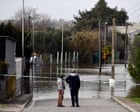
The Iberian Peninsula has been placed under severe weather warnings as Cyclone Leonardo continues to batter parts of Spain and Portugal with torrential rain and strong winds.
Since Tuesday, the slow-moving system has brought widespread disruption, flooding and evacuations. Grazalema in southern Spain has received more than 700mm of rain since Wednesday, equivalent to the country’s average annual rainfall.
Across Andalusia, around 3,500 people were evacuated, roads and schools were closed and transport networks were damaged. Spain’s state weather agency, Aemet, issued the highest red alert for heavy rainfall in parts of Cádiz and Málaga, where 150mm was recorded in just 12 hours on Thursday.
In Málaga province, a girl has been reported missing after being washed away in the Turvilla River, with emergency services continuing search efforts.
Portugal, which is still recovering from Hurricane Cristine, which killed at least five people last week, has also been hit hard. More than 200 people have been forced to evacuate after fresh rains caused flooding, landslides and downed trees. On Wednesday, another death was reported in the southern Alentejo region after a person’s car was swept away by flood waters.
The impact of the storm extended beyond that Europe. In northern Morocco, flash floods caused by overflowing rivers and reservoirs forced the evacuation of more than 100,000 people, with the city of Xar el-Kebir in the Tanger-Tetouan-Al Hoceima region the worst affected.
The heavy rainfall is being driven by an unusually southward-shifted jet stream, which will allow Leonardo to intensify and stall over the region. The storm is also coupled with an “atmospheric river” that carries tropical moisture from the Caribbean, replenishing the continuous rainfall. Soils are already saturated and rivers are swollen after weeks of wet weather, with the risk of further flooding and landslides high, especially in southern Spain.
Leonardo is expected to linger near the northwest of the Iberian Peninsula early next week, bringing persistent unsettled conditions. Northern and central Portugal could see an additional 150-250mm of rain by the end of the week.
Meanwhile, Tropical Storm Penha developed from a low pressure area over the Philippine Sea late Tuesday and tracked westward towards Mindanao. As of Thursday, the system will produce sustained winds of 45mph before making landfall in Surigao del Sur on Thursday.
Heavy rainfall warnings have been issued, with storm surges of up to two meters expected in coastal areas and 200-300 millimeters of rain expected in 24 hours. Strong winds of 38-55mph are expected, increasing the risk of damage to buildings and vegetation. After landfall, Penha is expected to weaken as it moves over northern Mindanao and Negros Island before dissipating near Palawan Island.