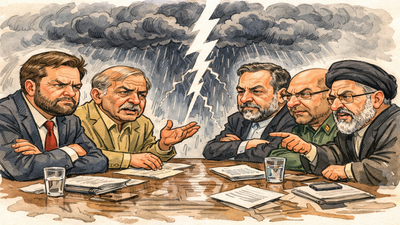
Negotiations between the United States and Iran have stalled without reaching an agreement after 21 hours of marathon talks in Islamabad, with the two sides failing to overcome deep differences despite engagement at the highest level in decades.
While both countries have indicated that discussions may continue, sharp disagreements over nuclear commitments, sanctions relief and regional control have prevented any immediate breakthrough.
Here are five main reasons why the talks failed:
- 1. The deep division over the Iranian nuclear program: The main sticking point remains Washington’s demand for strict guarantees that Iran will not seek to acquire the ability to produce nuclear weapons. The United States has pushed for strict restrictions on enrichment and related tools, while Tehran has resisted what it sees as excessive restrictions on its sovereign rights.
- 2. Disagreement over easing sanctions and freezing assets: Iran has demanded the release of frozen assets held abroad, including money in Qatar and other countries, as part of any agreement. But American officials denied agreeing to such terms, revealing a clear gap in expectations for economic concessions. ‘
- 3.
Control of the Strait of Hormuz and maritime tensions: Control of the strategic Strait of Hormuz has emerged as a major flashpoint. Iran has sought greater power, including the ability to collect transit fees, while the United States has insisted on ensuring free global shipping via the route, which carries about 20% of the world’s energy supply. - 4. Broader territorial claims and war reparations: Tehran expanded the scope of negotiations by demanding war reparations and a complete ceasefire throughout the region, including Lebanon. However, the United States remained focused on narrower goals, especially nuclear restrictions and maritime security, which led to a mismatch in priorities.
- 5. Lack of trust and a volatile negotiation environment: The talks were characterized by volatile tensions and a lack of mutual trust, with officials describing “mood swings” and escalating tensions during the discussions. The Iranian delegation arrived bearing symbolic reminders of civilian casualties, while both sides accused each other of inflexibility, further complicating progress.
Despite not reaching an agreement, Iran said that “negotiations will continue despite some remaining differences,” indicating that diplomacy is still open. However, with positions continuing to diverge and the ceasefire fragile, the outcome of future talks will be crucial in determining whether tensions will subside or escalate further.