

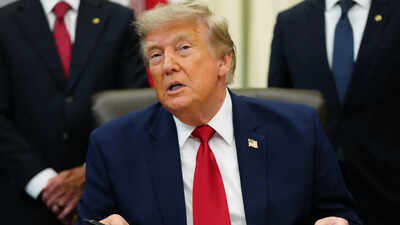
The US government has returned tens of billions of dollars in tariffs collected after the Supreme Court struck down a large portion of additional tariffs ordered by President Donald Trump, marking a major setback for one of his key economic policies.
Newly released Treasury budget figures show that recoveries soared after the court ruling, wiping out much of the revenue generated by the disputed tariffs.According to US budget data released on Monday, the government paid $81 billion in tariff refunds during the current fiscal year, which began in October 2025, compared to $5 billion during the same period the previous year.A Treasury official told AFP reporters that the sharp increase was “almost entirely” due to the Supreme Court ruling, with most installments being paid in May and June.Tariffs on imported goods were a mainstay of Trump’s economic agenda after his return to office last year. The administration said the tariffs would revive domestic manufacturing, secure better trade agreements and reduce the federal budget deficit.However, the US Supreme Court ruled last February that a large portion of the additional tariffs were imposed illegally, requiring the government to return the money to companies that paid those duties.
The administration’s trade policy suffered another legal setback in May when the US International Trade Court ruled that the administration’s blanket 10 percent tariffs were illegal.In a split 2-1 decision, the court held that the government had failed to establish sufficient statutory authority under section 122 of the Trade Act 1974 to impose the duties. The tariffs were imposed after the Supreme Court struck down an earlier, broader set of duties.The latest budget numbers suggest the federal deficit has begun to widen again despite tariff collections.The deficit reached $1.367 trillion during the first nine months of the fiscal year, an increase of 2 percent, while interest payments on the national debt exceeded $1 trillion, an increase of 14 percent. Military spending also rose by 5 percent, reflecting higher costs associated with the conflict in the Middle East, according to budget data.According to The Guardian, the White House is preparing for a new round of tariffs once the current temporary 10 percent global tariff expires on July 24. The proposed measures, which are said to target countries accused of weak enforcement of anti-forced labor laws and industrial excess capacity, could affect trading partners including the UK, India, Japan, Taiwan and China, where tariff rates are expected to range between 10 and 12.5 percent.