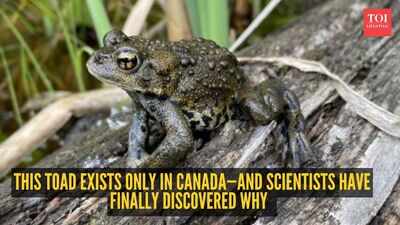
Photo: Jaina Bergman/University of Ottawa
Scientists have identified something that may be more uniquely Canadian than beaver or moose: a group of genetically distinct western frogs found only in Canada. The discovery, made by researchers from the University of Ottawa, points to a rare and previously unrecognized group of frogs living in the Canadian Rockies, and raises new questions about conservation, biodiversity, and how much wildlife remains to be fully understood.
The study was published in Diversity and Distributions.
The frog is only found in Canada
Western toads, or Anaxyrus boreas, are found across a wide area of North America, from Alaska to Mexico. But this new research shows that not all western frogs are the same. A team led by University of Ottawa doctoral student Jayna Bergman has discovered a genetically distinct population that exists entirely within a Canadian province, something she describes as “very unusual.”This discovery is important because groups found in only one country could be of particular importance for environmental conservation. If that group is lost, it cannot be replaced elsewhere. Bergman said the genetic findings suggest that more should be done to protect these species, especially Alberta’s population, because they represent a unique part of the species’ overall genetic diversity.
How researchers studied them
To reach this result, Bergman and her team traveled through ponds, wetlands and lakes across British Columbia and Alberta.
They collected genetic samples from both frogs and tadpoles and compared their DNA to see how closely related the animals were.The result was more surprising than expected. Researchers already knew that western Canadian frogs generally fall into two groups: “calling” frogs and “non-calling” frogs. But new genetic analysis has shown that these groups not only differ in behavior, but are also genetically distinct.This means that the difference is not limited only to their voice or behavior during reproduction. It is written in their DNA. Over time, when populations remain separate, their genes begin to diverge. The longer this separation lasts, the more likely it is that they will evolve into clearly distinct groups.
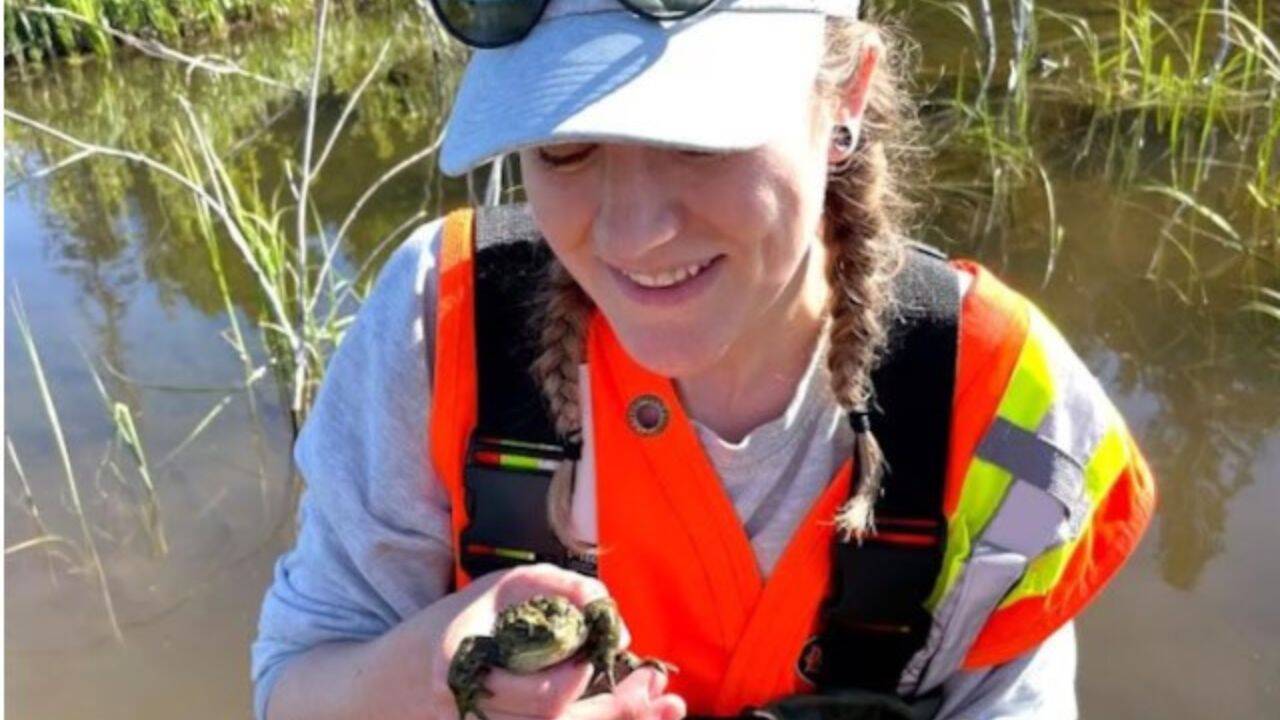
Photo: Jaina Bergman/University of Ottawa
Calling and non-calling frogs
One of the most interesting parts of the study concerns the mating call of the western toad. According to assistant professor of biology Julie Li Yao, frogs east of the Canadian Rockies have vocal sacs and emit an “announcement call” during reproduction, while frogs west of the Rockies and in the southern part of the species’ range do not.This difference is unusual in itself. Li Yao noted that this may be one of the most extreme differences in calls between animals that are still considered to be the same species. In other words, two groups can look alike on the surface but behave very differently when it comes to reproduction. Mountains appear to be involved in keeping the populations separate. Differences in climate and geographic barriers may have prevented gene flow between populations, allowing populations to remain separated long enough for genetic differences to accumulate.
The third group is in the Rocky Mountains
The research team also revealed a second big surprise: a third, previously undescribed genetic group of western frogs that live in the Rocky Mountains of southern Canada. This group is found in southwestern Alberta and southeastern British Columbia, and researchers believe it may extend south into Montana. This discovery is important because it indicates that the species is more complex than previously thought. For years, wildlife studies have relied on outdated tools that can miss subtle genetic differences.
Modern genomic approaches are now revealing hidden diversity within species that was once assumed to be well understood.The next step is to compare western frogs across their entire range to better understand how these groups evolved and whether they can still successfully interbreed with each other, Bergman said. This question is important because if groups become reproductively isolated, they may eventually be considered separate species.
Why is this important for conservation?
Western toads already have a conservation concern in Canada. They are listed as a species of special concern by the Committee on the Status of Endangered Wildlife in Canada and are also protected under the Species at Risk Act. The new findings add another layer of urgency.If Canada has a genetically unique population of the western frog, protecting this population becomes even more important. Wildlife protection decisions often depend on whether a population is genetically distinct, behaviorally unique, or separated by barriers that prevent mixing with other groups.
This study indicates that Alberta’s frogs meet many of these criteria.For conservation planners, this can impact how habitats are managed, how future surveys are designed, and where resources should be directed. It also shows why local people are important. Even within a species that spans an entire continent, a single region may contain an irreplaceable piece of the genetic puzzle.
More than just another frog
At first glance, this might seem like a niche discovery about a small amphibian.
But it’s actually a reminder of how much biodiversity can be hiding in plain sight. Species that appear to be common and widespread still contain rare, isolated and genetically distinct populations that deserve special attention.The case of the western frog is also a good example of how science continues to change what we think we know. What once seemed like a single species with few behavioral differences now appears to involve deeper genetic divisions and at least one completely unique Canadian group.That’s why this discovery stands out. It’s not just about the frog. It’s about a piece of Canada’s natural heritage that may not be found anywhere else on Earth.