

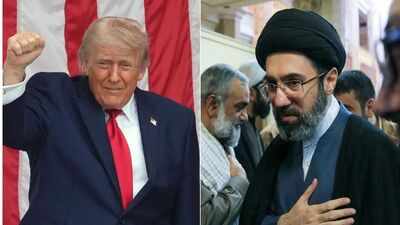
The United States and Iran blame each other for violating the ceasefire
Just a week after the United States and Iran declared a temporary ceasefire aimed at halting nearly four months of conflict, both sides accused each other of violating the agreement, raising new doubts about its sustainability late Friday (local time).The latest escalation began after an Iranian drone bombed a cargo ship transiting the Strait of Hormuz on Thursday. Washington blamed Tehran for the attack, describing it as a clear violation of the ceasefire, and responded on Friday by launching air strikes on Iranian military sites.According to US Central Command, US aircraft bombed missile and drone storage facilities as well as coastal radar sites used by Iranian forces.
The army later released footage of an explosion from the operation and said the strikes had ended.“The unprovoked aggression against commercial ships by Iranian forces clearly violates the ceasefire,” US Central Command said, describing the operation as a “strong response” to the attack on the merchant ship.US Vice President J.D. Vance echoed this position, insisting that Washington respected the memorandum of understanding reached last week.
“Iran signed the ceasefire agreement. We respected it. If they have disagreements about how to implement the memorandum of understanding, they can answer the phone. But violence will be met with violence,” Vance wrote on X.
Iran version
Tehran tells a completely different story.Iranian officials said the US strike targeted the area around the southern port of Sirik after Iranian forces only enforced shipping bases in the Strait of Hormuz.State media, citing military sources, said several warning shots were fired earlier at ships allegedly violating navigation rules, followed by the firing of two warning missiles from the nearby Karpan area towards the strategic waterway.On Saturday, Iran’s Mehr News Agency quoted the head of ports in eastern Hormozgan as saying that the US strike did not cause any damage to Sirik Port, which continued its normal operations.The Iranian Revolutionary Guard said it responded by striking sites hosting an American military deployment in the region.In a statement carried by state media, the Revolutionary Guard warned that “any further US attacks” would lead to a “broader response.”The Revolutionary Guards also said that the ceasefire agreement recognizes Iran’s authority over the movement of ships through the Strait of Hormuz, and accused Washington of provoking confrontations to undermine the arrangement.The statement added, “The United States, through its provocation on various fronts, sought to violate this commitment. The necessary response has been made and we will continue to do so. If the aggression is repeated, our response will be broader than this.”Iranian MP Ibrahim Azizi accused President Donald Trump of failing to adhere to the principles of negotiation and ceasefire, saying that the recent strikes showed Washington’s lack of commitment to the agreement.
What sparked the dispute?
At the heart of the dispute is the Strait of Hormuz, the narrow sea lane through which nearly a fifth of the world’s oil and liquefied natural gas supplies pass.After last week’s ceasefire, Iran announced that it would regulate shipping through the waterway and warned Gulf states against siding with Washington. However, the United States insisted that commercial navigation should remain free and unrestricted.US Secretary of State Marco Rubio, after meeting with leaders of the Gulf Cooperation Council countries, issued a joint statement calling for “free, unconditional and unrestricted navigation” through the Strait of Hormuz without fees or attempts by any country to assert control.Iran’s Foreign Ministry responded by saying the strait should be managed jointly by Iran and Oman, while senior advisor Ali Akbar Velayati warned that Gulf states depend on Tehran’s goodwill for their security.
Signs of diplomacy with the US-Israeli-Lebanese agreement
Even as Washington and Tehran exchanged accusations, there was a diplomatic breakthrough on another front.Israel and Lebanon signed a US-brokered framework aimed at ending hostilities between Israel and Iran-backed Hezbollah. The agreement stipulates the disarmament of non-state armed groups, the gradual Israeli withdrawal from southern Lebanon, and the restoration of Lebanese state control.Hezbollah rejected this framework, warning that attempts to implement it could lead to civil war.
What will happen next?
Neither Washington nor Tehran have indicated any intention to abandon the ceasefire completely, but both now insist that the other side violated it first.The United States insists its strikes were a legitimate response to Iran’s attack on commercial shipping, while Iran says its actions were defensive and that Washington violated the agreement by launching military strikes on Iranian territory.With both sides claiming compliance and blaming the other for reigniting hostilities, the fragile truce appears to have entered its most serious test yet.