

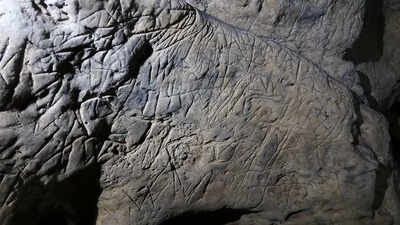
Derbyshire cave reveals Britain’s oldest known prehistoric artwork / Image: File
For many years, they were nothing more than mysterious scratches on the cave wall.Some believe they were accidental signs. Others thought it was too faded and fragmentary to hold any real archaeological significance.
Now, after detailed scientific analysis and years of research, experts have confirmed that a series of markings inside a Derbyshire cave are in fact the oldest known prehistoric art discovered in Britain.Not only does this achievement rewrite part of Britain’s ancient history, it also offers a rare glimpse into the life and creative expression of the hunter-gatherer societies that lived in the country more than 13,000 years ago, near the end of the last Ice Age.The remarkable discovery was made at Creswell Crags, a limestone gorge on the border of Derbyshire and Nottinghamshire which has long been recognized as one of the most important prehistoric sites in Britain.Researchers studying the marks inside the caves have concluded that humans created them intentionally during the Upper Paleolithic period. Detailed examinations revealed that the inscriptions are not random scratches, but rather intentional artistic sculptures produced by Ice Age residents thousands of years ago.
Experts believe the artwork dates back approximately 13,000 to 15,000 years, making it among the oldest surviving evidence of artistic expression ever discovered in Britain.These findings elevate Cresswell Crags to an even more important position in European archaeology, joining a select group of sites that preserve prehistoric cave art from the final stages of the Ice Age. Researchers have noticed the signs for many years, but their true significance has remained uncertain.The researchers used advanced imaging techniques, digital analysis and detailed studies of the engraved surfaces to distinguish intentional carvings from natural damage and more recent marks. The investigation revealed clear patterns and repetitive techniques that could only have been deliberately produced by human hands.Archaeologists have found evidence that the carvings were carefully created using stone tools.
The arrangement, depth, and direction of the inscribed lines indicate purposeful artistic activity rather than accidental contact with the cave walls.The scientific review has provided the strongest evidence to date that the marks were created by prehistoric communities who lived in Britain during the final stages of the Ice Age.Creswell Crags have long held a special place in British archaeology.The cave system has shown evidence of human presence in the area dating back tens of thousands of years, including stone tools, animal remains and traces of some of Britain’s first inhabitants.The site is of particular interest because it preserves evidence from the period when much of northern Europe was still recovering from the harsh conditions of the Ice Age. Archaeologists believe that groups of hunter-gatherers moved through the area following herds of animals and established temporary settlements near the caves.The newly confirmed artwork adds a whole new dimension to that story.Rather than simply surviving in a challenging environment, these ancient societies were also creating symbolic and artistic expressions, demonstrating a level of cultural sophistication comparable to Ice Age groups elsewhere in Europe.Although the exact meaning of the inscriptions remains uncertain, researchers say the discovery provides valuable insight into how prehistoric people understood and interacted with the world around them.Throughout Europe, cave art was often associated with storytelling, ritual practices, spiritual beliefs, and representations of animals that were central to everyday life. While experts remain cautious about interpreting the Derbyshire carvings too precisely, they believe the carvings were likely created for a specific purpose rather than as simple decoration.The discovery highlights the growing understanding that prehistoric Britain was not a cultural backwater on the edge of Europe. Instead, they were part of the broader Ice Age world where communities shared traditions, skills, and artistic practices.For archaeologists, confirming Britain’s oldest known prehistoric art is more than just a scientific achievement. It is a reminder that long before written history, Britain’s first inhabitants had already left behind creative marks that would last for thousands of years.More than 13,000 years later, these once-overlooked scratches are one of the most important pieces of evidence ever discovered about the artistic lives of Britain’s first people.