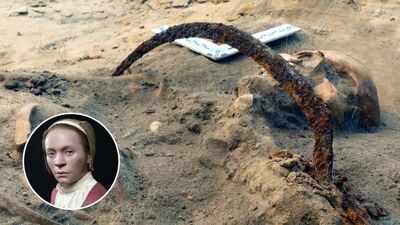
For many years, quiet cemeteries in northern Poland have offered an unusual glimpse into the fears of people who lived centuries ago. The cemetery, located near the village of Bean, is not notable for its size alone, although archaeologists have now documented more than 100 tombs there.
What has drawn wider attention is the manner in which dozens of these individuals were buried. Some were buried with iron machetes placed on their bodies. Others had heavy padlocks attached near their feet, while a number were placed face down or subjected to other unusual burial practices. These finds are often described as evidence of “vampire burials”, but the team studying the cemetery says such labels can be misleading.
Instead, the graves appear to reflect local customs shaped by fear, uncertainty and archaic beliefs about death during the 17th century.
Archaeologists have discovered unusual burial rituals in the Polish cemetery
Excavations at the site have reportedly been ongoing since 2005 under the supervision of archaeologist Darius Polinski of Nicolaus Copernicus University. As the cemetery was gradually discovered, it became clear that it represents one of Poland’s most important collections of early modern burials associated with protective rituals.
Of the more than 100 graves identified so far, at least 30 contain features that differ sharply from ordinary burials of the period. Rather than indicating belief in supernatural beings as actual beings, these arrangements seem to reflect attempts to prevent the deceased from disturbing the living after death.As CBS News reported, one of the burials discovered in 2022 quickly became the focus of international attention.
It belonged to a young woman whose remains were found with a triangular iron lock attached to one foot. It was not a decorative object. Archaeologists believe this was part of a ritual intended to prevent the dead from leaving the tomb.Just a few months later, another discovery reinforced the unusual character of the tomb. The grave of a child, believed to be between five and seven years old, showed similar treatment.
The child was buried face down and was also bound with a padlock, suggesting that the same fears could be directed towards adults and children in certain circumstances.Polinsky has repeatedly warned against describing such graves simply as “vampire burial grounds.” In his view, these practices are best understood as protective customs meant to reassure the living rather than evidence that the communities believed they had buried a real vampire.
Why were some people buried with protective rituals?
The reasons why some people obtained these burials seem to have varied. Sudden or violent deaths can raise suspicions, especially if the circumstances seem difficult to explain. Diseases that spread quickly between families may also have influenced how societies interpret death.Historical beliefs of the period linked unexpected deaths with the possibility that the deceased would return in some way.
In many parts of Europe, ideas about restless spirits and the return of the dead existed alongside religious traditions, shaping the way some funerals were performed.Children were not always exempt from these concerns. Historical records indicate that young men who died before baptism or those who drowned may sometimes be viewed differently from others buried in the same community.
Why were sickles and locks placed in graves?
The cemetery contains several forms of what historians describe as preventive or protective burial practices.
Iron locks placed on the feet of the deceased are believed to symbolically seal the grave, preventing the occupant from returning.The sickle served a different symbolic purpose. The curved blade, placed on the neck or chest, was thought to hold back the dead if they tried to rise. According to the beliefs of some societies at that time, movement brings the body into contact with the blade.Other graves reveal additional methods used to prevent return from death.
Some individuals were buried face down, while others had body parts removed after death. Stones placed on bodies or evidence of cremation have also been documented at the site, indicating that no single ritual was followed in every case.
The woman with the silk headdress raises new questions
One unexpected aspect of the cemetery is that preventive burials were not limited to people of low social status. The young woman buried with the triangular lock also wore a finely crafted silk headdress woven with threads containing precious metals, indicating that she had a relatively high status within her community.These details have led archaeologists to consider that social status alone did not determine who became the subject of these rituals. Physical disabilities, mental illness, or unusual behavior may have contributed to the fear, although there is no direct evidence explaining why any particular individual would receive this treatment.As Business Insider reported, forensic anthropologist Matteo Borini suggested that disease outbreaks may also have played a role in shaping such beliefs. Before modern medical knowledge, societies sometimes linked infectious diseases with supernatural explanations. When several members of the same family die in quick succession, this pattern can reinforce fears that the first deceased person has somehow returned to claim others.