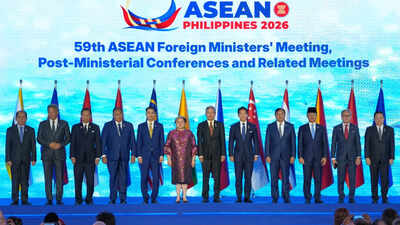
Senior ASEAN diplomats highlight their concerns during a closed-door meeting
Southeast Asian foreign ministers expressed “grave concern” over renewed hostilities between the United States and Iran, called for an immediate halt to attacks on all fronts in the Middle East, and warned that the escalating conflict threatens global energy supplies, trade and food security.“We are deeply concerned that these developments seriously undermine the ongoing efforts of the key mediators and reduce the prospects for a peaceful solution through dialogue and diplomacy,” the ministers said in a joint statement.The 11-member bloc called on all parties to exercise “maximum restraint” and avoid any actions that would further aggravate the situation. He stressed the importance of maintaining peace, stability and prosperity in the region, supporting international law, and promoting genuine dialogue and diplomacy in addressing conflicts.
ASEAN warns of risks
The Ministers recognized the immediate and long-term impacts of the Middle East crisis on the well-being of their people, noting ongoing initiatives to mitigate the social and economic impacts and support access to healthcare and basic services, especially for vulnerable population groups.They also expressed concern about the impacts of ongoing tensions on regional trade, energy and food security, including energy markets and supply chains, agricultural production, and the stability of agricultural input supply chains, especially fertilisers.
ASEAN expressed “deep concern” about any discriminatory or unilateral measures that might impede or impede ships passing through the Strait of Hormuz or any strait used for international navigation, and called for the restoration of a safe, unhindered and continuous transit corridor.The ASEAN statement specifically calls for “a complete and immediate cessation of hostilities on all fronts in the Middle East.”The Association of Southeast Asian Nations (ASEAN) is a major oil importer and has a combined GDP of $3.8 trillion, making it highly vulnerable to supply disruptions through the Strait of Hormuz. The bloc has sought to speed up the oil-sharing mechanism to mitigate the impact.
Rubio targets Beijing
US Secretary of State Marco Rubio also criticized China in an opinion piece published in Philippine newspapers, warning that freedom of navigation in the South China Sea “is by no means guaranteed.”“If those waters fall under the control of a power willing to use trade as a geopolitical weapon, both the United States and ASEAN will face dire new threats to their sovereignty, security, and economic future,” Rubio wrote.He reiterated that the 2016 arbitration ruling that invalidated China’s comprehensive sovereignty claims in the South China Sea was “final and binding,” and said the United States would honor its obligations to the Philippines and other allies.
The confrontation between China and the Philippines worsens
A new war of words broke out after the Philippine military accused Chinese Coast Guard personnel of hitting a naval personnel member on the head with a club near the disputed Second Thomas Shoal on Monday. The two governments exchanged accusations of provocation and dangerous maneuvers.Philippine President Ferdinand Marcos Jr.’s office said he would summon China’s ambassador to Manila, hours after Manila’s ambassador to Beijing was similarly summoned.
The Chinese Foreign Ministry said ASEAN is not a forum to discuss bilateral maritime disputes, adding: “The Philippines should strengthen dialogue and cooperation, instead of putting its political interests above regional peace and stability.”
“The US State Department condemned what it described as China’s “dangerous and aggressive” actions.The ministers also held consultations on the conflict in Myanmar, where the bloc’s peace initiative has faltered five years after a military coup plunged the country into a civil war that killed an estimated 100,000 people.The ASEAN statement reaffirmed the bloc’s commitment to maintaining maritime safety and security in accordance with international law, and called for the restoration of safe, unhindered transit through the Strait of Hormuz. It also expressed concern about unilateral measures that contravene international law and the safety of seafarers.