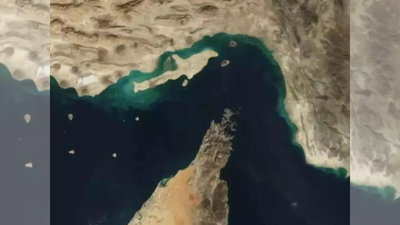
 Shipowners and traders are closely monitoring movements through the strategic waterway, with only a limited number of ships attempting to cross amid tight inspections by US and Iranian forces. The crew now needs clearance from two navies, dramatically slowing traffic through one of the world’s busiest shipping lanes.
He watches
“India in talks with several countries over Hormuz”: MEA amid US naval blockade
Unusual roads and limited crossings amid strict procedures
According to ship tracking data cited by Bloomberg, the LPG carrier G Samar and the very large crude oil tanker Hong Lu sailed through a narrow passage between the Iranian islands of Larak and Qeshm before entering the Gulf.Washington blacklisted the two ships because of their links to Iran, and they were sailing empty.Their route, through Fujairah in the United Arab Emirates and along the Iranian coast, has been described as unusually circuitous. Other ships, including the food-carrying bulk carrier Rosalina and the tanker Nubler, also followed similar routes, indicating sophisticated navigational strategies to avoid confrontation.Despite these moves, overall traffic remains well below pre-war levels.
Only a handful of ships have crossed since the blockade began, compared to an average of about 135 crossings per day before the conflict, Bloomberg reported. No fully loaded Iranian oil tankers have been seen exiting the strait, putting nearly 1.7 million barrels per day of wartime flows at risk.
Conflicting claims as tensions continue
The US Central Command confirmed that no ships succeeded in breaching its blockade, noting that the ships that were trying to cross were turned back.However, Iran claimed that one of its oil tankers managed to pass, highlighting conflicting accounts about implementation. According to Bloomberg, Tehran may be referring to the Alicia, an empty ship sanctioned by the United States, which entered the region and passed Iran’s Larac Island on Wednesday, a few hours before the Hong Lo.The situation is further complicated by electronic interference and ships shutting down tracking systems, meaning not all movements are visible.The naval confrontation comes amid escalating geopolitical tensions in the Middle East. Iran has warned of “dangerous consequences” of US actions in the Persian Gulf and the Strait of Hormuz, warning that the blockade could exacerbate an already fragile situation.Tehran has also indicated that it will not back down, with senior officials stressing that control of the Strait of Hormuz remains a key strategic lever. The waterway, which transports nearly a fifth of the world’s oil supplies, remains at the center of the standoff, raising concerns about global energy flows and the stability of trade.