

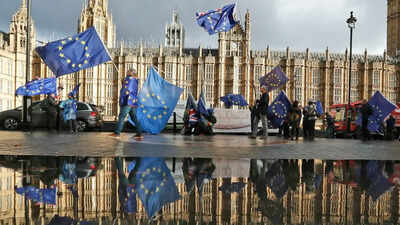
It has been a decade since the United Kingdom voted to leave the European Union, a decision that continues to define political loyalties and the end of deep relationships within the region. On 23 June 2016, just over half of voters, around 52% or 17 million, chose to leave the bloc, setting in motion the biggest transformation in British economic and social life since World War II.
Despite the decisive vote, the UK’s disengagement from the European Union took almost five years to be completed.The push for Brexit arose out of public anger towards both Brussels and the lingering effects of the 2008 financial collapse. Supporters promised that cutting ties with Europe would allow Britain to focus on its priorities and regain its standing. Opponents responded that a split would damage the economy and weaken the UK’s global standing.
Economic outcome
Supporters envisioned a newly independent Britain thriving through trade deals and entrepreneurial energy. A decade later, that recovery has not materialized, although the pandemic, the war in Ukraine, and more recently the conflict between the United States, Israel and Iran have all complicated the picture, as the Associated Press reported.Companies continue to cite differences in trade with European neighbors and the European Union, which remains the UK’s largest trading partner by far.
Although tariffs have not been imposed, exporters now face extensive paperwork, border checks, and visa hurdles. Promised trade agreements, especially with the United States, have not been implemented.Economists estimate that the UK economy is between 4% and 8% smaller than it would have been if the country had remained in the EU, a gap that translates into lower living standards and lower funding for public services such as the National Health Service.
Leave campaigners had pledged an extra £350 million a week to the NHS. “Brexit has made the UK economy smaller than it could have been,” said Jonathan Portes, a professor at King’s College London.“The impact was not a sudden collapse, but rather a gradual and cumulative decline in trade, investment and productivity,” he wrote in an article published in the UK in a Changing Europe think tank.Brexiteers contend that such judgments are premature, and claim that short-term economic pain has always been the price of regaining control over policy areas such as immigration.
Immigration debates
Ending freedom of movement with the EU was central to the Leave campaign’s ‘Take Back Control’ message, but the results have been mixed. While immigration from EU countries has fallen sharply, the number of arrivals from outside Europe has risen, partly due to visa changes made by the previous Conservative government to plug labor shortages in sectors such as aged care.However, total net migration declined significantly, from more than 900,000 in 2023 to 171,000 the following year.
However, public frustration has focused less on these numbers and more on illegal crossings, especially people fleeing conflict zones such as Afghanistan and Sudan arriving via small boats across the English Channel. The number of crossings peaked at 46,000 people in 2022, then reached 41,000 the following year. Although it represents a small portion of total migration, the issue has become politically explosive, with protests, some turning violent, erupting in hotels housing asylum seekers.
Public opinion has shifted
Brexit has reshaped British politics, eroding support for the traditionally dominant Conservative and Labor parties alike. The Conservatives lose power in 2024 after 14 years sharply marked by internal disagreements over relations with the European Union. Labour’s tenure hasn’t been much better since then, with Prime Minister Keir Starmer reportedly preparing to step down soon.Nigel Farage’s UK Reform Party, led by perhaps the most prominent Brexiteer, has topped the polls for more than a year.
Meanwhile, sentiment has deteriorated nationally: an Ipsos poll showed that 52% would now support a return to the EU versus 33% against, and nearly half of respondents thought Brexit was worse than expected. Almost many people support holding a new referendum on European Union membership.
Reconciliation, but not retreat
Labor has tried to thread the needle since taking power in 2024, ruling out a rollback of Brexit and a return to the EU single market, leaving little room for manoeuvre.
Starmer sought a “reset” as Brussels focuses on easing trade friction, with more announcements expected at the next EU summit, assuming he remains in office.His successor Andy Burnham, amid speculation of internal strife, toned down his EU rhetoric during his election campaign before winning a special election last week against a reformist challenger in a strongly pro-Brexit constituency.
He has been careful to stress that he is not pushing for EU membership, placing the matter in terms of respect for the original referendum result.“I am not suggesting that the UK should consider returning to the European Union,” Burnham said. “I respect the decision that was taken in the referendum and it will undermine everything I said about strengthening democracy if we do not respect this vote,” he added.