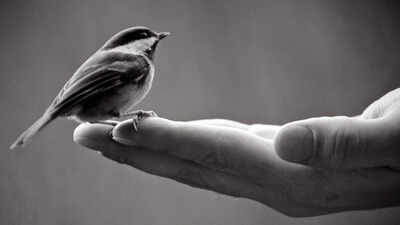
A bird in the hand is worth more than a hundred flies
Imagine you were offered $1,000 today or a chance to win $10,000 next month. Many people will be tempted by the larger reward. However, history, economics and human experience suggest that there is wisdom in choosing the certainty of what you already have.This idea lies at the heart of one of the most enduring proverbs in the Spanish-speaking world: “More than others, that’s what happens.” Literally translated it means “A bird in the hand is better than a hundred flying around.” English speakers know it a little differently: “a bird in the hand is worth two in the bush.”For centuries, this proverb has reminded people that a guaranteed gain is often more valuable than a greater reward that remains uncertain.
The proverb is older than most people realize
The proverb has deep roots in European culture. Its Spanish form dates back centuries, but the idea itself predates modern Spanish.Many scholars trace this expression back to medieval Europe, where variations appeared in several languages. Linguists have linked it to ancient Latin sayings that emphasized the value of certainty over probability. The English version, “A bird in the hand is worth two in the bush,” appears in written records as early as the 15th century.
Similar forms are found throughout Europe, indicating a common piece of folk wisdom that has been passed down across cultures and generations.The pictures are simple and memorable. The hunter who holds a single bird already has something real. Chasing the many birds still flying overhead carries risks. The hunter may lose what has already been secured in the pursuit of something better.
What does it mean to say?
At its core, the proverb is about balancing certainty and risk.He advises people not to give up something valuable they already own just because a better opportunity appears on the horizon.This statement does not suggest avoiding all risks. Rather, he warns against sacrificing a guaranteed benefit in exchange for a hypothetical benefit without thinking.In everyday life, people apply the proverb to countless situations:
- Accept a stable job rather than gamble on an uncertain opportunity.
- Maintain a reliable investment rather than chasing unrealistic returns.
- Appreciating the existing relationship rather than risking it for something untested.
- Choose practical results rather than wishful thinking.
The lesson remains relevant because uncertainty is a constant feature of human life.
The psychology behind the proverb
Modern behavioral economics has shown that this adage reflects how many people naturally think.Research by psychologists Daniel Kahneman and Amos Tversky has shown, particularly through prospect theory, that people often place greater value on avoiding losses than on obtaining similar gains. Their work has helped explain why individuals tend to prefer certain outcomes over risky alternatives, even when gambling may offer a greater reward.In simple terms, losing something you already own is usually worse than the pleasure gained from getting something new.
Why was it passed down by farmers, merchants, and families?
Like many traditional proverbs, this one came from practical experience rather than abstract philosophy.For farmers, traders, and workers, survival often depended on making careful decisions about limited resources. Taking unnecessary risks can have serious consequences.A farmer who sold reliable livestock in pursuit of a speculative opportunity might lose both. A trader who gives up a safe trade while hoping for a better deal may end up with nothing.The proverb became a warning against reckless ambition and poor judgment.Parents also passed it on to their children as a lesson in patience and gratitude. Instead of constantly striving for something bigger or better, this proverb encouraged people to appreciate what they already had.
Its importance in the modern world
Although this proverb goes back centuries, it sounds contemporary.Modern life constantly encourages people to search for more. Social media platforms offer seemingly perfect jobs, relationships, and lifestyles. Advertising encourages consumers to believe that something better is always available.The result can be a constant feeling of dissatisfaction.The proverb offers a counterbalance. It reminds people that opportunities should be carefully evaluated and that current accomplishments have value.The message is particularly relevant in financial markets. Investors seeking unrealistic returns often expose themselves to greater risks. Financial advisors often encourage clients to focus on long-term stability rather than pursuing every promising trend.The same principle applies to jobs. Leaving a safe position for a promising opportunity can sometimes be worthwhile, but the proverb encourages thoughtful analysis rather than rash decision-making.
A lesson about human nature
Beyond practical decision making, this proverb reveals something deeper about human behavior.People often focus on what they don’t have so much that they ignore what they do have. Philosophers from Aristotle to contemporary thinkers have explored this trend.The Spanish proverb serves as a reminder to acknowledge present value before pursuing uncertain rewards.More importantly, it is not an argument against ambition. History’s greatest achievements often require people to take risks. Instead, the proverb encourages balance. It asks a simple question: Is the potential reward worth the potential loss?This question remains as relevant today as it was centuries ago.
Why does the proverb remain?
The enduring popularity of “Más vale pájaro en mano, que cien volando” comes from its universal truth.Every generation faces choices between certainty and possibility. Each person must decide whether to protect what they have or strive for something more.The proverb does not provide a strict rule for every situation. Instead, it offers a timeless reminder to think carefully before replacing reality with hope.In a world that constantly celebrates bigger dreams, faster success and greater rewards, the old Spanish proverb still whispers valuable wisdom:Sometimes, the bird in your hand is already more valuable than all the birds still flying in the sky.