

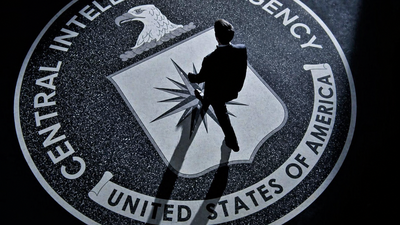
The Cold War is often framed in terms of leaders, treaties, and nuclear arsenals, but most of its direction emerged in quieter places. Intelligence officers met anonymous sources, analysts pieced together fragments of intercepted signals, and reconnaissance flights captured images that could change global decisions.
The United States and the Soviet Union stood in opposition to the ability to wage a catastrophic war, making knowledge as valuable as power. The Contest is detected through systems designed to collect, interpret and share information. These systems form networks that connect people, technology, and governments, shaping how each side understands and responds to risks.
the Spy networks That shaped the Cold War
The Cold War was a competition between networks rather than between isolated states.
Intelligence agencies have built interconnected systems that carry information across borders, linking field operatives, surveillance platforms, and central analysts. Each piece of intelligence gains meaning when it is combined with others, creating a broader, more reliable picture of events.At the heart of the Western system was the UK-USA Agreement, which formalized the exchange of intelligence signals between allied nations.
Communications intercepted in one region can be analyzed elsewhere and combined with other sources, producing a level of knowledge that no single country can achieve independently. This structure reduced uncertainty and allowed decision makers to respond more confidently during moments of stress.These networks also supported coordinated operations. One of the most ambitious examples is Operation Berlin Tunnel, where Western agencies attempted to exploit Soviet lines of communication in East Berlin.
The operation later turned out to have been infiltrated by a Soviet source, but it demonstrated the scale, reach and coordination achieved by intelligence networks. The hidden architecture of the Cold War was already in place, operating across borders and under the umbrella of public diplomacy.
When the threat came from within the network
The strength of these systems depended on trust, and that trust was not always secure. One of the most revealing early breakthroughs came from inside Britain, where the Cambridge Five exposed how deeply KGB was able to penetrate Western institutions.
Among them was Kim Philby, who worked within the intelligence establishment while relaying information to Moscow.Their actions did not mark the beginning of Cold War espionage, but they revealed how weak even established regimes were. Information traveled through the same networks it was supposed to protect, allowing damage to spread quietly across operations and alliances. Intelligence agencies responded by tightening vetting procedures and strengthening counterintelligence structures, recognizing that internal compromise could undermine the entire system.
Human sources and flow of insight
While networks relied on structure, they equally relied on individuals who could provide access from within. Oleg Gordievsky became one of the most valuable sources of Western intelligence during the period of increasing tension in the early 1980s. As a senior KGB officer, he provided insight into how Soviet leaders interpreted Western actions.His reports contributed to a clearer understanding of Soviet perceptions, including the extent to which the leadership feared a possible NATO attack.
This information entered the wider intelligence network, where it was analyzed alongside other sources and helped reduce the risk of misinterpretation. His eventual exit marked the end of his role, but his contribution did shape how Western policymakers assessed the volatile situation.A generation ago, Oleg Penkovsky played a different role within the same network system. His intelligence on Soviet missile capabilities became part of a broader analytical effort to assess the balance of power.
His reporting did not stand alone. It joined other technical sources and data, helping to reduce uncertainty during a period when assumptions were highly risky.
When technology becomes part of the network
The development of intelligence networks extends beyond human sources. Technology has become a staple, expanding reach and reliability. High-altitude reconnaissance platforms such as the Lockheed U-2 allowed the United States to collect visual evidence of Soviet military activity deep within restricted territory.The 1960 incident involving Gary Powers exposed the scale of these operations, bringing the hidden side of the Cold War into public view. Despite the diplomatic ramifications, aerial reconnaissance remained a key component of intelligence gathering. During the Cuban Missile Crisis, images collected by these systems confirmed the presence of Soviet missiles in Cuba. This evidence entered the intelligence network, where it helped make quick decisions at the highest levels.Technology has not replaced human intelligence. It expanded the network, providing additional streams of data that could be verified, compared and integrated into a broader analytical framework.
Late Cold War violations and order limits
Even as intelligence networks became more sophisticated, they remained vulnerable to insider risks. In the later stages of the Cold War and its aftermath, cases such as Aldrich Ames and Robert Hansen showed how damaging internal abuses could be.Both individuals worked within US intelligence organizations while transmitting information to the Soviet Union. Their actions compromised networks, exposed operations, and exposed vulnerabilities that persist despite decades of reform. These cases showed that intelligence systems can be enhanced through architecture and technology, but they still rely on human reliability at their core.
A balance formed through networks
The Cold War did not hinge on one decisive intelligence success.
Its path is shaped by the continuous operation of interconnected systems that collect, share, and interpret information. Intelligence networks have influenced many key decisions and crises, helping leaders understand intentions, assess capabilities and reduce the risk of catastrophic miscalculation.The balance between confrontation and restraint has emerged from this constant flow of insight.
Each piece of intelligence contributed to a bigger picture, allowing policymakers to act with greater awareness of the consequences.
The legacy of the unseen regime
The intelligence networks built during the Cold War continue to influence global security today. Modern systems for surveillance, signal interception, and international cooperation reflect structures first developed during that period. The tools have evolved, the scope has expanded, but the principle has remained constant.
Information, when collected and shared effectively, shapes how countries respond to uncertainty.The Cold War demonstrated that history can be quietly shaped by systems operating beyond public view. These networks linked individuals, technology, and governments under a single framework of understanding. Within this framework, decisions were made, risks were assessed, and the course of the conflict was directed with a level of awareness that helped prevent it from becoming something far more destructive.