Moonquake sensing could move to a new stage as fiber-optic technology is adapted for use on the Moon’s surface. The Moon, often viewed as static and unchanging, continues to experience internal vibrations caused by tidal interactions with the Earth, meteorite impacts, and extreme temperatures.
Since the time of the Apollo missions, instruments have detected thousands of seismic events, yet their limited status has left gaps in understanding how these movements behave across the entire interior of the Moon. Recent work associated with Los Alamos National Laboratory is exploring whether fiber-optic cables could provide a broader, more persistent way to detect these vibrations. In terms of ongoing NASA-led lunar exploration efforts, this approach may contribute to safer and more informed mission planning.
The Apollo missions and the first direct recordings of Lunar seismic activity
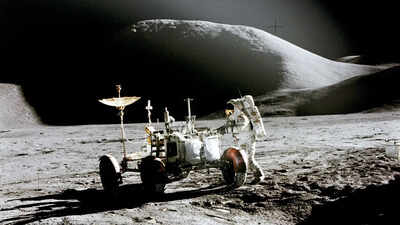
Seismic experiments conducted by the Apollo missions resulted in the first direct measurements of lunar earthquakes. Instruments were placed at different landing sites, and experiments were conducted between 1969 and 1977, leading to the realization that the Moon had several different tremors despite the absence of tectonic plates.Different types of seismic activity on the Moon are caused by a number of different factors, including Earth’s gravitational pull, the Moon’s expansion and contraction due to temperature changes, and the impact of space debris.
Although the information collected in this period was valuable, the limited number of instruments meant that a complete picture of global seismic activity could not be obtained.
What is fiber optic sensing using distributed acoustic sensing?
Fiber optic sensing relies on a method known as distributed acoustic sensing, in which laser pulses are transmitted through a cable and reflected in response to minute disturbances. Each vibration along the cable causes a slight change in the returned signal, allowing movement to be detected along its entire length rather than at a single point.This turns a single cable into a long chain of virtual sensors. Instead of spreading multiple individual instruments across the lunar surface, a single extended cable can pick up seismic activity over large distances. This concept reduces the complexity of the system while expanding the scope of data collected from a given area.
Fiber optic cables under lunar conditions
Fiber optic cables provide a different way to address this problem. On the ground, fiber optic cables are usually buried to prevent interference from external sources.
However, on the Moon, where there is no atmosphere and therefore no weather-related interference, it is possible to lay these cables on the lunar surface. Tests were performed on fiber-optic cables placed on simulated lunar surfaces, such as crushed basalt, to evaluate their performance in detecting vibrations.
According to research results published in scientific journals such as Icarus and Earth and Space Sciences, fiber optic cables can be used to detect seismic activity on the moon’s surface.
Technical considerations and limitations
The process of designing such systems is a balance between sensitivity and mass. While thick fiber-optic cables can provide clearer and stronger signals, they can also make the system heavier. In space exploration missions, the cost of launching systems is a major concern and is closely controlled.