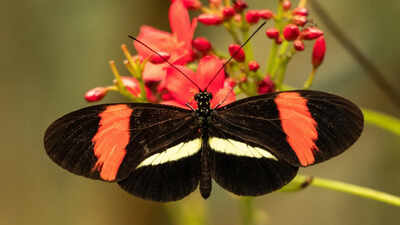
Some tropical Heliconius butterflies have evolved a remarkable way of staying small, allowing them to live much longer than most butterflies.
Most butterflies live for only a few weeks after reaching adulthood. But scientists have now identified a group of tropical butterflies that can live for about a year with little sign of physical decline, a discovery that could help researchers better understand how healthy aging develops in nature.The study was led by the University of Bristol and published in the journal Nature CommunicationsI found that butterflies belong to Heliconius The genus lives much longer than their closest relatives. In one striking example, Heliconius hewitsoni Surviving for 348 days, while closely related to it Dionne Juno He lived for only 14 days, a difference of 25 times the maximum lifespan.Butterflies don’t just live longer, researchers say.
Some appear to age more slowly, making them one of the most promising insect models for studying the biology of longevity.The team worked with scientists at the Smithsonian Tropical Research Institute in Panama and collected data from butterfly homes, marking release and recovery studies, and controlled insect experiments to compare lifespan and senescence patterns across the Helikonini tribe.
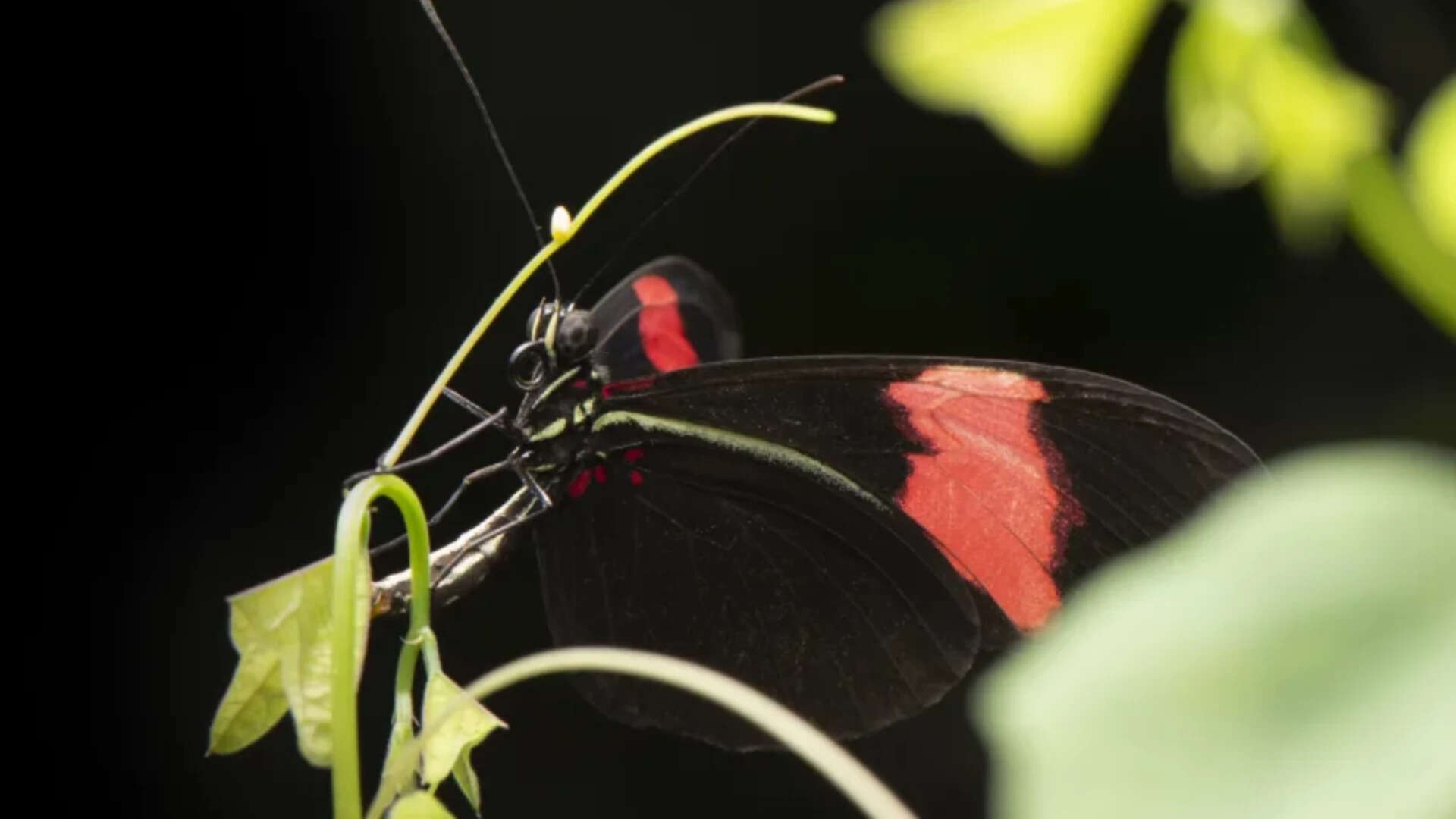
The female Heliconiserato lays an egg on a plant
Butterflies that stay strong as they get older
One of the most surprising findings of the study came from Heliconius HekalA tropical butterfly found in the rainforests of Central and South America.
To find out whether older butterflies lose strength with age, the researchers conducted grip strength tests. They found that the elderly H. Heikal The butterflies performed similarly to younger butterflies, showing little or no measurable physical deterioration.The result was in sharp contrast to Dryas Yuliaa closely related butterfly, has a much shorter lifespan. Older individuals of this type showed a pronounced decline in physical performance as they aged.The researchers found that too H. Heikal It maintained body mass and muscle function much longer than its relatives.Taken together, the results suggest that at least some of these findings are… Heliconius Butterflies largely avoid the gradual physical decline that afflicts most animals as they age.
Omar is unlike most butterflies
Adult butterflies are usually short-lived. Many of them live for only a few weeks after emerging from their cocoons.via Heliconius However, the researchers found that the average lifespan of the group was about three times longer than the average lifespan of closely related species. Many species have survived for between 106 and 277 days H. Hiwetsune It has reached almost a full year.Just one other type of butterfly, Mycelia cyanarisIt is known to live longer, with a maximum recorded lifespan of around 380 days. Scientists say that very little is known about why this species lives for so long.The study also showed this Heliconius Butterflies always had lower baseline mortality and slower aging rates than related non-pollen-feeding butterflies.
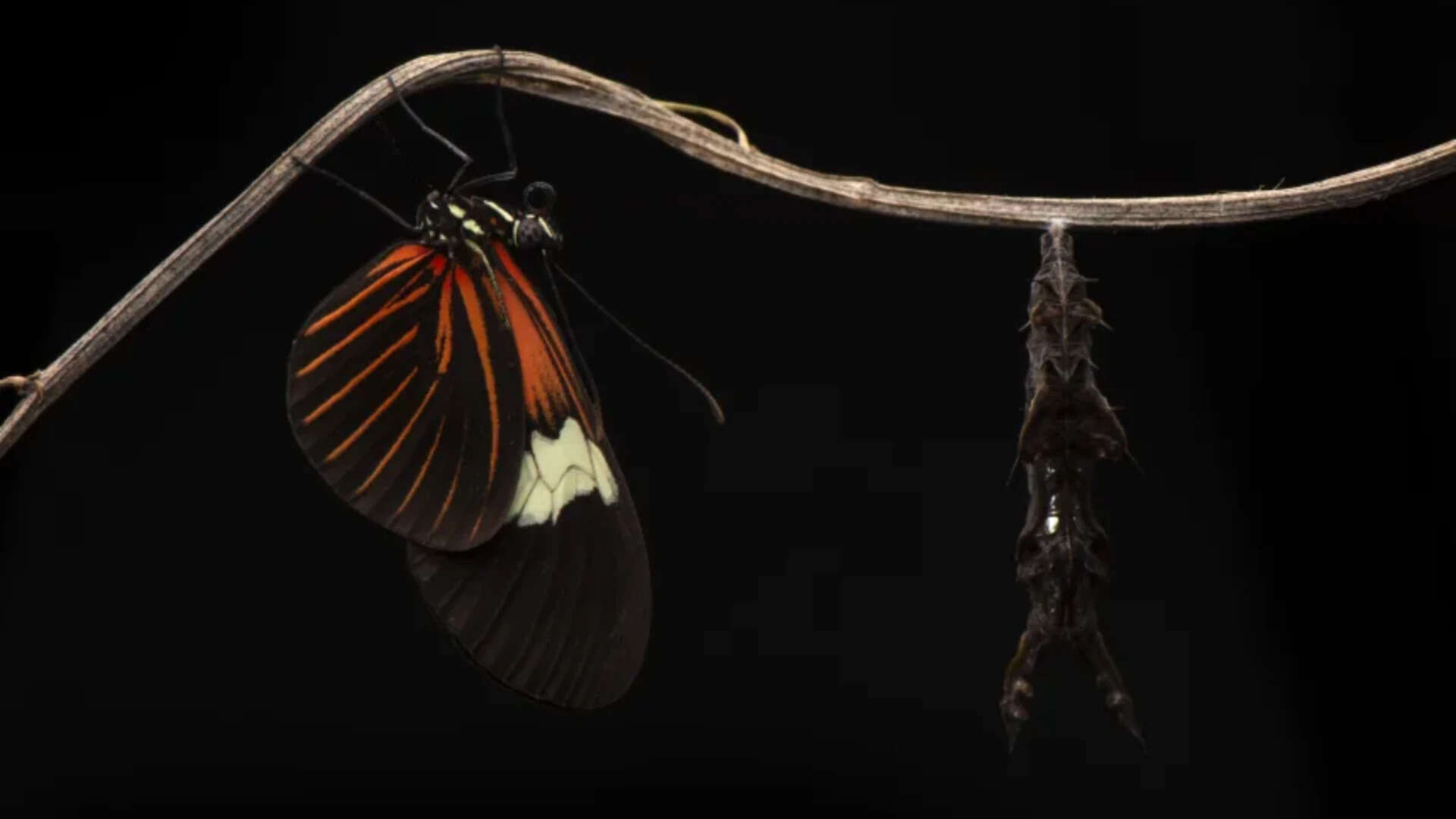
An adult Heliconiserato appears next to a pupa of the same species
An unusual diet caught the attention of scientists
For years, researchers have suspected that the butterflies’ unusual feeding habits might explain their long lives.Unlike most butterflies, which feed almost entirely on carbohydrate-rich flower nectar, most… Heliconius The species also feeds on pollen after reaching adulthood.Pollen contains amino acids and lipids, nutrients that most butterflies only obtain as larvae before they undergo metamorphosis.These nutrients help produce eggs and sperm, support energy storage and can also strengthen the immune system.“The general evolutionary strategy is to reproduce as much as possible until these resources are expended, which doesn’t take very long for these small insects,” Dr. Jessica Foley, lead author of the study and a postdoctoral researcher at the USDA Jean Mayer Human Nutrition Research Center on Aging in Boston, said of the limited food reserves of most butterflies.“They usually die soon after using this limited resource.”To test whether pollen alone explains the butterflies’ exceptional lifespan, the researchers compared pollen nutrition Heliconius Hekal With its relative, which does not feed on pollen Dryas Yulia.The team also removed pollen from the diet of some Heliconius Butterflies to see if they will lose their longevity advantage.The results surprised them.Even without pollen, Heliconius Butterflies still live much longer than their close relatives.This finding suggests that nutrition is only part of the explanation. Researchers now believe that butterflies have also evolved biological mechanisms that naturally slow aging.Dr. Foley said her interest in the study came from the large differences in lifespan seen in the animal kingdom.“We see significant differences in lifespan across the animal kingdom. Adult mayflies are known to live for only one day, while some whales and sharks can live for hundreds of years,” Foley wrote in an email.“I am interested in the evolutionary basis for these types of differences in lifespan because they may hold relevant insights into healthy aging in humans.”
More than just a nutritious diet
Researchers say the findings point to something more complex than good nutrition.From 28 Heliconius Of the species studied, only six did not feed on pollen. These non-pollen-feeding species lived between 14 and 98 days, much fewer than many of their pollen-feeding relatives.However, removing pollen from the butterflies’ diet did not erase their lifespan advantage. Heliconius Hekal I continued to survive Dryas Yuliawhile also preserving body mass and muscle function for longer.
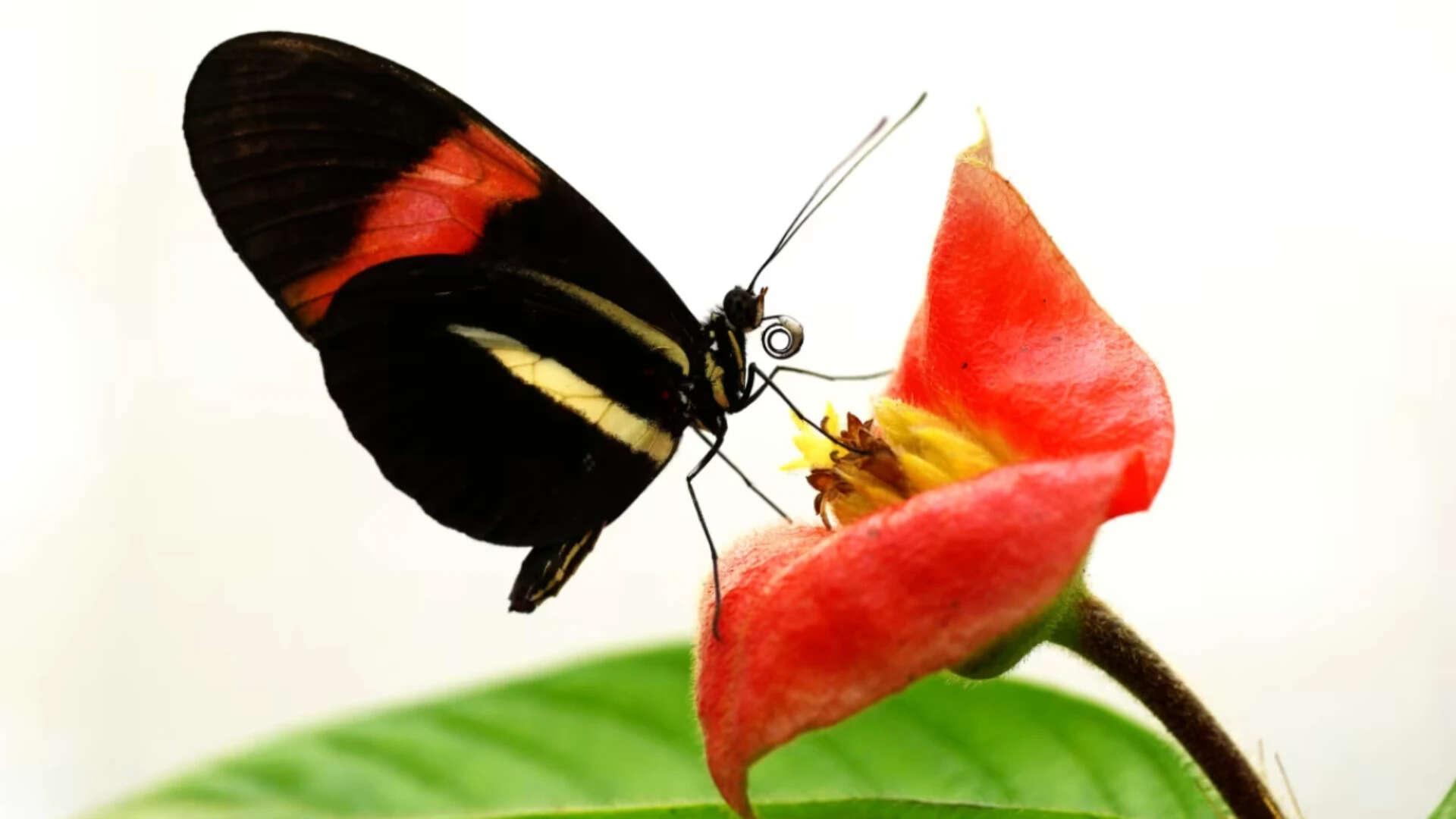
The Heliconius melpomene moth feeds on pollen
This suggests that butterflies have evolved biological traits that help them stay healthy longer, with pollen providing an additional benefit rather than being the sole reason for their extended lives.The researchers say that amino acids derived from pollen also allow this Heliconius Butterflies continue to produce eggs throughout adulthood, extending their reproductive lifespan as well as their overall longevity.
Measure aging using “Pullinator”
To investigate how aging affects physical performance, the team designed an unusual piece of equipment dubbed “The Pulinator.”The device consists of a perch covered with sandpaper and mounted on a lightweight wooden base.
The researchers placed it on a laboratory scale before gently lowering the butterfly onto the perch.“We placed this on a lab scale, adjusted the scale, and then gently grabbed a butterfly by its wings and lowered it until it was holding the perch,” Foley said.“Then, we pulled until the butterfly would let go, but as you pulled the butterfly, it would go down “For the balance to negative, we can use the maximum negative reading as an indicator of how much weight the butterfly can carry before it lets go.”Grip strength measurements showed that older adults Heliconius Hekal Butterflies have remarkably retained their strength as they have aged Dryas Yulia The butterflies became noticeably weaker.Researchers say that this late physical deterioration is one of the clearest signs that some people suffer from Heliconius The species is not only long-lived but also ages more slowly.
A natural experiment in longevity
Long-lived animals have long fascinated scientists because they may reveal how evolution solves the biological challenges of aging.While studies involving whales, sharks and other exceptionally long-lived animals can take decades, Heliconius Butterflies complete their entire lifespan in about a year, which makes studying them in detail much easier.This makes butterflies the perfect natural experience, Dr. Foley said.“As the most species-rich animal class, insects are known for their exceptional morphological and ecological diversity.
They also show extreme variation in longevity, with maximum lifespans ranging from only a few days in adult mayflies to several decades in the reproductive classes of some ants and termites. This represents an approximately 5,000-fold difference within a class, compared to the approximately 100-fold difference in lifespan observed in mammals.“Heliconius butterflies are among the longest-lived butterflies, but what makes them particularly notable is that they have evolved not only to have a longer lifespan, but also to age more slowly.
This allows them to live much longer than closely related species from which they diverged relatively recently in evolutionary time.“The exciting implication of this lifespan extension is that it provides a powerful opportunity to identify mechanisms that support longevity. By comparing the long-lived Heliconius butterflies with their short-lived relatives, we have a natural evolutionary experiment that can help reveal how lifespan is extended, making it a very promising new model for research into the biology of aging and longevity.”
“Despite the progress, researchers say they still don’t know exactly what biological mechanisms are responsible.“We have shown that these butterflies have evolved longevity mechanisms, and they also appear to have developed late physiological decline, making them excellent new models for studying the mechanisms that allow long lives,” Foley said. “However, we do not yet know what these mechanisms are.”
What it could mean for human aging research
Scientists have long relied on organisms such as yeast, worms and fruit flies to understand the biology of aging. Researchers believe Heliconius Butterflies can become another valuable model because they have evolved naturally for longer lifespans rather than being produced through laboratory processing.Dr. Foley said her colleagues are now interested in investigating the mechanisms of butterflies’ longevity that remain unknown, alongside their unusually large brains and impressive long-term memory, which appears to remain strong even as they age.The findings could ultimately help scientists understand how evolution has led to healthier aging in different species, providing clues that may one day inform research in human health.Dr. Garrett C. said: Daniels, the center’s curator and interim associate director of the McGuire Center for Lepidoptera and Biodiversity at the Florida Museum of Natural History, who was not involved in the study, said the research highlights the broader value of insects to biological sciences.“This study enhances the utility of many insect groups and important model organisms in various areas of research,” Daniels said in an email. “Since many insects are often overlooked, underestimated or undervalued by humans, studies like this can help change this perspective.”The research was published on June 16 in Nature Communications By scientists from the University of Bristol and collaborating institutions, including the Smithsonian Tropical Research Institute in Panama. says the team Heliconius Butterflies now offer one of the clearest opportunities to study how life evolves naturally and slows aging, and why some animals remain healthy long after others begin to decline.