

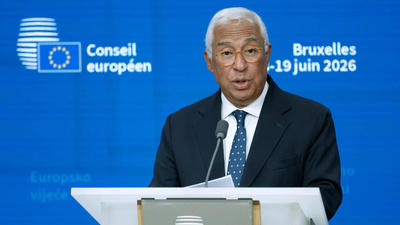
European Council President Antonio Costa on Friday defended his office’s recent diplomatic outreach to the Kremlin, saying the European Union needs direct channels of communication with Russia even though the time for peace negotiations over Ukraine has not yet come.Speaking after the EU leaders’ summit in Brussels, Costa said maintaining contacts with Moscow was essential to supporting Ukraine through diplomatic means. “Precisely because we also need to support Ukraine through diplomatic means, we need to have a direct diplomatic channel with Russia,” he added.Costa stressed that there are currently no “reliable indicators” that Russia is ready to enter into real negotiations.“The time for negotiation has not yet come,” he added, adding that the European Union nevertheless needs to establish direct contact in order to listen to Russia’s position and convey the bloc’s messages directly.
Awareness exposes divisions within the European Union
These statements came after a European Union official revealed on Wednesday that Costa’s office had held “brief contacts at the diplomatic level” with Moscow in an attempt to open channels of communication.The initiative revealed divisions within the European Union regarding how and when to deal with Russia.
As Reuters reported, several leaders criticized the move during closed-door discussions at the Brussels summit, arguing that it had not been coordinated with member states and that the bloc should focus on maintaining pressure on Moscow.According to Reuters, German Chancellor Friedrich Merz and French President Emmanuel Macron were not enthusiastic about this awareness, while the Nordic and Baltic countries expressed the strongest concerns.
Macron and Merz urge caution about negotiations
Macron said Europe would ultimately need a seat at the table in any negotiations to end the war, but insisted that Russia must first show its willingness to engage seriously. “It is up to Russia, which has been made many offers in recent months, to say when it will be ready to negotiate,” Macron said.He added that negotiations will initially take place between Russia and Ukraine before involving the United States and Europe.Merz said it was still too early to decide who should represent Europe in future talks with the Kremlin.He pointed out that Ukrainian President Volodymyr Zelensky has already discussed the main points of possible negotiations with the so-called E3 group, which includes France, Germany and Britain.Latvian Prime Minister Andris Kohlbergs was among those skeptical about the extent of communication. He said, according to what Reuters reported: “Diplomatic channels with Russia are of no importance if Russia does not want to practice diplomacy.”
Some Member States support direct communication
However, Costa’s efforts also received support from some member states. Spanish Prime Minister Pedro Sanchez said that the initiative does not amount to peace negotiations but is merely a diplomatic channel.“I think this is completely understandable, and from the point of view of the Spanish government, I would say it is necessary,” Sanchez said.Irish Prime Minister Micheal Martin also supported the move, and said that opening a communication channel was not a mistake.The discussion comes as European leaders consider how the bloc can play a greater role in efforts to end the Ukrainian war, amid concerns that US-led diplomatic initiatives have lost momentum. Ukrainian President Volodymyr Zelensky has repeatedly called on Europe to participate more actively in any future peace process.Costa emphasized that establishing a direct channel with Moscow is necessary because the European Union cannot rely solely on others to interpret Russian messages.“We must be able to convey our messages to Russia,” he said.