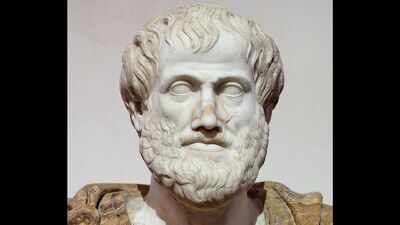
Aristotle (Image: Wikipedia)
No amount of careful planning can eliminate the possibility that life will simply not cooperate. Aristotle put a name to how a person deals with that gap between plan and reality. “The ideal man endures life’s mishaps with dignity and grace, making the best of circumstances,” he wrote.
The word “accidents” here does not specifically mean literal accidents. It means unexpected events, illness, setbacks, and loss, which arrive regardless of preparation. This line does not promise that hardship can be avoided through adequate planning, because Aristotle was too realistic a thinker to make that claim. It offers something narrower and more useful instead, a description of what truly remains within a person’s control once misfortune has actually arrived.
Today’s quote by Aristotle
“The ideal man endures life’s mishaps with dignity and tolerance and improves circumstances.”
Where this idea lies in Aristotle’s actual philosophy
This line is closely related to a concept that Aristotle developed at length in his Nicomachean Ethics, Book IV, which is his description of the megalomaniac, often translated as a person of great soul or high mind. This person is described as one who faces good luck and bad luck with the same unwavering calm, neither inflamed by success nor broken by misfortune. Bearing accidents with dignity is actually a specific application of that broader personality trait.
What do dignity and grace mean here?
Dignity, in this context, is not the absence of emotion. Someone can feel real sadness, fear, or frustration and still cling to their sense of self-worth throughout their existence. Grace doesn’t mean passive acceptance either. A person can respond assertively to real injustice while avoiding being completely drawn into anger. Both adjectives describe how a person carries himself through difficulties, not whether he feels anything at all while going through them.
Why is the response more important than the event?
It is possible for two people to experience very similar setbacks and come out on the other side in completely different places. One may become fixed on what went wrong. Another person may ask for support, adjust their priorities, and keep moving. The event itself is often beyond anyone’s control. What happens next usually does not happen, and this is actually the main point that Aristotle’s line makes.
Why accepting a setback is not the same as giving up?
Accepting that something painful will happen is different from agreeing to it or abandoning any attempt to change what comes next.
A person can be truly angry about an unfair situation while beginning to think clearly about what to do about it. Aristotle’s line describes this first type of acceptance, not surrender.
Other memorable quotes by Aristotle
- “Happiness depends on ourselves.”
- “The roots of education are bitter, but its fruits are sweet.”
- “The whole is more than the sum of its parts.”
- “It is good to wake up before dawn, because such habits contribute to health, wealth and wisdom.”
Why does this quote by Aristotle remain relevant to this day?
No one can plan their way around every setback life eventually throws at them. What actually varies from person to person is not how far the hardship comes, but how they endure it once it occurs. Aristotle’s line never promised escape from difficulty. He was describing what the character would be like once the difficulty had actually arisen.