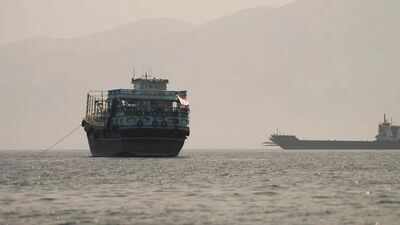
Report: Iran is determined to maintain its control over Hormuz
Iran is determined to secure international recognition of its control over the Strait of Hormuz and the right to charge ships for passage, even if it has to use force to achieve that, two senior Iranian sources said.Under the interim agreement signed with the United States this month to end the conflict, Iran agreed to allow free passage through the strait for 60 days. But Tehran believes that the wording of the agreement allows it to determine which ships can pass and which route they will take.
The sources said that Iran wants permanent formal acceptance of this control once the transitional period ends. Its negotiators will not discuss other issues in the peace talks until this is settled.The sources said that if the agreement expires without an extension, Iran will begin imposing fees on ships in mid-August. It did not specify what fees it would charge or how they would be collected.
Tehran’s position puts it on a collision course with the United States
Any permanent Iranian control of the strait, along with duties and procedures, would add costs, delays and risks to shipping through a waterway that carried a fifth of the world’s energy supplies before the war.Iran’s position directly contradicts US interpretations of the June 17 memorandum.
The United States insists that no country can block shipping or impose duties on international waterways.US President Donald Trump said last week that there would be no tariffs unless Washington decided to impose them. Foreign Secretary Marco Rubio told Gulf states that no country has the right to impose fees on passage through the strait.The Iranian sources said that Tehran interprets the agreement as giving it control over all corridors, and while it must discuss arrangements with the Gulf states, it is not required to reach an agreement with them.
Iran says it has a “historic opportunity”
An Iranian official said on Monday that Tehran plans to hold talks with the Sultanate of Oman, which controls the southern coast of the strait, to determine transit routes.Over the weekend, Iran fired on four ships that attempted to cross Omani waters without Iranian permission, leading to a brief exchange of fire with US forces.One senior official said that Iran would not return to pre-war arrangements. It wants new rules that would give it power to enter and exit, the right to block the passage of ships it considers a security threat, and the power to charge fees for the services it provides.The official added that Iran is ready to implement its demands by force if an agreement is not reached. Tehran will not back down even if this leads to renewed conflict with the United States.Another official said Iran sees a “historic opportunity” to secure a long-term advantage after surviving what it sees as its greatest threat: war with the United States and Israel.
How likely is it that Iran will use force to impose its control over the strait?
More than 3 thousand users shared their opinion today
More than 5 thousand users voted today
Share your opinion
“Neither side believes they lost.”
The official said shipping nations would eventually accept Iranian control because of the increasing cost of the conflict, and Washington would accept it to keep global energy supplies flowing.But Ali Ansari, a professor at the University of St Andrews, responded to Reuters, saying that Iran may be overestimating its position and misjudging the US willingness to accept such a concession. He added: “The chances of this conflict being renewed are much higher than people think, because neither side believes it has lost.”Neither Iran nor the United States have signed the United Nations Convention on the Law of the Sea, which considers Hormuz an international strait requiring freedom of passage. But Oman is a signatory to the agreement.Chris O’Flaherty, a former British naval captain, said Iran was defying what many consider settled international law. He added: “This is an intensely political issue.”