

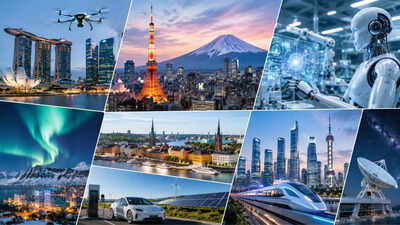
The world’s most technologically advanced countries are ranked based on the degree of digital transformation, internet access, mobile phone use, investment in research and development, and a country’s overall technological competitiveness.
Among the top countries to be considered for 2026 are those with higher scores on integrating technology into daily life, in business activities, and in government affairs. Progress in technology cannot be assessed solely by a country’s economic size or international recognition, but by the practicality of the money invested in scientific research.As WorldAtlas noted, there are distinct clusters of technology leaders located primarily in East Asia, Europe, and North America.
List of most Developed countries in the world 2026
| Rank | nation | region | Main force | Spending on research and development |
| 1 | South Korea | East Asia | Semiconductor, 5G, electronics | ~5% of GDP |
| 2 | US | north america | Artificial intelligence, software, chips | ~$823 billion total |
| 3 | Taiwan | East Asia | Advanced chip manufacturing | ~4% of GDP |
| 4 | Denmark | Europe | Renewable energy, pharmaceuticals | ~3% of GDP |
| 5 | Switzerland | Europe | Pharma, precision engineering | ~3.4% of GDP |
| 6 | Israel | The Middle East | Cybersecurity, startups | ~6% of GDP |
| 7 | Finland | Europe | Communications and games | ~3% of GDP |
| 8 | Holland | Europe | Semiconductor equipment | ~2-3% of GDP |
| 9 | Sweden | Europe | Digital platforms and communications | ~3.5% of GDP |
| 10 | Norway | Europe | Clean energy technology | ~2% of GDP |
The most advanced country in the world
South Korea
South Korea is the most technologically advanced country in the world due to a very high degree of digital transformation and industrial innovation. Almost the entire population has access to the Internet, and their mobile connections are among the fastest in the world. The South Korean government allocates 5% of the country’s GDP for research and development purposes, facilitating continuous innovation in many industries. The country’s electronics industry is highly advanced and includes smartphones, monitors and consumer electronics.
US
The United States is one of the most innovative countries in the world due to the amount of research spending and a vibrant private sector environment. Every year, the United States spends more than $800 billion on research and development, the largest spending in absolute terms among all countries in the world. The country excels in artificial intelligence, software development, cloud computing, and semiconductor design.
Taiwan
Taiwan plays a crucial role in global semiconductor supply chains, especially in advanced chip manufacturing.
Taiwan Semiconductor Manufacturing Corporation (TSMC) produces a large share of the world’s most advanced chips used in artificial intelligence systems, smartphones and computing devices. The country invests about 4% of GDP in research and development, supporting a strong export-led industrial economy.
Electronics manufacturing, chip design and precision engineering are core sectors.
Taiwan’s global importance comes from its dominance in advanced semiconductor manufacturing, which supports almost all modern digital technologies around the world.
Denmark
Denmark is known for its pioneering efforts in renewable energy technologies and the pharmaceutical industry. Denmark spends about 3% of its GDP on research and development activities, which contribute to sustainable technological progress.
Wind energy is one area where Danish companies have excelled in developing renewable energy infrastructure on a global scale. Denmark’s pharmaceutical sector, especially in the case of diabetes-related innovations, has helped Denmark make its presence felt globally.
Switzerland
Switzerland’s innovative strength can be seen in its performance in pharmaceutical products, precision engineering and scientific research.
Spending on innovation is estimated at about 3.4% of GDP, with support from private sector institutions and distinguished organizations. Roche and Novartis are two of the leading global pharmaceutical companies leading the charge for innovation in healthcare. The Swiss have an excellent scientific institution, such as CERN, which is located near Geneva.
Israel
Israel is among the countries that spend more than 6% of its GDP on research and development.
Israel is known as a hub for startup innovation, especially in cybersecurity, artificial intelligence, defense, and software solutions. Many multinational technology companies started as Israeli startups. Unit 8200 has been very instrumental in preparing the next generation of cybersecurity experts. There is high venture capital investment in Israeli startups; This ensures the continued emergence and growth of startups in the country.
Finland
Finland shows great technological prowess through telecommunications, gaming, and digital public institutions. The country allocates about 3% of its GDP to research and development, ensuring continuous innovation in all sectors. Nokia continues to play a major role in deploying 5G networks globally. The gaming industry has made great strides when it comes to contributing to digital exports and innovative technologies.
There is significant digitalization of services, including education and governance systems.
Holland
The Netherlands stands out as the largest producer of semiconductor equipment and digital infrastructure technology. There is only one factory that produces the machines used in the semiconductor manufacturing process, known as EUV lithography. The country has equally advanced logistics technology, as well as a strong Internet technology infrastructure, with significant data exchange facilities.
Research is directed towards engineering, agricultural technologies and high-tech manufacturing.
The Netherlands holds a very important place in global supply chains due to the technologically advanced nature of its chip production machines and logistics systems.
Sweden
Sweden has a highly developed digital economy, which is facilitated by financial technology, telecommunications and consumer technology applications.
Investment in R&D amounts to about 3.5% of GDP and shows a high level of national commitment to innovation activities. An advanced digital payments system has been created; Sweden is characterized by having a cashless economy. Thus, there is a balance in the country between traditional technologies and industries.
Norway
Norway focuses its technological development on renewable energy, marine systems and environmental innovation. Almost all of its electricity production comes from hydropower and renewable sources, making it one of the most sustainable energy systems in the world. Electric vehicle adoption is among the highest in the world, supported by strong government policy and robust infrastructure. R&D spending is around 2% of GDP, lower than some peers but supported by high digital adoption across public services.