

Suffer with your own judgment, rather than having fun under someone else’s
“What is the price of convenience if it costs your freedom?”For centuries, Mongolia’s vast grasslands have produced a culture that values self-reliance above comfort. Few sayings embody this spirit more powerfully than the traditional Mongolian proverb:“Suffer with your own judgment, rather than frolic under someone else’s.”(Large land area)At first glance, the proverb seems harsh. Why choose suffering over comfort? Why endure hardship when an easier life is available? But behind these words lies a worldview shaped by geography, history, and a deep commitment to personal and collective independence.More than just a simple saying, it is a statement about dignity, independence, and the belief that freedom is worth preserving—even when it comes at a cost.
Understand the meaning
The proverb contrasts two options.The first is to live comfortably under the authority of others. The second is to endure difficulties while maintaining control of your life.Its message is clear and direct: SThe imp report is more valuable than the comfort gained through accreditation. This proverb suggests that material ease loses some of its value when it requires giving up personal freedom, while hardship becomes more bearable when one endures it on one’s own terms.
The proverb does not glorify suffering in itself. Rather, he claims that the individual’s ability to make his own decisions carries a value that cannot be easily exchanged for security, wealth, or comfort.
Why did this idea appear in Mongolia?
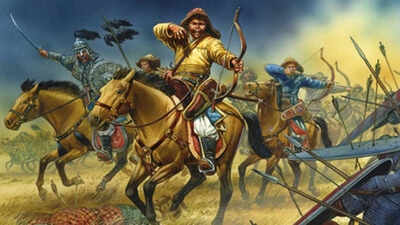
To understand a parable, one must understand the world that shaped it.For most of their history, the Mongols lived as herding nomads across the vast Eurasian steppe. Families moved seasonally with their livestock, following grazing land over great distances.
Traditional Mongolian society was organized around families, clans, and tribes rather than densely populated cities. Historians suggest that Mongol social life was closely linked to kinship networks and mobile herding, creating societies that valued flexibility and independence.The geography of Mongolia played an important role. With vast open spaces and relatively low population densities, people often had the option of moving elsewhere rather than remaining trapped in conflicts.
When conflicts arise, families or groups can move elsewhere in the steppe rather than permanently submit to rivals. This environment encouraged a strong culture of self-reliance and personal independence.Historians of Mongolia have long noted that steppe societies differed from many sedentary agricultural civilizations. Political power existed, but day-to-day survival depended largely on individual households, horsemanship, livestock management, and the ability to adapt independently to changing conditions.In such a world, dependence on others can be seen as a weakness. The proverb reflects this reality.
A reflection of Mongolian identity
This proverb also speaks to a broader characteristic of Mongolian historical identity: The desire to remain masters of their fate.Throughout history, Mongolian tribes have experienced periods of fragmentation and periods of political unity. rise Genghis Khan In the early 13th century, it united many competing tribes under one authority, creating one of the largest empires in history.
However, even within larger political structures, steppe culture retained a strong appreciation for personal initiative and freedom of movement.Likewise, the national story of modern Mongolia has been shaped by struggles to maintain sovereignty between powerful neighbors. Therefore, independence is not just a political concept; It occupies an important place in cultural memory.This proverb reflects the constant preference for autonomy over subordination, whether at the level of the individual, family, or nation.
The philosophy behind the words
Philosophically, this proverb belongs to a long intellectual tradition that places freedom above comfort.Her central question is Khalid: Is it better to be comfortable and in control or free and in charge?Many cultures have grappled with this dilemma. A Mongolian proverb provides a clear answer. He points out that freedom carries responsibilities and hardships, but those burdens are better than a life managed by others.It is also about accountability. When people live according to their own choices, they must also accept the consequences of those choices. In this sense, the proverb is not just about independence; It is about taking ownership of one’s life.Freedom, in this perspective, cannot be separated from responsibility.
Why the proverb still matters today
Although this proverb is rooted in the Bedouin past, it remains surprisingly relevant in the modern world.Consider entrepreneurship. Many business owners choose uncertain paths rather than remaining permanently dependent on their employers.
The risks are high, but so is the opportunity to build something of their own.The same principle appears in politics. States often endure economic or political challenges to maintain sovereignty and autonomy rather than accept external control.Even in personal life, people regularly face a choice between comfort and independence. Whether deciding on a career, education, or lifestyle, individuals often weigh the safety of following established expectations with the uncertainty of forging their own path.A proverb does not guarantee success. He simply argues that freedom of choice is valuable enough to justify the risks involved.
Lessons for contemporary readers
For beginners encountering Mongolian culture, this proverb provides an accessible introduction to a key cultural value.He knows that:
- Independence has a price.
- Comfort is not always the highest good.
- Personal responsibility accompanies freedom.
- Long-term dignity may be more important than short-term ease.
These lessons resonate far beyond Mongolia. In an increasingly interconnected world, where institutions, technologies and systems shape everyday life, the question of how much autonomy people are willing to give up remains of great importance.
Timeless reminder
“Suffer under your own rule, rather than have fun under someone else’s” is more than just a proverb. It is a concise expression of a worldview formed on the open steppe, where survival often depended on self-reliance and where freedom was valued as a necessity rather than a luxury.Its enduring appeal lies in a simple fact: Others can give comfort, but self-determination cannot.That’s why this centuries-old Mongolian proverb continues to speak to modern readers. It reminds us that although freedom may require sacrifice, the ability to direct one’s own life remains one of the most valuable possessions any person—or nation—can possess.