

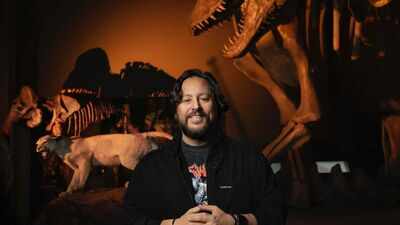
A few years ago, the idea of reviving extinct animals seemed closer to science fiction than anything investors would normally invest in. However, it has been steadily drawn into boardrooms, labs, and funding rounds on a scale that is now difficult to ignore.
And at its center is Colossal Biosciences, a company built on the idea that genetic engineering might one day recreate copies of lost species, starting with the woolly mammoth. Its CEO, Ben Lamm, has become one of biotech’s most unusual figures, part technology entrepreneur, part long-term biology promoter. The company has no commercial product associated with its core ambition, no living mammoths, and no revenue from its de-extinction work.
However, it has attracted billion-dollar valuations and hundreds of millions in funding, driven by the belief that its science can eventually reach far beyond the Arctic animals it is known for.
Phenomenal Bioscience: From Genome Research Giant to $10 Billion Startup
The origin of Colossal Biosciences goes back to a meeting between Ben Lamm and Harvard geneticist George Church. Church had already spent years working on ancient DNA, including attempts to reconstruct the woolly mammoth genome from remains preserved in Arctic ice.
His works were mostly located within academic research circles, with limited expectations of their transfer into the commercial area.Lam came from a completely different world, having built and sold several technology companies. As Forbes reported, one of his previous ventures, Hypergiant, an AI-focused software company, was later acquired by Thrive Capital in 2023 for an undisclosed sum. A meeting between the two eventually led to the creation of Colossal in 2021, initially backed by about $15 million in seed funding.Church’s involvement in mammoth genetics goes back more than a decade before the company was founded. In contrast, Lam saw the potential to turn this research into a platform company built on genetic engineering tools rather than a single scientific goal.
Financing, evaluation and business based on future results
The company has expanded rapidly through successive funding rounds, attracting support from venture capital firms and investors linked to large private investment groups.
As Forbes reported, the company has raised about $200 million in 2025, led by TWG Global, and puts Colossal at a valuation of about $10.2 billion. This assessment has made Lam a billionaire on paper, with his net worth estimated to be around $3.7 billion.In total, the company has raised approximately $435 million. Despite this, it has not yet generated revenue from its de-extinction programme. Instead, parts of its scientific work have been separated into subparts, including Form Bio, launched in 2022 as a computational biology platform, and Breaking, a biological recycling project founded in 2024.The company’s structure reflects a long development cycle, where commercial returns are expected to come from tooling, licensing, and adjacent technologies rather than the immediate creation of extinct animals.
What the Woolly Mammoth Project actually entails
The goal of the most famous Colossal project is not to accurately reproduce the woolly mammoth. Instead, researchers are working with Asian elephant DNA and inserting identified genetic traits into mammoth genomes extracted from the frozen remains.
These changes focus on characteristics associated with cold adaptation, including hair growth, fat distribution, and other physiological traits.Early progress has included multiple gene editing across more than 20 genomic loci. The goal is to produce an elephant-based animal that can survive in colder environments similar to those once inhabited by mammoths, rather than reviving similar prehistoric species.Artificial womb research is another aspect of the work. Elephants present practical challenges due to their long gestation periods and reproductive biology, prompting exploration of in vitro embryo development systems that could shorten experimental timelines.
The ecological role of the woolly mammoth and the huge bioscience conservation and de-extinction vision
Supporters of the project often point to the ecological role mammoths played in shaping the northern landscape. Their movement and grazing patterns are thought to have influenced grassland maintenance and soil conditions, with some researchers suggesting that similar animals today could influence permafrost stability and carbon release.Colossal has reportedly said it is in discussions with two governments about potential contracts related to biodiversity, including one island nation. One proposed project involving endangered species could cost about $350 million over decades, with uncertain outcomes if pursued through traditional conservation methods. The company has suggested that genetic engineering could shorten this timeline, although this raises scientific and ethical controversy.
Criticisms and questions about environmental release
Outside the company, there are strong doubts. Some geologists and conservationists wonder whether engineered animals can restore ecosystems that have changed dramatically since extinction events. Others argue that releasing GMOs into open environments carries risks that are not yet fully understood.Carl Flessa, a professor of geosciences at the University of Arizona, called the idea of bringing back the mammoth-like animals misguided, citing concerns about environmental mismatches and uncertain climate benefits.
He also wondered whether such animals would live in environments already under high temperature stress.At Colossal, Beth Shapiro, chief science officer, acknowledged the uncertainty, while saying that traditional conservation methods alone may not be enough given the speed of environmental change. Nearly 46,300 species are currently considered threatened with extinction according to the International Union for Conservation of Nature.