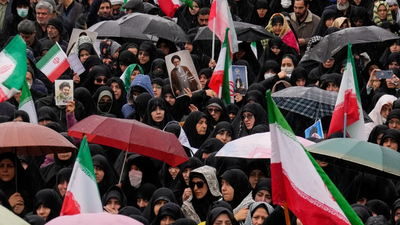
The economic impact of the Iran war could push more than 32 million people into poverty around the world, with developing countries expected to be hardest hit, according to the United Nations Development Programme.The report, released amid uncertainty over the fragile ceasefire, said the global economy is facing a “triple shock” of rising energy prices, food insecurity and slowing economic growth. He warned that conflict was undermining development gains, with uneven impacts across regions.
He watches
Pak’s red carpet welcome to the Iranian delegation. Araqji meets Asem Mounir; Talks with the United States next?
Energy prices rose in the weeks following US-Israeli air strikes on Tehran, exacerbated by Iran’s closure of the Strait of Hormuz, disrupting global oil and gas supplies.
The impacts have also extended to fertilizer supplies and shipping, raising concerns about a growing food crisis in developing countries.The United Nations Development Program has identified three scenarios for the economic impact of war. In the worst case scenario — which involves weeks of major disruption to oil and gas production followed by months of rising costs — up to 32.5 million people could fall into poverty. This estimate is based on the World Bank’s upper-middle-income poverty line of $8.30 per person per day.
About half of the increase in poverty rates will be concentrated in 37 energy-importing countries in the Gulf region, Africa, Asia and small island developing states.“A conflict like this is the opposite of development. Even if the war stops, obviously a ceasefire is very welcome. But the effect is already there,” said Alexander De Croo, UNDP Administrator and former Prime Minister of Belgium, as quoted by The Guardian.“You will see a lasting effect, especially in poor countries, as you push people back into poverty. That is the saddest element. The people who are pushed into poverty are often people who used to be in poverty, got out of poverty, and are now being pushed back.”The head of the International Monetary Fund warned that the “traumatic effects” of the conflict have already caused lasting damage to the global economy, even if peace is maintained.The United Nations Development Program called for a global response to support the most affected countries. The report recommended targeted and temporary cash transfers to protect vulnerable households, estimating that about $6 billion would be needed to offset the impact on those falling below the poverty line.De Croo said international agencies and development banks could support such measures. “There is a positive economic return from providing short-term cash transfers to avoid people falling back into poverty,” he said.
He added that temporary subsidies or vouchers for electricity or cooking gas could also help, although the report cautioned against blanket subsidies because they would benefit wealthier households and are harder to maintain.While wealthier countries are better placed to manage the impact, the UNDP said developing countries face greater challenges due to limited financial resources and current economic pressures. It also pointed to cuts in aid spending by Western governments, including the United States, Germany, France and the United Kingdom, as they deal with rising debt and increased defense spending.