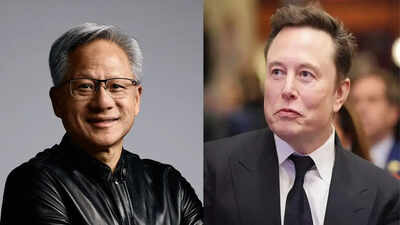
The way senior leaders run companies is changing in quiet but noticeable ways. Some of the biggest names in business are breaking away from old office habits and replacing them with routines that may seem unusual from the outside.
At companies like Nvidia, Airbnb, United Airlines, Southwest Airlines, and Twilio, CEOs are shaping their workdays in ways that don’t always align with traditional corporate expectations.The idea seems to remain acute in roles where decisions carry heavy weight. Not everyone agrees with these methods, but they are gaining attention throughout the business world. Some of these methods may not suit every workplace. It also doesn’t take away the pressure or workload.
However, they suggest a gradual change in how senior executives manage time at the highest levels.Here’s what some top CEOs are setting unconventional rules for at work and life.
Secret work rules for CEOs are changing corporate culture
Jensen Huang – Nvidia: No one-on-one meetings
At Nvidia, work culture moves quickly. Jensen Huang is said to avoid one-on-one meetings with his direct reports. This approach is unusual for a company at the center of the global AI race.Instead of private follow-up, information remains open across teams.
Huang has stated in public discussions that he prefers transparency over filtered communications. Everything that is shared with leaders is shared widely within the organization. There is still interaction with executives, but the structure is different. Short exchanges replace long scheduled meetings. If something urgent happens, he is said to respond quickly.
Unscheduled. More interactive.The goal is simple in theory: “Less time in meetings and more time building.”
Brian Chesky – Airbnb: Reject email habits
At Airbnb, communications took a different turn. Brian Chesky has moved away from email as a daily tool.
He tends to rely on calls and messages instead, which he describes as more direct and less draining.He also avoids early morning meetings. For him, work starts later in the day, often after 10 a.m. It is not a rule that he expects others to follow, but rather just a personal structure that suits the rhythm of his work. A simple thought runs through him. When meetings begin, it matters only as much as what happens inside them.
Scott Kirby – United Airlines: Power naps inside corporate offices
At United Airlines, the leadership approach is more materialistic.
Scott Kirby talked about taking short naps during the work day.Not long breaks, but a 20-minute nap habit is associated with mental clarity. This habit was once noticed by employees, which led to him placing a sofa in his office. Since fatigue affects decisions, short sleep helps refocus. It is not a shared leadership image. The CEO is resting during the day. However, this seems to be part of how he manages long hours in a demanding industry.
Bob Jordan – Southwest Airlines: Block out the entire afternoon for thinking time
At Southwest Airlines, time management has taken another direction. Bob Jordan has introduced protected blocks in his calendar where meetings are not allowed. Some afternoons throughout the week are kept free. The purpose of this is not comfort alone. It is time to think, plan and review priorities without interruption.He described the modern executive schedule as crowded with activity that may not always equal progress.
Meetings can quickly fill a calendar, but they don’t always move strategy forward.“The approach signals a shift in leadership style.”
Josima Shepschandler-Twilio: Short meetings and movement breaks
At Twilio, time is also tightly controlled. Josima Sheepchandler prefers shorter meetings, often shortening standard periods by several minutes.A 30-minute period may become 25 minutes. The one-hour period may end at 50. Unused time is not wasted, but rather used for movement, stretching, or brisk walking. The idea is to keep energy constant throughout the day.
Sitting for long periods is avoided wherever possible. Even small breaks are treated as part of doing the work.
Elon Musk – Tesla: No big meetings
According to a Forbes report, Elon Musk at Tesla has repeatedly emphasized reducing unnecessary large meetings. He described it as a common inefficiency in large organizations, often growing in size and losing focus over time.His point is that meetings should only take place when they add clear value for everyone in the room. If they do not, they should be avoided or reduced. A one-hour meeting with eight people actually consumes eight team hours. As the group becomes larger, the time cost quickly adds up, sometimes equaling several full business days for a single meeting.“Protect productive time and keep discussions meaningful, not routine.”