

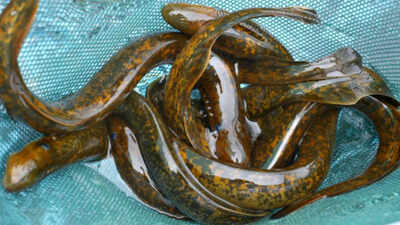
At a June meet-and-greet organized by the GLFC, six sea lampreys posed for cameras at the Capitol. One even sucked Rep. Bill Huizinga’s palm, CNN reports.
Among the few things the entire Congress agrees on, there’s one: Invasive sea snakes must go.For U.S. coasts that feed on their marine fish, the invasive species, also known as Great Lakes “vampire” or “vampire” fish, has had a devastating impact on lake trout, salmon and whitefish. Thus it inspired what scholars often call the “forbidden experiment.”
The arrival of the sea lampreys
The former home of sea lampreys was the Atlantic Ocean. The first arrived on Lake Ontario in the 19th century, making their way from the Atlantic Ocean, via the Hudson River, and following the Erie Canal. They remained in Lake Ontario for more than a century because Niagara Falls prevented them from moving any further.Once the Welland Canal was modified by the mid-20th century, allowing ships to circumnavigate Niagara Falls, sea lamprey numbers boomed.
They finally made it to the upper Great Lakes. Suddenly, the lampreys had more space, found more food and colonized more breeding areas. The invasion has begun.The sea lamprey has no jaw, proper teeth, or bones. However, this predator can attack a fish 100 times its size as a suction cup, using its tongue to make a hole in its side, liquefying its tissues and feeding on it. Sea lampreys are quite fertile (like other invasive species) and have a life cycle that is unique to fish.
A single lamprey consumes about 40 pounds of fish in 12-18 months, and the female can lay between 40,000 and 67,000 eggs, and they do so in almost every riverbed that empties into the Great Lakes.
These eggs hatch into larvae called ammocoites, which are eyeless, worm-like creatures that burrow into the sediment, making it impossible for predators to find them. Ammocoites live like this for many years, feeding on algae and decaying matter, until they become large enough to become a sucking predator.One lamprey can kill up to 20 kilograms of fish in just two years. On this fishy and bloody diet, the five-gram lamprey grows 40 to 50 times larger as adults. There are thousands of these vampire fish in the Great Lakes.
Loss of local fish
When lampreys invaded the Great Lakes, lake trout, their favorite food and once a top predator, began to die out. By the mid-1960s, the Great Lakes trout harvest in the Great Lakes had fallen to less than 200,000 kilograms per year from eight million kilograms per year in the 1920s.Alewives, small fish eaten by lake trout, are no longer subject to predation. They became so abundant that there were massive die-offs in the lakes every year, and millions of dead fish were washing up on the beaches.
Forbidden experience
In 1954, Canada and the United States established a partnership to address the sea lamprey problem, and the Great Lakes Fisheries Commission (GLFC) was established. A successful project to control lamprey populations came about in 1957, when a chemical compound called TFM (3-trifluoromethyl-4-nitrophenol) was developed, which kills lamprey larvae, without harming most native fish.
Since then, “lampicide” has been applied from spring to fall to breeding areas in the lake’s tributaries, killing sea lamprey hatchlings before they can enter the lakes, beyond the reach of scientists.Lampicide works because the larvae are unable to metabolize the compound, which disrupts their energy production, leading to death. Nearly 70 years after its introduction, there is no indication that lampreys have developed any resistance to it.Nearly seven decades after the launch on the moon, almost all efforts have been undone. During the lockdown in 2020 and 2021, staff were forced to maintain social distancing, which resulted in a reduction in the number of treatments carried out and the authority was unable to implement the full monitoring programme. Lamprey numbers have “skyrocketed” by 300% in some areas, said Greg McLinchley, director of policy and legislative affairs for the Great Lakes Fishery Commission (GLFC).
“You made our case.”“We call it the ‘blocked experiment’ here at the office,” he added. “We’ve always said that if we don’t keep controlling the sea lampreys they will come back – they’re a curling menace. But we’ve never dared to do that.”About 9 million sea lampreys must be killed each year just to prevent a population explosion. If left unchecked, the estimated lamprey numbers could collapse Great Lakes fish stocks, and with them the multibillion-dollar fishing industry, within just five years, the GLFC says.
Is there a need for more moon shots?
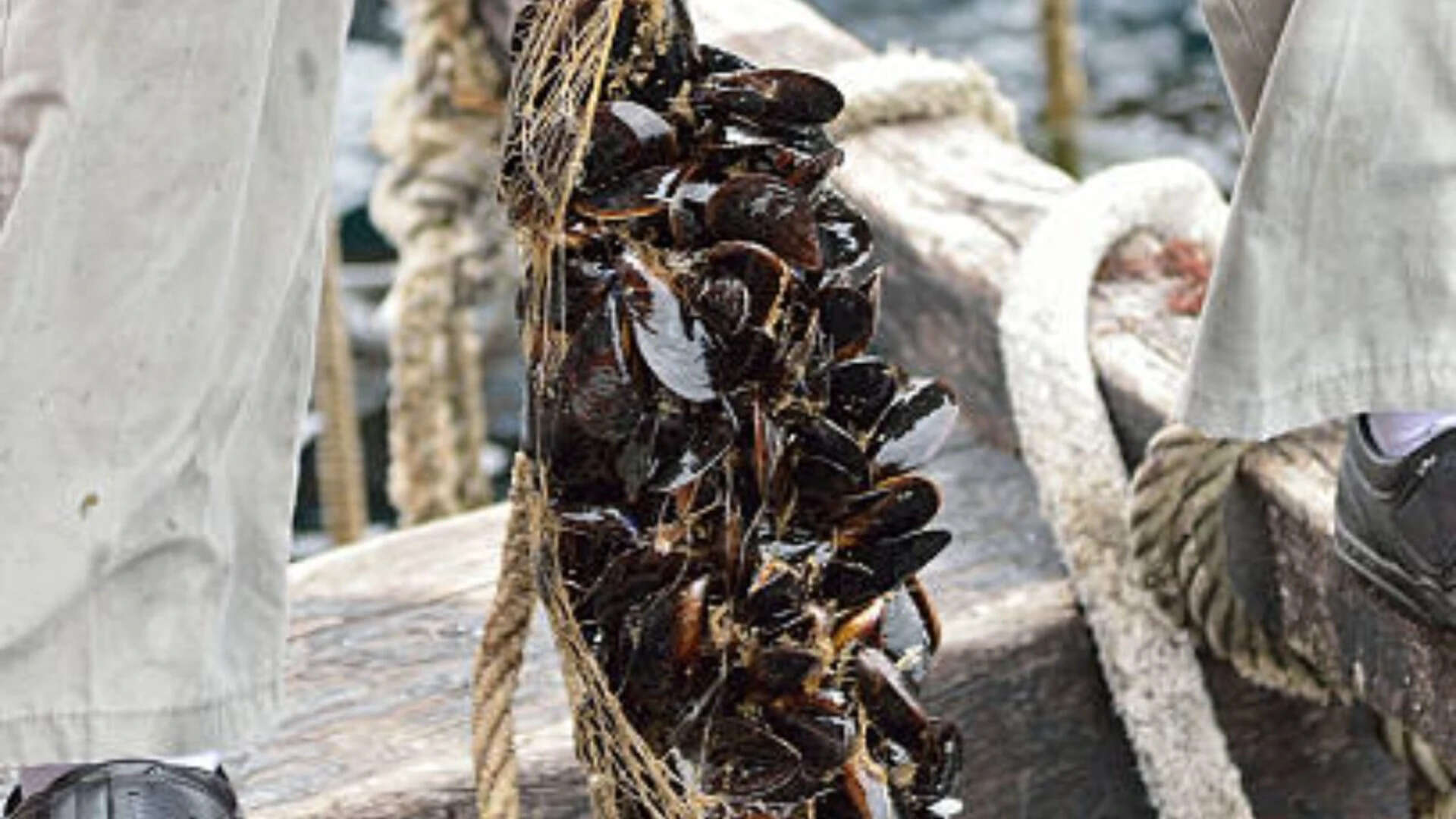
Other species such as quagga mussels and zebra mussels are now widespread in the lakes.
Sea lampreys are just one of 186 invasive species out of 3,000 in the Great Lakes region. Other species such as quagga mussels and zebra mussels are now widespread in the lakes. The mussels arrived in the ballast water of commercial ships in the 1980s, and have since affected the survival of fish eggs, caused toxic algal blooms, and outcompeted native mussels. Invasive mussels are also a suspected factor in the emergence of cases of food poisoning in birds in recent decades.
They’re focusing on botulism, and another invasive species, the round goby, eats mussels. Scientists hypothesized that poisoned gobies become paralyzed and easy prey for birds, which then die from the poison. There is currently no way to safely eliminate them from the Great Lakes.“It strips nutrients and plankton from the water column and destroys the food web that whitefish and other species depend on,” said Vito Figliomeni, executive director of the Ontario Commercial Fisheries Association. “In Lake Huron, the decline in whitefish has coincided with a rise in mussel biomass.”According to a CNN report, there is legislation before Congress that would task the commission with finding control. The bipartisan bill, called the Save Great Lakes Fish Act of 2025, proposes a $500 million budget spread over 10 years to find a solution.