

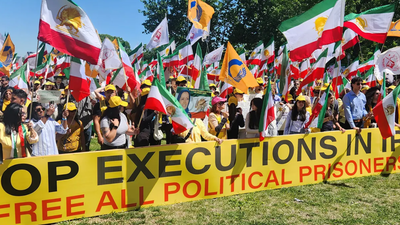
The Bahá’í community in India has been deeply saddened by the war in Iran, which has seen an escalation in the persecution of Iranian Bahá’ís. Many Indian Baha’is originally came from Iran and still have relatives in that country.As the Islamic Republic regime tightened its grip and brutally crushed any internal dissent during the conflict, the crackdown was harsh on Iranian Baha’is, the country’s largest non-Muslim minority.“There is a history of persecution of Iranian Baha’is which became a systematic state policy after the 1979 Islamic Revolution,” says Neelakshi Rajkwa, representative of the Baha’i Public Affairs Office.
“Whenever there is a crisis in Iran, the Baha’is are used as scapegoats. The Constitution of the Islamic Republic does not even recognize the Baha’i faith, and there was even a memorandum in 1991 calling for preventing the development of the Baha’is from all sides.
“The Islamic Republic has long denied Baha’is basic rights such as access to education, government employment, and even cemeteries to bury their dead. During the recent conflict, dozens of Baha’is were arrested, charged or tried without due process.
Among them are cousins Beivand and Purna Naimi.According to the Iranian Human Rights Organization, 30-year-old Bevand was arrested on January 8 in Kerman. He was accused of encouraging other young Iranians to protest, was not given a lawyer, and was reportedly tortured in detention, including mock executions.Poorna was arrested on March 1 and similarly tortured. The authorities extracted forced confessions from their cousins under extreme duress in connection with the killing of three security personnel, according to the Baha’i International community and Amnesty International.The most common allegation leveled against Baha’is in Iran is espionage at the request of Israel. “This is complete nonsense,” says Farah Motlabi, who was born and raised in Tehran. “The founder of the Baha’i faith, Baha’u’llah, was exiled in the 19th century, and his final resting place is near Haifa in modern-day Israel. The Islamic Republic regime continues to associate Baha’is with Israel because of this. But modern Israel did not exist at that time. It was part of the old Ottoman Empire.”“Last July, my mother-in-law died in Shahroud, eastern Iran, where she was prevented from being buried. They had to carry her body 300 kilometers to another city to bury her. This is the constant persecution we have been facing for 40 years.”Another Indian Baha’i of Iranian origin, Romina (name changed), details the ordeals her family is going through. “My sister was arrested and imprisoned with her one-month-old baby in 1980. She also had a two-year-old at the time, which she had to leave at home alone.
My sister’s crime? I have been accused of teaching children – the Iranian regime treats Baha’is as evil, and therefore they are banned from teaching, especially values education classes.
“Al-Muttalabi says: “Yes, the regime recognizes Christianity, Judaism, and Zoroastrianism. But not any religion that came after Islam.” “Baha’is are therefore automatically excluded by the regime, making them easy targets for scapegoats.” Romina adds: “Our faith teaches us to be loyal to our country and our government. Iranian Baha’is want to help Iran. But the Islamic regime does not see Baha’is as equal citizens.”
“