France The minority government finally passed the budget for this year after avoiding a series of no-confidence votes in a long-running political saga that has unsettled debt markets and alarmed the country’s European partners.
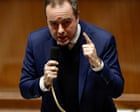
Prime Minister, Sebastian Lecornutold parliament on Monday, after months of wrangling, that the French people “reject this disorder and want our institutions to function”.
The budget is passed using special constitutional powers and is not presented to Parliament for a vote. But as part of that process, Lecornu and his government faced successive no-confidence motions. The government survived the last two no-confidence votes on Monday evening.
Lecour was able to advance the budget because the Socialist Party agreed not to vote against the government in exchange for some concessions, including a suspension. Macron’s main pension will changesought a gradual increase in the retirement age from 62 to 64.
Hervé Soulignac, a Socialist MP, told parliament his party had “done its duty” and “avoided the worst”. He said he will leave France Without the budget there would have been “adding more agony to the agony” of the French people.
Lecornu called the budget “progressive”, saying it would increase defense spending by €6.5bn. Although some lawmakers expressed doubts, the budget aims to reduce the deficit from 5.4% in 2025 to 5% of gross domestic product in 2026. The French executive had initially set a target of 4.6%, but the repeal of pension changes failed to reduce the deficit.
Budget talks have consumed the French political establishment for almost two years after President Emmanuel Macron sparked a vote of no confidence by making the call. An early election In June 2024, it delivered a hung parliament. The Left Alliance won the most seats, but fell well short of a majority. The extremist National Rally Party won the most votes and became a force to be reckoned with, but lacked a majority. Macron’s centrist grouping lost seats but is still there.
Since then, domestic politics have been largely deadlocked, leading to instability and government collapse in Europe’s second-largest economy.
Macron first recruited the right wing Michel Barnier The prime minister in 2024 was ousted by parliament after just three months amid a row over the 2025 budget. Then the mediator François Barrow That lasted just nine months before he was fired over the proposed 2026 budget. Lecour, a key Macron ally, was appointed last fall before resigning Reappointed An attempt should be made to pass the budget.
Lecour wants to stay in office until 2027 without being deposed. His fragile government wants to go beyond the budget on issues like the Farmers Protection Act and Bill. Assisted dying and improved palliative care. But deadlock in parliament has limited the government’s ability to act on domestic policies.
Municipal elections will be held across France next month. The presidential election in the spring of 2027 is now a crucial issue in national politics.
Macron, who cannot run for office again after serving two terms as president, now works almost entirely on foreign policy, making Europe less dependent on foreign powers and advocating a tougher line in the face of tariffs or US President Donald Trump. Greenland The crisis
Terrorist leader Marine Le Pen, who is considered one of the contenders for the 2027 presidential election, is currently attending Rehearing on appeal On the misuse of European Parliament funds through an alleged fake jobs scandal. She was found guilty last year Banned from running for office five years, but seeks to set aside that judgment and sentence.