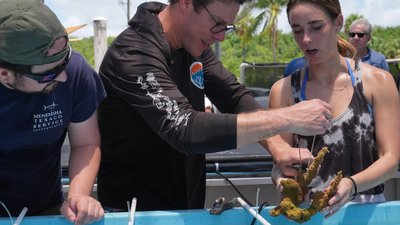
Scientists in Florida have launched an emergency effort to protect one of the Caribbean’s most important coral reefs from complete extinction. Researchers at the University of Miami have transferred 30 parts of endangered elkhorn coral from underwater nurseries to a land-based hatchery, fearing that another extreme marine heatwave this summer could lead to widespread coral bleaching.
The move comes after successive heat waves in 2023 and 2024 devastated Florida’s coral reefs, rendering elkhorn corals functionally extinct in much of South Florida. By bringing coral to shore, scientists hope to preserve its remaining genetic diversity until ocean conditions are safe enough for future restoration efforts.
Florida scientists move endangered elkhorn coral to shore as heatwave threat grows
The emergency relocation was carried out by researchers from the University of Miami, who have been growing endangered elkhorn corals in marine nurseries for years.
However, forecasts of unusually warm ocean temperatures this summer have raised concerns that another severe bleaching event could devastate even these carefully managed populations.Marine biologist Diego Lerman, an associate professor at the University of Miami, said early signs suggest 2026 could become a particularly difficult year for Florida’s coral reefs. Some corals have already begun to show signs of heat stress, prompting scientists to act before temperatures rise further.
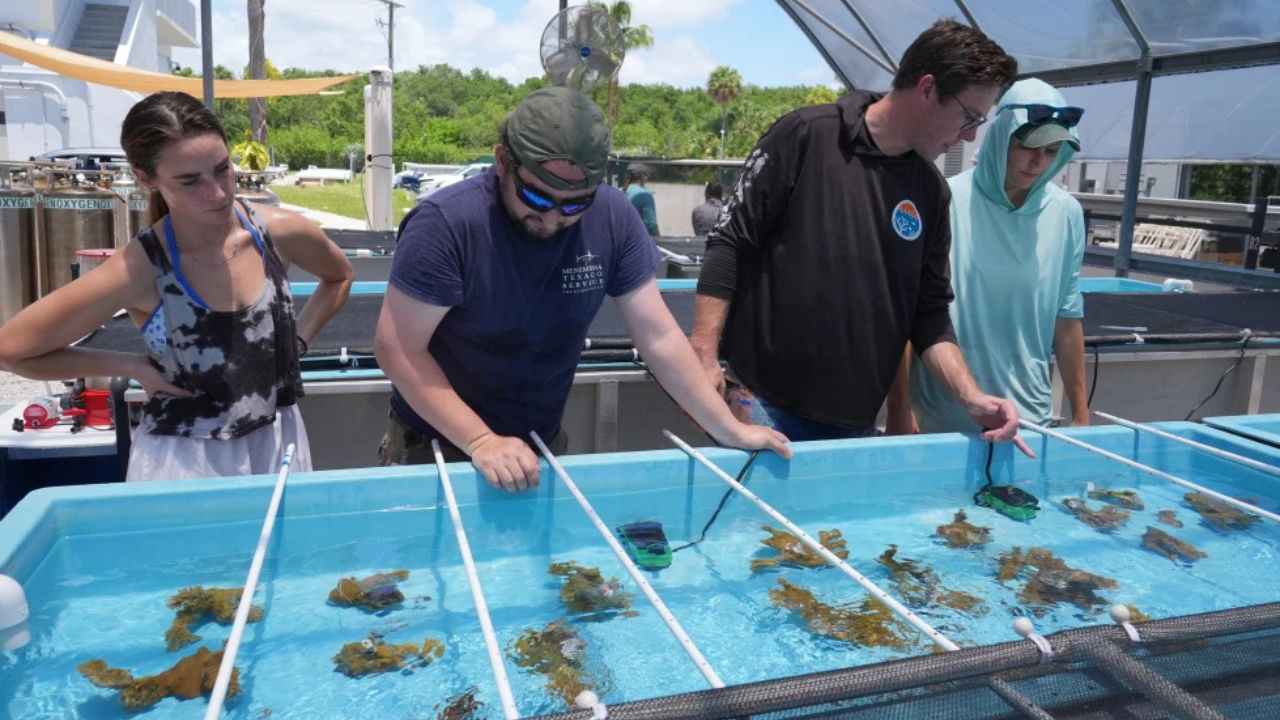
Divers collected 30 genetically diverse coral fragments, wrapped each piece in wet bubble wrap to prevent drying out and transported them in insulated coolers to the university’s hatchery. Once there, the corals were sterilized and placed in specially maintained tanks where water temperature, salinity and other conditions could be closely controlled.
What is Elkhorn coral and why does it matter?
Elkhorn coral (Acropora palmata) is one of the most important reef-building coral species found in the Caribbean and the waters surrounding Florida.
Named after their broad branches that resemble elk antlers, they grow relatively quickly and form large coral structures in shallow coastal waters.These coral reefs provide habitat for countless marine species, support commercial and recreational fisheries, attract tourists and act as natural barriers that absorb wave energy during storms and hurricanes. Although coral reefs cover less than one percent of the ocean floor, they support about a quarter of all known marine species at some point in their lives.Due to their ecological importance and significant decline, the Elkhorn coral is listed as Critically Endangered by the International Union for Conservation of Nature, and is protected under the US Endangered Species Act.
Why is coral bleaching becoming an increasing threat?
Coral bleaching occurs when long periods of unusually warm seawater puts coral reefs under stress. Healthy corals live in partnership with microscopic algae called zooxanthellae, which provide them with most of their food through photosynthesis and give corals their vibrant colors.When the water temperature rises beyond what corals can handle, they expel these algae and turn white, a process known as bleaching. Bleached corals do not die immediately, but if stressful conditions persist for weeks, they lose their primary food source and often die.Florida has experienced four mass bleaching events over the past decade, with little time between them for coral reefs to recover. Researchers say frequent marine heatwaves linked to climate change are making these events more frequent and more severe.
What “functionally extinct” means for Florida coral reefs
Scientists say the elkhorn coral is functionally extinct in much of South Florida, extending from Broward County to the Florida Keys.Functionally, extinction does not mean that every coral colony has disappeared. Instead, only a few colonies remained, and they were so widely separated that they could no longer reproduce naturally in sufficient numbers to restore a healthy population.A devastating marine heatwave in 2023 caused widespread coral mortality, while another, though less severe, bleaching event in 2024 weakened remaining populations.
Researchers now fear that another exceptionally hot summer could wipe out many remaining colonies if preventative measures are not taken.
Preserving genetic diversity for future restoration
One of the main goals of coral translocation is to maintain as much genetic diversity as possible. Each piece of coral carries unique genetic traits that can be crucial to the long-term survival of the species.Some corals may naturally tolerate higher temperatures, while others may have greater resistance to disease or ocean acidification.
Losing those genetic traits would make future restoration more difficult.To reduce this risk, the University of Miami exchanges coral fragments with other research institutions, aquariums and conservation facilities. Maintaining genetically diverse populations at multiple sites ensures that a single disease outbreak or environmental disaster cannot wipe out the remaining breeding stock.
How coral nurseries help restore coral reefs
Over the past decade, Florida scientists have developed underwater coral nurseries to help rebuild damaged reefs. Small coral fragments are attached to underwater frames or suspended structures where they grow under controlled conditions before being transplanted back onto natural coral reefs.Thousands of coral colonies have already been restored using this technique, although recurring marine heatwaves continue to threaten those gains.Temporarily transporting some coral fragments to land represents an additional layer of protection during periods of extreme ocean warming. The researchers hope that the rescued colonies will eventually be returned to the sea once environmental conditions improve.
Climate change increases the urgency
Scientists say rising global temperatures are warming oceans, increasing the frequency and intensity of marine heatwaves. Unlike isolated bleaching events seen decades ago, today’s heatwaves occur so often that coral reefs do not have much opportunity to recover before facing the next episode.According to University of Miami researchers, bleaching seasons are beginning to overlap, leaving coral reefs under almost constant pressure. If this trend continues, more reef-building coral species may face severe population declines despite ongoing restoration efforts.