
A person experiencing a heat wave (Image source: Canva)
Most people run their thermostat dozens of times a week without touching the fan settings. It sits quietly between ‘auto’ and ‘on’, and unless something feels right at home, it’s easy to forget it’s there.
But this overlooked switch has a real impact on your comfort, your utility bill, and the life of your HVAC equipment. With many regions experiencing extreme heatwaves and air conditioners running longer hours, small changes to your thermostat settings can make a noticeable difference. While lowering the temperature is the obvious response, the fan setting can also affect how well your cooling system works, how comfortable your home feels, and how much you spend on electricity.
Here’s everything you need to know about choosing between Auto and On fan settings.
Two settings, two very different functions
The thermostat does two things at once: it sets the target temperature and controls the blower fan that actually moves the heated or cooled air through the ductwork. The fan setting controls the second part. “Automatic” means that the blower fan only runs while the furnace or air conditioner is running a heating or cooling cycle.
The moment your home reaches the target temperature, everything turns off together, the stove or compressor and fan alike, until the temperature drops and triggers the next cycle. On means the fan itself never turns off. It runs continuously, day and night, whether or not the heating or cooling components are working effectively. Even in the gaps between cycles, air is still forced through the vents. Understanding this distinction is the first step to knowing which setup actually works for your family.
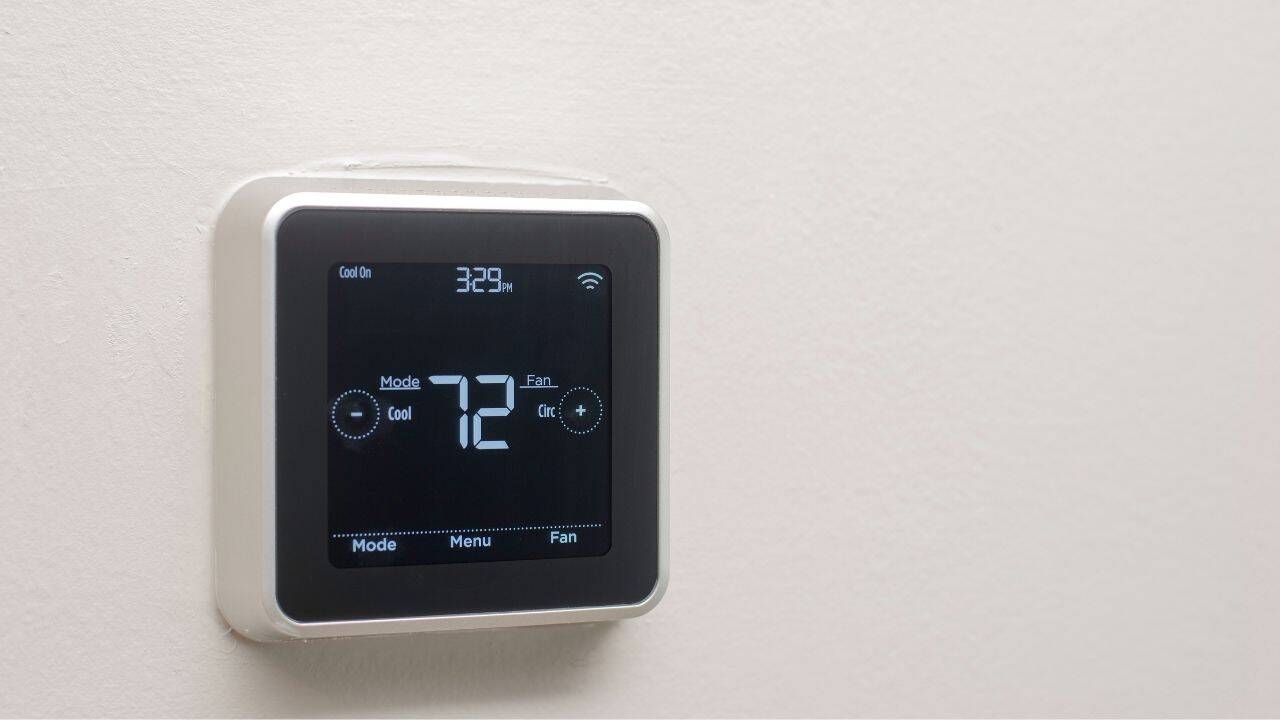
Image credit: Canva
Why most experts lean towards cars
Here are a few reasons why automatic mode dominates most scenarios:Low energy costs: A fan that only runs when needed consumes much less electricity over the course of a month than one that runs non-stop. Since heating and cooling already make up a large share of a typical home’s energy use, reducing unnecessary fan run time adds up. Better humidity control in summer: When you run your air conditioner, condensation collects on the cooling coils and is usually drained to the outside once the cycle is finished.
If the fan continues to blow after the cycle stops, that remaining moisture may be drawn back into your ductwork and circulate throughout your living space instead of draining, making the air more humid than it should be.Slower filter loading: Because less air passes through your HVAC system, the filter accumulates dust and debris more slowly, which means it may not need to be replaced as often.Quieter operation: Since the blower turns off between heating and cooling cycles, many homeowners find the home noticeably quieter, especially at night.The main compromise is temperature consistency. Because the fan stops completely once the heating or cooling cycle has finished, rooms far from the thermostat, especially those on the top floor or at the end of a long duct, may become slightly warmer or cooler than the room where the thermostat is located.
Image credit: Canva
When the On setting makes more sense
Running the fan around the clock is not without its advantages, and may be convenient for some households.More consistent temperatures throughout the house: Continuous air movement helps prevent hot and cold spots that tend to occur in larger homes, multi-story plans, or homes with long or poorly insulated ductwork.Powerful air purification: The more frequently air passes through an HVAC filter, the more dust, pollen, and pet dander it can capture. For households with pets, indoor smokers, or people with allergies or asthma, this continuous filtration can make a noticeable difference in daily indoor air quality.Decreased cycling start and stop: Continuous operation reduces the number of times the blower motor starts and stops. However, modern HVAC motors are designed for frequent cycling, and since the fan generally runs longer hours, continuous operation does not necessarily extend motor life.But the costs are hard to ignore. Expect significantly higher electric bills, more frequent filter changes, and in homes where ductwork runs through unconditioned spaces such as attics, crawl spaces or garages, constant airflow can allow air to pick up heat in the summer or lose heat in the winter before it reaches your room. Continuous airflow during the cooling season can also reduce dehumidification because the moisture in the evaporator coil has less time to drain between cycles.
A hybrid setup worth knowing about
Some newer or smart thermostats include a third option, often called “cycling.” This causes the fan to run at a low speed for a set number of minutes every hour, rather than not stopping. It offers some of the air-mixing benefits of “On” without the full power cost, landing somewhere between the two main settings.
How to decide what is right for you
The right setup depends on what your family values most:Do you care much about your utility bill? Automation is always the most cost-effective option.Do you deal with allergies, pets, or smoking indoors? The additional filtration from On may be worth the additional energy cost.Do you notice that some rooms are always too warm or too cold? Running, or preparing a circular if available, can help settle matters.Do you have young children, elderly relatives, or anyone sensitive to temperature fluctuations at home? On’s constant airflow can add a layer of comfort and consistency, especially during inclement weather.Not many homeowners stick to just one setup year-round. It’s common to turn on the fan during the day to improve circulation, then switch to automatic mode overnight to save energy and reduce noise. If saving money and running an efficient system is your priority, to It is the smarter everyday default for most homes. If improved air circulation and frequent filtration are more important than slightly higher energy costs, then on The setting may be worth considering. Either way, knowing what this little switch actually does gives you real control over how your home feels and how much it costs to keep it that way.