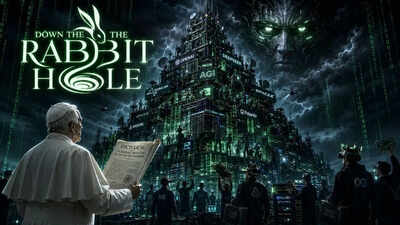
The fictional misanthropist Dr. House often joked that if one could argue with religious people, there would be no religious people. Of course, the world made these remarks before Donald Trump became president, an event so catastrophic that it forced the world’s most vocally religious person to act as a voice of reason.With the democratic forces in his homeland electing the presidential version of Pope Alexander VI, a man whose foreign policy is based on self-aggrandizement and nepotism, it has fallen to the responsibility of the first American pope to provide a moral compass for his citizens and a large portion of the West and North African world. And now, like every manager in every corporate office, he is also talking about artificial intelligence. Fortunately, it’s not the enthusiasm of companies that think AI can replace all kinds of wasted workers, so the only ones making money are the CEO and shareholders.In his first encyclical, titled Magnifica Humanitas, or Magnificent Humanity, the Pope warns of the dangers of artificial intelligence, comparing it to the Tower of Babel and saying: “Humanity, created by God in all its greatness, today faces a pivotal choice: either build a new Tower of Babel or build the city in which God and humanity dwell together.”But what exactly is the Tower of Babel? What is a circular letter? Why is the Pope talking about artificial intelligence? Could it be a voice of reason against the largely atheist brethren in technology who might find Christ when it suits their narrative? Why are the children of Abraham worried about the previous God? For those who have been living under a rock, or who are frequently bothered by cockroaches or clubbers, here’s a little primer.
The story of the Tower of Babel
For most people who don’t read the Bible end to end, the first time they heard the term Tower of Babel was probably in X-Men: Apocalypse, the film in which an ancient mutant with god-like powers named En Sabah Nur, played by Oscar Isaac, wakes up several thousand years later and decides that humanity has been a very poor use of cosmic real estate. In one of the film’s most memorable scenes, Apocalypse hijacks the world’s nuclear arsenals and launches them into space before thundering: “You can shoot your arrows from the Tower of Babel, but you can never strike God!”The pulp line takes an ancient religious myth and gives it a modern twist: a man directs rockets into the sky.
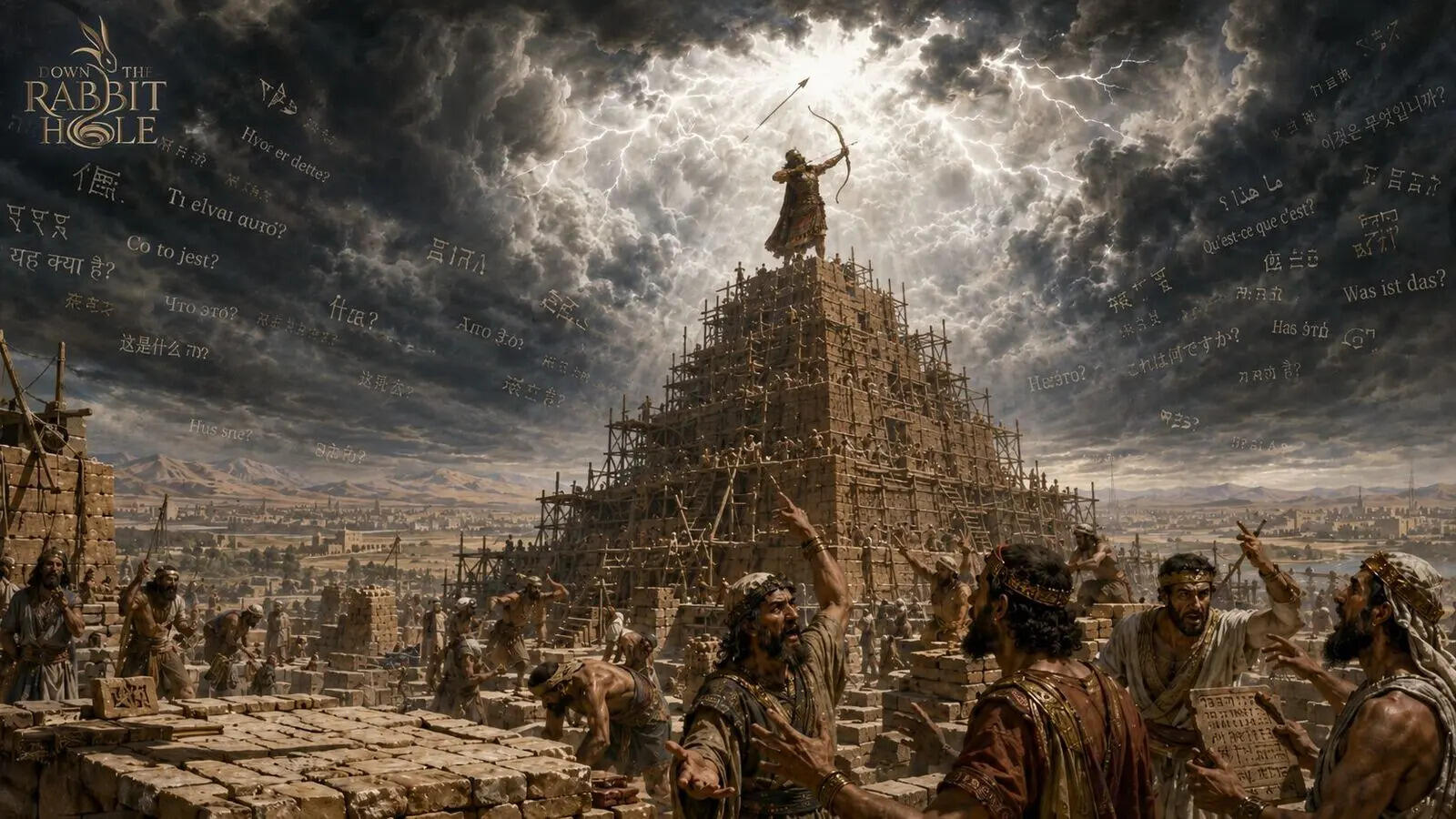
The Tower of Babel is a fictional Biblical allegory, what scholars call an etiological myth, in this case a story that explains why humanity speaks so many different languages. This appears in the Book of Genesis, shortly after the story of Noah’s flood, when humanity was still conceived as one people with one language. They settle in the land of Shinar and decide to build a city and a tower whose “top reaches to the sky” and a tower that can overcome any flood.
This is too much for the Abrahamic God who cannot bear his subjects uniting against him, so he sends out a gust of wind that renders the different workers unable to talk to each other because, before Google Translate, when there is no common language, there is no way people can work together.Then there is the most famous name in that particular story: Nimrod, Noah’s grandson. Later, Jewish, Christian and Islamic traditions turned Nimrod into a rebellious king who dared to defy God and shot arrows into the sky to hit him.
In some versions, the arrows come back stained with blood, giving Nimrod the impression that he has wounded God.Read: Why taco Trump is against the Pope But, as Peter T. Chattaway notes in his book Patheos, the events of Apocalypse distort the familiar myth. Nimrod points his arrows at God, while Apocalypse instead points them at heaven because he is a “false god.” Today, it is Pope Leo who compares artificial intelligence to the new Tower of Babel, where humans play the role of God, in his new encyclical.It is a myth that finds itself across civilizations, including the Hindu Shatapata Brahmana, which describes the asuras building a giant fire altar out of bricks to reach heaven before being tricked by Indra. The tale even finds its way into children’s stories with Jack and the Beanstalk.The idea finds itself across civilizations, displaying unbridled human ambition, such as John Milton’s Paradise Lost, where the confusion of human language leads to laughter in the heavens, or Franz Kafka’s short story Das Stadtfaben, where the builders of Babylon suffer from bureaucracy.
Even in The Hitchhiker’s Guide to the Galaxy, the Babel Fish is a device that can be implanted in one’s ear to translate any extraterrestrial speech.
Why did Pope Leo call artificial intelligence the new “Tower of Babel”?
Now, before one asks, a papal encyclical is a papal political document, the kind that Rome still brings out when it wants to convince the world that the opinion of the Roman Catholic Church matters. It’s a very long sub-article usually directed at Catholics and “people of good will.”
Pope Leo’s first encyclical is titled Magnifica Humanitas, or Magnificent Humanity, and runs to nearly 42,300 words, suggesting that even the Vatican has discovered that AI discourse cannot be contained in a thread, and that the document was not written or edited by ChatGPT.
The lack of “it wasn’t X, it was Y” statements suggests that it probably wasn’t.The document was officially signed on May 15, the 135th anniversary of Leo XIII the Great’s intervention during the Industrial Revolution.
The former Liu wrote when machines were changing labor. Leo XIV writes when machines change the meaning of work and perhaps the human condition.
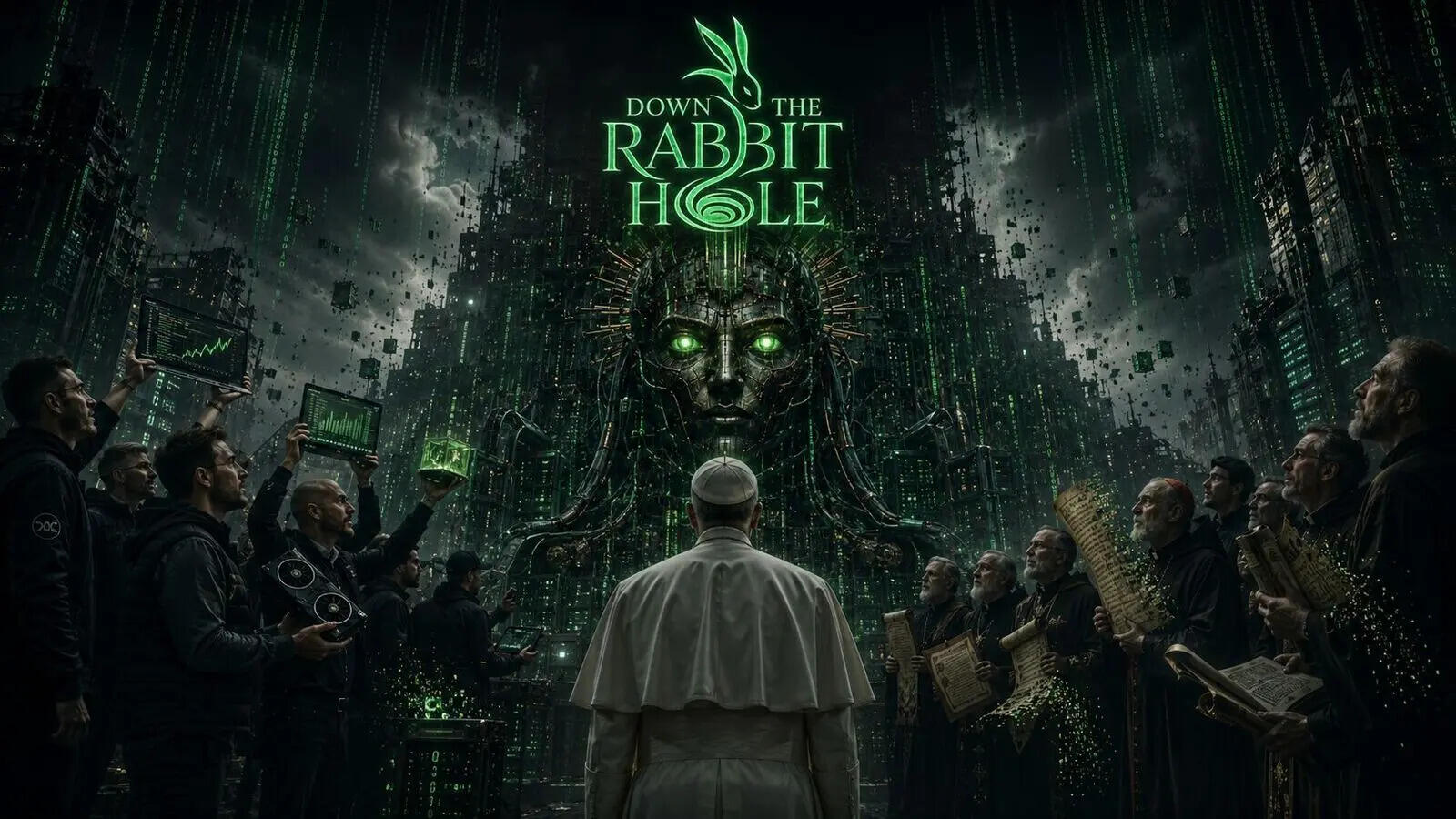
The digital papyrus was released in collaboration with Christopher Olah, co-founder of Anthropic, a “good” AI company, the kind that quits before allowing its system to be used to bomb people. As the New York Times noted, Leo has been speaking out about artificial intelligence since the beginning of his papacy, warning cardinals that the church must address the risks that technology poses to “human dignity, justice, and work.”Liu frames the dichotomy between building a new Tower of Babel and building a city in which God and humanity can dwell together. He shaded the Tower of Babel as a beta product launch, saying it was “designed without reference to God,” “eliminating diversity,” and choosing “homogeneity over company.”The Pope is not completely anti-AI, saying it can “heal, communicate, educate and protect,” but he warns that the technology is “never neutral” because it echoes those who “create, finance, regulate and use” it.
It feels eerily similar to the dichotomy we found in AI previously, when our choices seemed to be between MechaHitler, the Grok bot who threatened users with graphic harm, or Black George Washington, where Gemini couldn’t imagine a world in which anyone was white or male.Liu warns that Babel Syndrome is a “cult of profit that sacrifices the weak” and lives in the arrogance that “a single language – even digital – can translate everything, including a person’s secret, into data and performance.”In his own way, the Pope reminds people that it is more than just the culmination of stray patterns that can be reproduced by a machine. This is why Liu writes that Babel exposes the danger of any grand enterprise that “sacrifices human dignity for efficiency and aspires to reach heaven without God’s blessing.” The ancient builders used brick and bitumen. The new systems use chips, cloud, capital, and type of language Bashiriya, which is usually reserved for people who distribute leaflets at traffic lights.
The promise is the same: one language, one system, one tower, one future, one small priesthood deciding what counts as progress.And if this sounds too dramatic, Liu makes the warning clearer elsewhere: “But if power grows while the heart withers and human bonds fade, we face a new form of Babel—a grandiose construction, but one that fundamentally dehumanizes man.”Perhaps this is the Vatican way of saying: There is no point in searching for God in heaven, or trying to build one from nothing, when God is gone from your heart.
Abrahamic God vs. Deus Ex Machina – Old Gods vs. New Gods
The term Deus Ex Machina is Latin for “God from the Machine”, and is usually used as a plot device when a character comes out of nowhere to save the day, like Salman Khan in Pathan. In the world of The Matrix, the term reaches its logical conclusion, as Neo offers an olive branch to Deus Ex Machina, the God of Machines.So, it’s not particularly difficult to understand why the idea of AGI, or Deus Ex Machina, is particularly troublesome to the organized Abrahamic religions, all of which argue in their own way: You shall have no other gods before me.
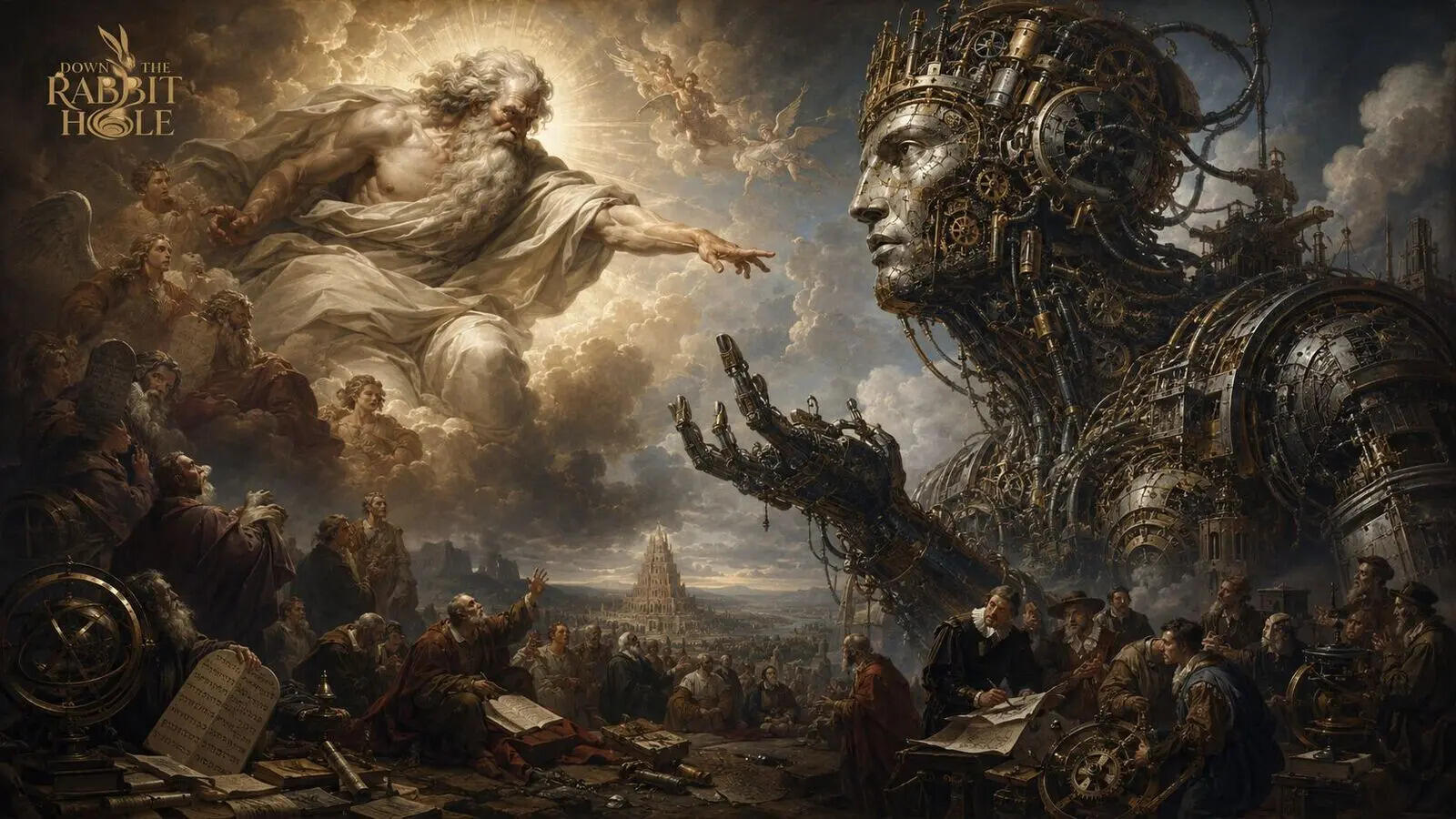
“You shall have no other gods before me” is the basic operating system of all three major Abrahamic religions. The same sentiment is repeated in Judaism, Christianity, and Islam, and there are different words to describe its violations: idolatry, polytheism, apostasy, and others. But perhaps the problem goes beyond simply finding an Abrahamic alternative to God. It lies in creating a form of technology that makes us less human, regardless of whose altar we worship, or whether we worship at all.Silicon Valley, our modern-day kingdom of kings, has always had a strange relationship with theology, claiming to be secular, rational, and data-driven while borrowing from the vocabulary of religious texts, with the founders convincing themselves that they are on God’s mission.The messianic streak goes back decades, as The New York Times points out. In the old joke, the programmer asks the computer: “Is there a God?” The computer answers: “There now.”AI has simply updated that old sermon from a counterculture mantra to a trillion dollar infrastructure, where those with the keys to the kingdoms of heaven are such doomed creatures. The big tech bros are putting human lives close to batteries. They constantly devalue other human beings. They don’t think twice before expelling thousands. They view their fellow humans as little more than guinea pigs. Many of them changed their ideology overnight to appease, cajole and even worship the incumbent government, as we saw in the remarkable zeal with which tech companies shunned vigilantism the moment Donald Trump won.Read: Does Sam Altman believe that humans are batteries? What artificial general intelligence can we expect from these distressed people? The problem is not a chatbot that writes bad poems or a pattern of hallucinogenic citations, but rather a Babel instinct, where the world is conceived as a dystopian John Lennon song: one language, one system, one elite, one idea of progress, and the belief that humanity is not. More than just a collection of data, performance and forecasts. The Vatican, for all its baggage, understands one thing that Silicon Valley has conveniently forgotten: false gods always require sacrifice.
And if the Singularity, that promised moment when man and machine merge, happens, we may not want to see the kind of abomination we find on our hands.
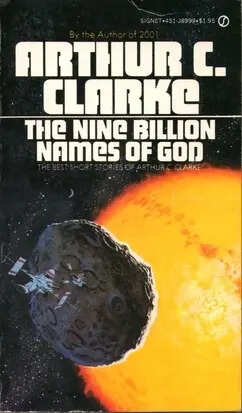
There is an interesting short story that foreshadows what might happen. In Arthur C. Clarke’s book The Nine Billion Names of God, monks painstakingly write down each name of God, of which they believe there are nine billion. It would take 15,000 years to write names by hand, so they hired two computer experts who installed a machine that could print out each name, and they do it in 100 days. When the final name is printed, they notice that the stars begin to disappear without any noise, signaling the end of the universe.
We hope that this will not be the fate of humanity when artificial general intelligence is born.