
View gallery


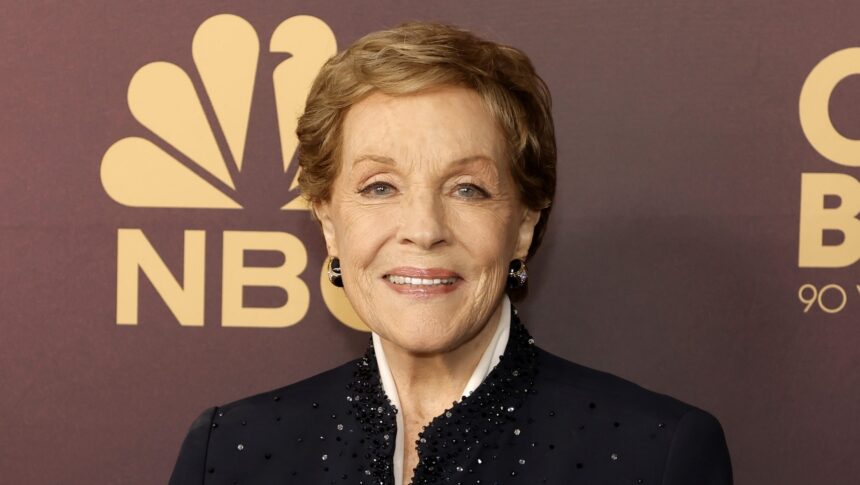
Mrs. Julie Andrews She sparked widespread concern about her health when she appeared in a video in May 2026 to help raise awareness of Parkinson’s disease. Since beloved The sound of music The star is now 90 years old, and fans are concerned that she may be suffering from an illness behind the scenes.
“Good evening everyone, I’m Julie Andrews, and I’m pleased to welcome you to the 7th World Parkinson’s Congress,” Jolie said in a clip on Instagram. “Your participation is invaluable as we strive to find a cure for this terrible disease.”
the Princess Diaries The actress added that she knows “how devastated she is.” [Parkinson’s] “It could be.”
“I hope we can all become a beacon of light to stop it in its tracks,” Jolie concluded, before adding: “Consider me a red thread. Thank you.”
Here’s what we know so far about Jolie’s overall health and how she’s doing now.
How old is Julie Andrews now?
As mentioned earlier, Jolie is 90 years old. She was born on October 1, 1935.
Does Julie Andrews suffer from Parkinson’s disease?
At this time, there is no indication that Jolie has Parkinson’s disease. Neither she nor anyone from her inner circle has confirmed these speculations.
How is Julie Andrews’ health today?
As far as everyone knows, Jolie is supposed to be in good health, even though the revered English actress and singer has rarely appeared in public over the past few years.
Jolie has been an outspoken health advocate throughout her career in the spotlight. As well as helping raise awareness about Parkinson’s – a disease that other actors suffer from Michael J Fox Living With – The award-winning icon also discussed osteoporosis, a condition that causes bone mineral density to deteriorate over time. Jolie’s late mother suffered from the disease, according to Global Action on Aging.
“I think it’s time to recognize osteoporosis as one of the most serious health concerns facing women of my generation,” Jolie once said. “Osteoporosis should not be accepted as a normal part of aging because it shouldn’t be. There have been great advances in this area – in detection, prevention and treatment – and it’s important for women to know the facts, talk to their doctors and maintain their independence so they can continue to do the things they enjoy in life.”