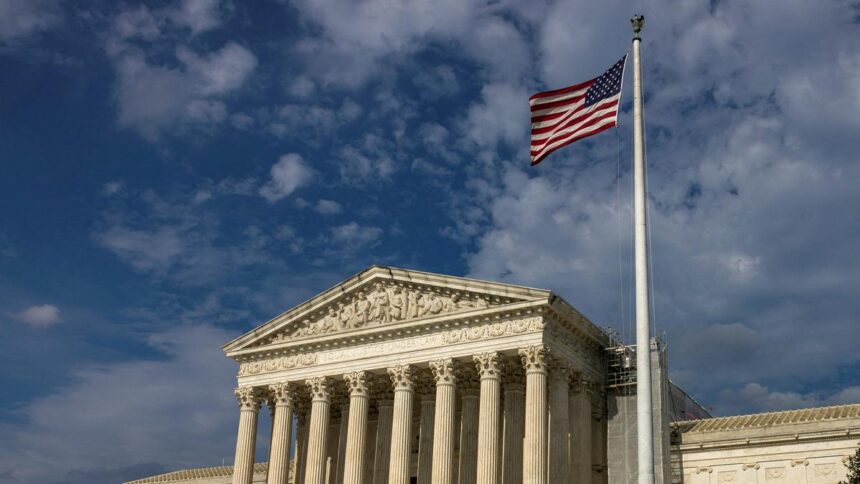
The Supreme Court of the United States (SCOTUS), in a 6:3 ruling, declared that President Donald Trump had exceeded his authority to unilaterally impose unlimited tariffs and change them at will using the International Emergency Economic Powers Act of 1977 (IEEPA) in peacetime.
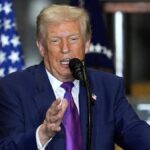
The Supreme Court is “very unpatriotic and disloyal to the Constitution,” Mr. Trump criticized, suggesting the ruling was influenced by “foreign interests.”
Also Read: US Supreme Court Rejects Trump’s Global Tariffs Headlines
But the Supreme Court’s ruling recognizes Congress’s exclusive power under Article I, Section 8 of the Constitution, “to lay and collect taxes, duties, imposts, and excises.” It read that the taxing power “clearly” includes the power to impose duties. The Court’s majority opinion held that the framers of the Constitution did not vest part of the taxing power in the executive branch.
The court reasoned that any delegation of authority to the executive must be expressly stated in the statute, in this case, the IEEPA. The bench rejected the government’s interpretation that the IEEPA empowered the President to impose tariffs of unlimited amount and duration on any product from any country. Instead, the Court pointed to the central questions doctrine that Congress itself “cannot delegate the most consequential legislative powers to the executive through vague language. It must be a specific delegation subject to strict limitations.”

Mr. The Supreme Court found that Trump acted beyond the legal scope of his office. The bench noted that neither historical precedent nor the breadth of the President’s office supported the use of IEEPA to impose “any” tariffs, only tariffs of such size and scope. IEEPA’s half-century of existence has never seen an executive use of national emergency legislation on such a unique and broad scale. The three justices on the bench, Justices Kagan, Sotomayor and Jackson, observed that the Court did not even need to use the major questions doctrine to support the president’s argument against the tariffs. Ordinary means of statutory interpretation are sufficient to arrive at the same result.

In the Indian context, the Supreme Court has consistently held that legislative functions essential to the executive cannot be transferred to the executive. An executor should act within the scope of the statute. The principle that the executive cannot add to existing statutory provisions through executive orders is anchored in the occupied field doctrine.
The basic structure doctrine, which has shades of the central question doctrine in United States President Trump v. Learning Resources by the US Supreme Court on February 20, calls for the separation of powers between the three branches of government. A number of Supreme Court rulings have held that the government cannot take broad economic policy decisions without a statutory basis and, as the US Supreme Court has said, only Congress or Parliament in the Indian case has “access to the people’s pockets”. However, unlike its US counterpart, the Indian Supreme Court generally restrains itself from ruling on economic policy; It has been repeatedly held that only executive decisions affecting fundamental rights which are manifestly arbitrary or taken in bad faith are subject to judicial review.
In May 2025, the Supreme Court in R. Ranjit Singh’s judgment held that executive instructions “can only supersede the law or the areas covered by the law which it does not extend. They cannot contradict the statutory provisions or diminish their effect”.
The Supreme Court of India held that the Government cannot amend or supersede statutory provisions by administrative instructions. But if the rules are silent on any particular point, it can fill in the gaps and supersede the rules and issue instructions “not inconsistent with the rules already made”.
However, when it comes to judicial review of government policies in the financial sector, the Supreme Court has exercised restraint even when the executive law lacks statutory backing, as in the demonetisation and Aadhaar cases.
Although the president argued that the economic policy decision to impose tariffs was intended to counter two foreign threats in the form of a public health crisis caused by the flow of illegal drugs from Canada, Mexico, and China, the US Supreme Court did not hold back from reviewing and rejecting President Trump’s authority to impose tariffs. Undermining critical supply chains.
In November 2016, the Government of India issued a gazette notification imposing a demonetisation policy in the country, banning counterfeit Indian currency notes and null It is said to be a necessary measure to tackle liquor production. The Constitution Bench of the Supreme Court upheld this policy. The Reserve Bank of India said the Act allowed the executive power to demonetize currency values without the need for a separate Act of Parliament.

In its judgment in the demonetisation case, the Constitution Bench, referring to judicial precedents, said, “We do not think it is the duty of this Court or any Court to sit in judgment on matters of economic policy, which must be left to the Government of the day to decide”. Reiterating its earlier decisions like the RK Garg and 2022 BALCO Employees Union cases, the court did not want to supersede “expert feeling” by its own views on economic policy matters.
In the 2009 Aadhaar project, the government went a step further and issued executive orders authorizing private parties to collect biometric data from people.
The government argued in the Supreme Court that ‘privacy’ is an elitist concept and Aadhaar enrollment is voluntary. This is despite the clear situation that Aadhaar has a “mandatory element” as public welfare schemes and banking, among other essential activities, are linked to the 12-digit unique identity card.
In a judgment after the government enacted the Aadhaar Act in 2016, the Supreme Court referred to the ‘savings clause’ in Section 59 of the Act to validate mass collection of personal data between 2009 and seven years after the Act came into effect.