Inbound calls are increasing Iran For an independent inquiry into the death toll during the recent protests after the government said it would monitor the publication of the names of those killed.
The highly unusual government move, announced on Thursday, was designed to counter claims that crimes against humanity had been committed and that 30,000 Iranians had been killed. Iran’s official death toll, released by the Martyrs Foundation, is 3,117, including members of the security services.
Iranian reformists say the planned government identification process is not transparent enough and is unlikely to end the dispute over how many have died.
Mohsen Borhani, a law professor at Tehran University and a critic of the Iranian government who worked in Evin prison, said the government’s proposal to publicly identify the dead was a positive development because in previous large protests, Iranians “faced a complete lack of information about the dead and wounded”.
Borhani said the best way to achieve transparency is to create a website and announce the names of the deceased “so that information cannot be one-sided”.
“Citizens can publicly and publicly upload names and information about the deceased without being identified. The site must then commit to verifying and providing the necessary information about each name announced.”
One difficulty is that families are willing to recognize the mortal danger of retaliation, especially if they assert that a family member was killed by the security services.
In a sign that many Iranians believe the death toll is far higher than the official claim, the Tehran teachers’ union issued a statement demanding the release of all prisoners, saying, “In less than a week one of the bloodiest chapters of repression in contemporary Iranian history has unfolded. Tens of thousands of children, women and women have drowned in blood.”
Ahmad Zaidabadi, a reformist analyst, said distrust between the state and society had grown “so deep and wide” that many did not accept official data.
The best solution, he said, is to allow the United Nations to send a fact-finding team to Iran that cannot be impeached.
Writing on his Telegram channel, Zaidabadi asked: “Why not hand over this task to a legitimate international organization where opposition forces and countries cannot easily suspect it?”
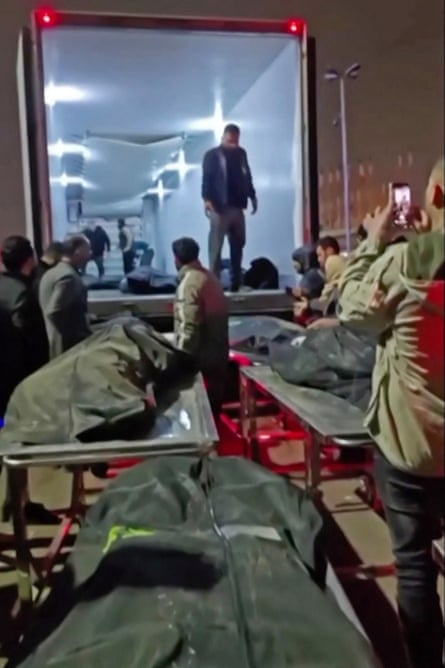
The Reform Front, a coalition of reformist groups that worked to secure the election of Iranian President Massoud Pezheshkian, also called for an independent committee to “investigate this unprecedented disaster and provide a transparent and unbiased report to the Iranian nation.”
Reformist lawyer Ali Mojtahedzadeh said the government should address the root causes of distrust by building a strong civil society.
In his first intervention, former President Hassan Rouhani said protests led by a generation born and raised in the Islamic Republic showed the need for major change. He called for an end to the formation of political parties and the filtering of election candidates.
Separately, an informal committee has been set up to identify all those still in detention as security services search for those they describe as behind the protests across the country. The number of those detained is not official, but is believed to be in the tens of thousands.
The number of children under 18 has not been released, but teaching union websites are publishing photographs of every child confirmed killed. Government officials were also photographed visiting prisoners.
Prosecutors told Iranian media that most of those arrested were born between 1980 and 1985 and were the main breadwinners of the family. Basic punishments are imposed from two to five years. Many are from working-class families and cannot afford the required bail money.