It has been nearly two and a half centuries since soldiers gathered on a grassy rise overlooking Fort Ticonderoga and listened as the newly declared nation presented itself to the world.
The hill remains serene today, bordered by trees and shaped by layers of military history, yet the land beneath it continues to preserve parts of those turbulent years. Archaeologists working at a historic New York fort have recovered hundreds of objects that appear to be directly linked to the men, women and families who lived through the uncertain early stages of the American Revolution. Together, the discoveries offer something rare: material traces of daily life from a moment when independence was still an idea being tested rather than a certainty.
Liberty Hill’s long military legacy has been revealed by new discoveries
As WAMC reported, the latest discoveries came from Liberty Hill, a prominent elevation overlooking the fort and its surrounding waterways. Long before it received its modern name, the site had already earned a place in military history.During the mid-18th century, the region formed part of a disputed frontier as French and British forces fought for control of the strategic routes linking Canada and the northern colonies.
A major battle took place there in 1758, leaving behind evidence of the conflict that will remain buried for generations.By the time the American Revolution began, the ground itself had taken on a different role. Instead of serving as a battlefield, it became home to a large military camp. Soldiers occupied the hill alongside civilians, creating a temporary community overlooking one of the most important military sites in North America.
Hundreds of things come out of the soil
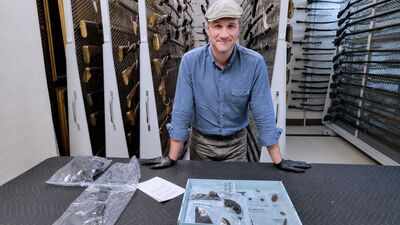
Excavations conducted at Liberty Hill have produced more than 500 artifacts, many of which appear to be linked to the Continental Army’s occupation of the site in 1776. Among the items recovered are fragments of firearms, pieces of exploded mortars, parts of military equipment and personal belongings that once traveled with soldiers. A cast iron cooking pot, part of a portable writing set, and items of edged weapons were also uncovered.The excavations also yielded many coat buttons, the kind of everyday objects that rarely attract attention when new but become valuable historical evidence centuries later.
How Liberty Hill became the site of a pivotal moment in the Revolutionary War
Liberty Hill holds a special place in Revolutionary War history for reasons that go beyond military logistics. In the summer of 1776, many soldiers stationed at Fort Ticonderoga already knew that dramatic political developments were unfolding. However, news traveled slowly, and information often arrived in fragments. While troops heard reports of the Declaration of Independence, many did not yet know the exact wording of the document approved in Philadelphia.