

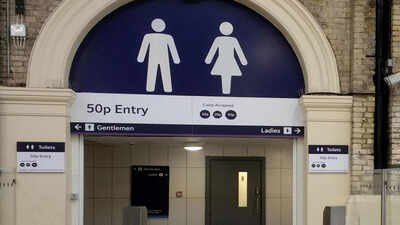
Britain officially adopts new transgender guidelines on single-sex spaces under Equality Act rules / Image: File
From public toilets and hospital wards to women-only gyms, schools and shelters, Britain is preparing for one of the biggest changes to equality guidelines in years after the government formally unveiled new rules for transgender access.The updated guidance sets out when trans people can legally be excluded from certain single-sex spaces under UK law, a move that is already sparking intense national debate about rights to privacy, safety, inclusion and equality.The new law follows a landmark ruling by the UK Supreme Court in 2025, which stated that under the Equality Act 2010, the legal definition of “sex” refers to biological sex rather than gender identity.
The ruling effectively means that a transgender woman is legally considered male under equality law, while a transgender man is legally considered female for the purposes of single-sex protections.The guidance was prepared by the Equality and Human Rights Commission (EHRC), an independent UK equality watchdog, and was formally presented to Parliament by the UK government’s Equality Office under the supervision of Women and Equalities Minister Bridget Phillipson.
Parliament now has a 40-day scrutiny period before the law becomes fully enforceable across public bodies, workplaces and service providers across England, Scotland and Wales.The updated rules replace previous guidance dating back to 2011, and are expected to impact policies across the NHS, schools, universities, gyms, sporting organisations, employers and local councils nationwide.
Rules for single-sex venues in the UK
The new law states that organizations can lawfully exclude transgender individuals from certain single-sex services if doing so is considered a “proportionate means” of protecting privacy, dignity, safety or justice.The guidance applies to venues and services including:
- Public toilets
- Changing rooms
- Domestic violence shelters
- Hospital wards
- Sports competitions
- Schools and colleges
- Gyms and entertainment centers
Within the updated framework:
- Trans women may be excluded from women-only spaces.
- Transgender men may be excluded from male-only spaces.
- Organizations are encouraged to consider gender-neutral or third space alternatives where possible.
The European Human Rights Committee also stressed that transgender people are still protected under equality law through the protected characteristic of gender reassignment.However, the guidance says organizations must balance these protections with the rights of women and other service users. The Code frequently emphasizes “case-by-case” assessments rather than blanket bans.One important point is that the guidance warns organizations against creating “double exclusion” situations where transgender people are unable to access either male or female facilities.
Workplaces can see big changes
Some direct impacts are expected in healthcare, workplaces and sports.The draft guidance states that hospitals can legally place patients on wards on the basis of biological sex rather than gender identity. NHS policies may now require review following publication of the updated code.In sports, the law states that participation in sex-segregated competitions must generally be based on biological sex.For workplaces, employers may need to reconsider toilet and changing room arrangements.
Legal experts have noted that many organizations are still trying to understand how to apply the ruling in practice without creating risks of discrimination.The guidance also acknowledges practical complexities. For example, she says it would typically be unrealistic to routinely require people to prove biological sex before using regular public facilities such as toilets.The law also notes that the exclusion of transgender men from certain health care services such as gynecology or obstetrics could itself become disproportionate or discriminatory.
Controversy broke out Trans rights law
The publication of the guidance sparked intense debate across politics, legal circles, LGBTQ+ organizations and women’s rights groups.Supporters say the new rules finally provide legal clarity after years of confusion over the Equality Act. Many activists campaigning for women-only spaces welcomed the Code as a necessary step after the Supreme Court’s decision.However, critics warn that the guidelines may marginalize transgender people and create fear around access to public facilities.
Some LGBTQ+ activists and advocacy groups say the practical effect could lead to exclusion and humiliation of transgender individuals.Legal challenges have already surrounded previous versions of the Commission on Human Rights and Freedoms’ interim guidance. While a Supreme Court challenge failed earlier this year, the debate over how to interpret the law is still far from settled.International human rights experts also urged Britain to ensure that women’s rights and transgender rights are equally protected in the implementation of future policies.