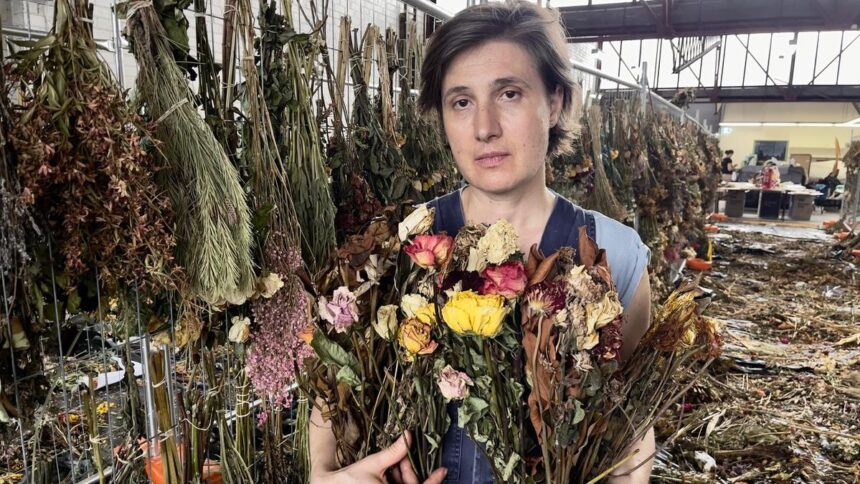
In a warehouse on the outskirts of Sydney, grief is at work.
As the first truckloads arrived, the air was thick with the sweet, heady scent of flowers wilting in the late summer heat. Tributes are laid on Bondi Beach after Australia’s deadliest mass shooting in nearly three decades on December 14, 2025. They decompose within days.
Now the warehouse feels different. The windows are cracked open. Industrial fans hum. Long tables spread from wall to wall, covered in careful order rather than chaos. The petals are flattened between sheets of tissue paper. Leaves are arranged by shade. Seeds rest in labeled trays. Grief is reorganized as a discipline.
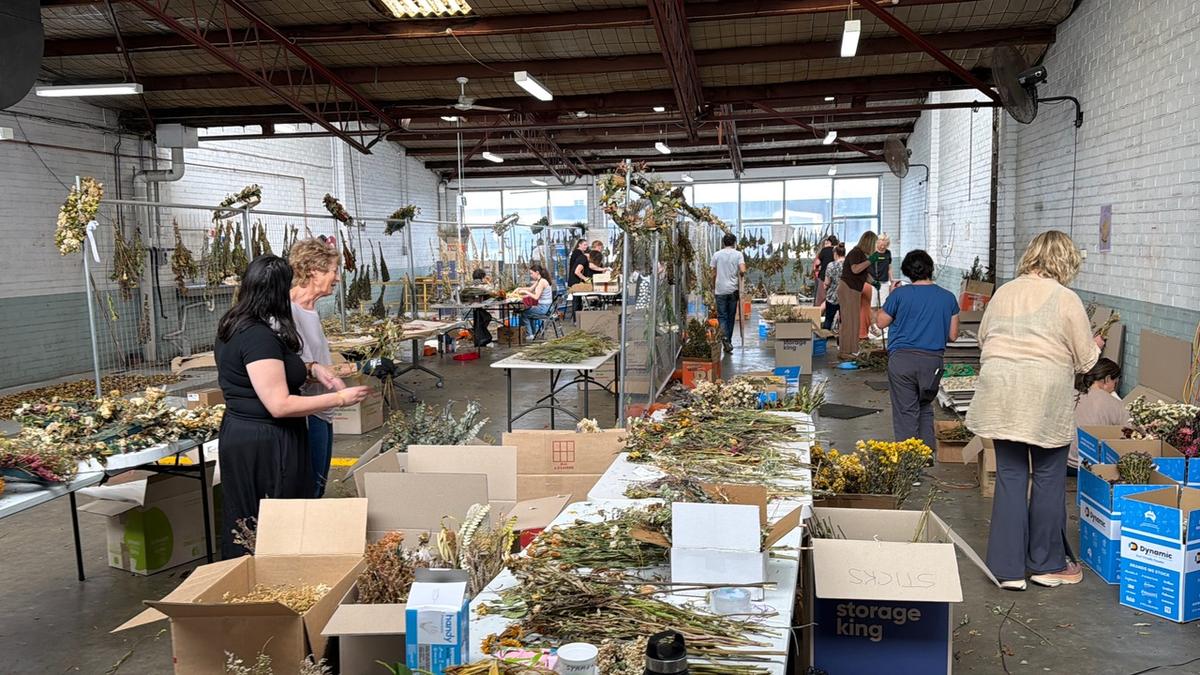
Volunteers at work – one petal, one seed, one flower at a time. | Photo credit: Courtesy of Nina Sanadze
It is here at the Goldstone Gallery that Melbourne-based Jewish artist and artistic director Nina Sanadze, 49, is building a living memorial to the victims of the Bondi Beach massacre – a petal, a seed, a flower. Known for working with materials salvaged from sites of trauma, Sanadze said he has long collected newspaper clippings documenting synagogue vandalism, arson attacks and threats. She imagines embedding those clippings next to preserved bondi flowers, creating parchment-like walls where history and grief collapse into one another. “It’s not a one-off,” she said. “It’s part of something bigger.”
The Bondi memorial will be unveiled at the Sydney Jewish Museum in 2027 when it opens to the public after a major redevelopment.
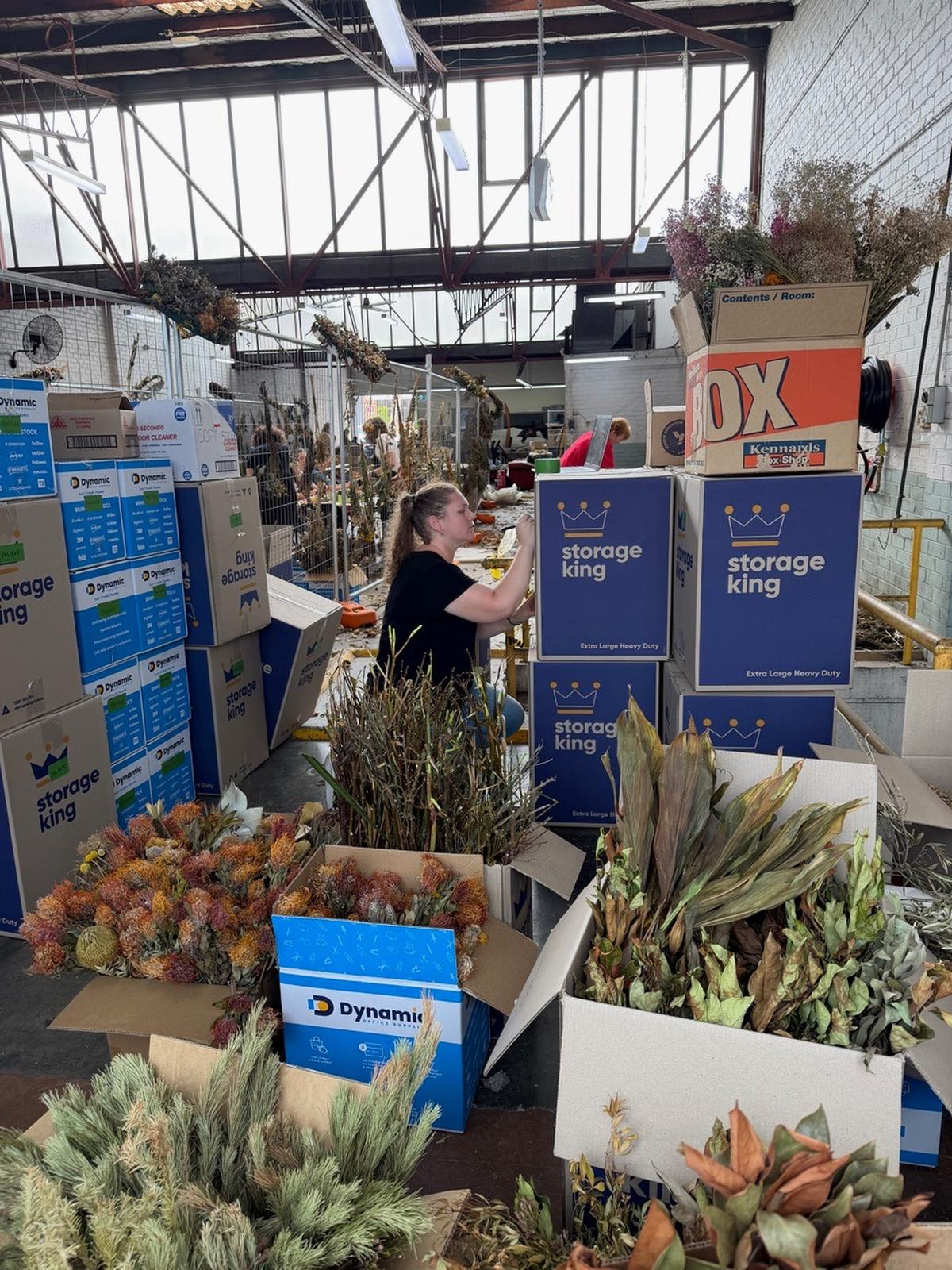
More than three tonnes of flowers were left on Bondi Beach after the shooting on December 14, 2025. | Photo credit: Courtesy of Nina Sanadze
Refusing to erase
Impromptu monuments are fragile by nature. They bloom quickly — flowers, candles, handwritten notes — and then, just as quickly, they are torn down. Tributes are disposed of at discretion. Praja Karma ends.
Sanadje could not bear to see that happen in Bondi. More than three tons of bouquets — sunflowers, roses, orchids, wattles, bougainvillea — were left along the shore. Each arrangement is a private gesture of mourning: from parents, friends, strangers, school children. Most include handwritten messages, photos, ribbons, small tokens of love.
Where officials saw a logistical problem, Sanadje saw art. Working with curator Shannon Biederman and a team at the Sydney Jewish Museum, she proposed an alternative: collect everything. Save it. Change it. Allow the monument to thrive rather than disappear.
“Nothing is thrown away,” she insists. “Not even the seeds.” Even weeks after the site was officially closed, fresh blooms continued to appear in Bondi. Sanadje returned again and again to retrieve them.

Seeds were saved, pollen collected
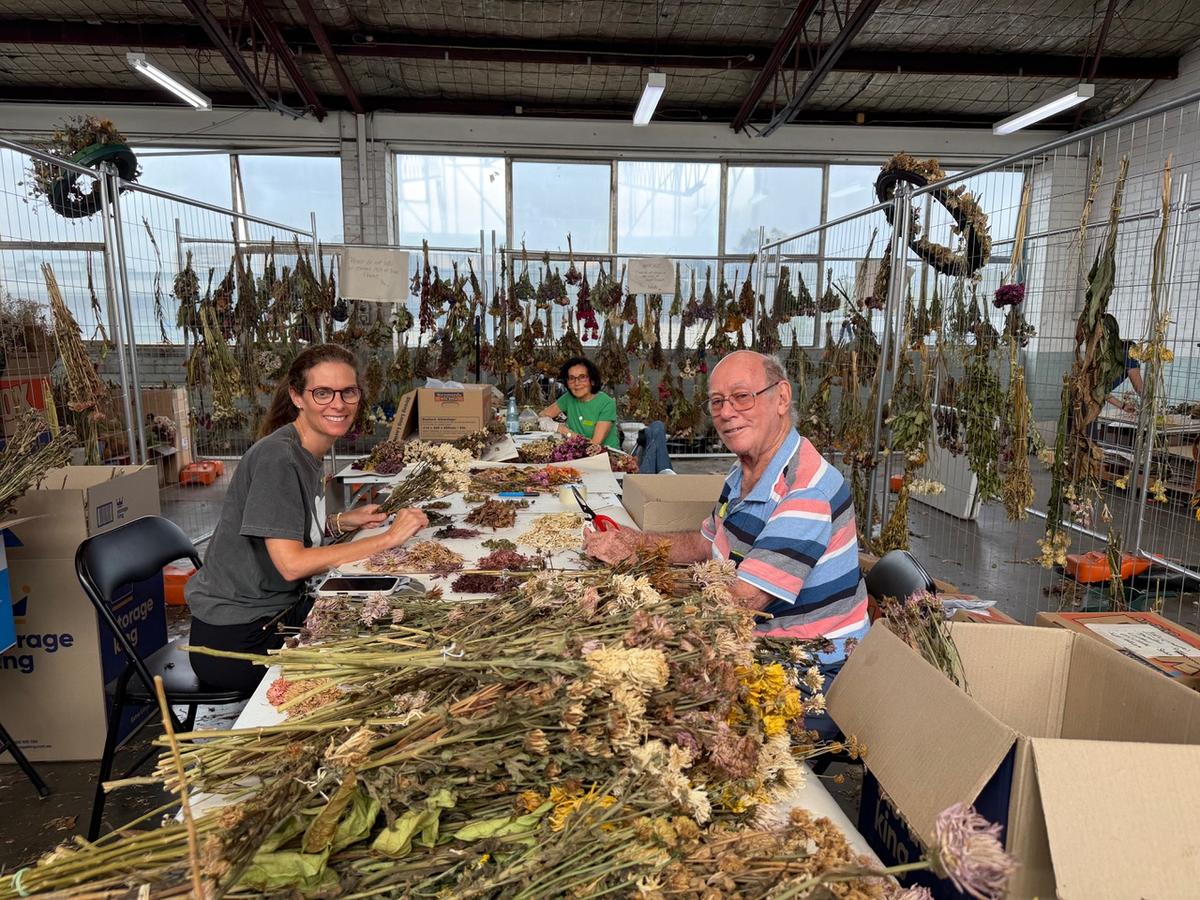
100 volunteers are engaged in conservation work for the Bondi Beach floral memorial. | Photo credit: Courtesy of Nina Sanadze
The operation is widespread. Trucks carried the flowers from the beach to the warehouse in large black plastic bags — bags that, Sanadze admits, “looked disturbingly like body bags.” Inside the warehouse, 100 volunteers are busy with maintenance work. Some artists. Others are retirees, students and professionals taking time off from work. Many of Sydney’s Jewish community are still reeling from the attack, which took place during celebrations for the Jewish holiday of Hanukkah, attended by about 1,000 people. Two gunmen killed 15 people including three women and a child. A trial begins against the lone survivor of the assailant.
The process of laying flowers and offering tributes is very intense. The petals are gently removed, pressed and ironed flat between tissue paper to prevent decomposition. The pollen is extracted and processed as pigment for future paintings. Leaves that fall to the ground are collected and boxed with the same dignity as intact blooms. The seeds are dried, cataloged and stored for replanting.
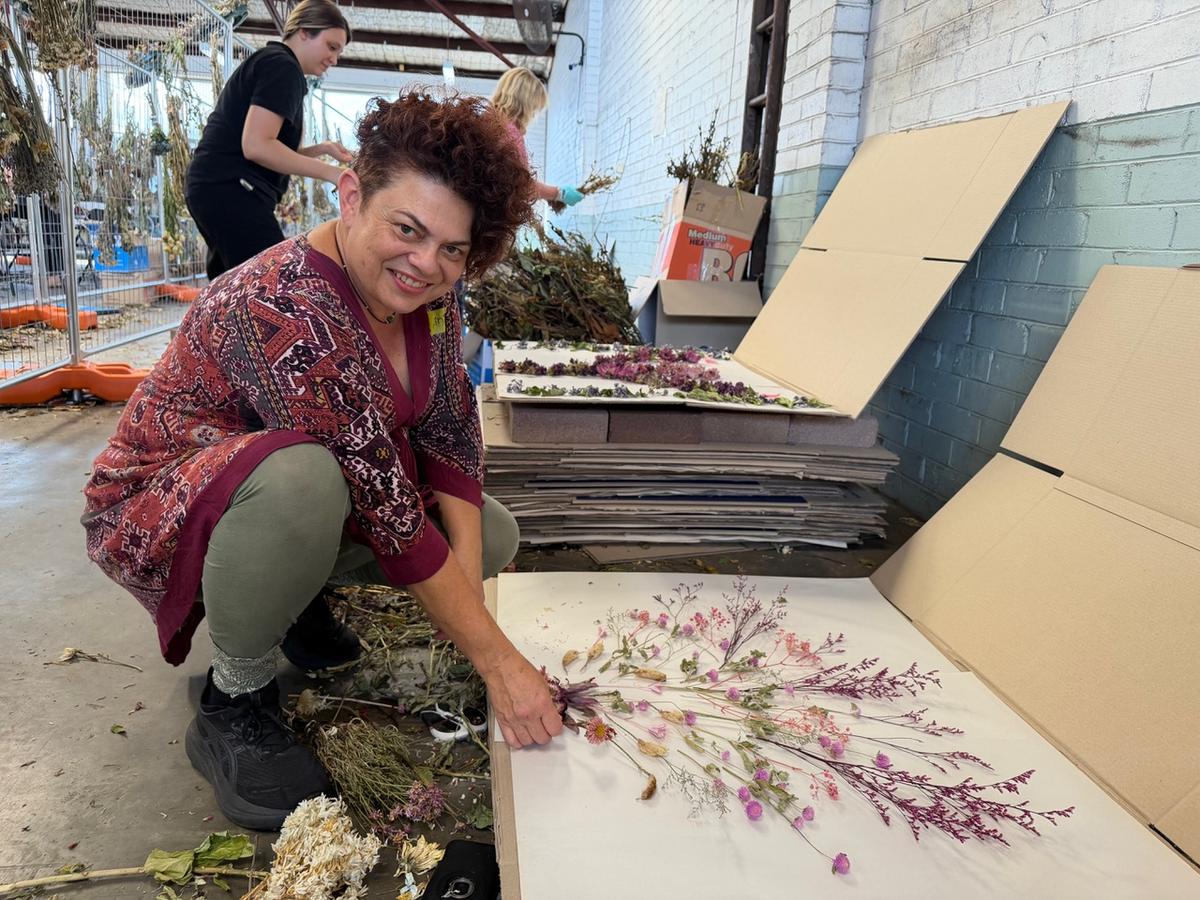
The process of paying tributes by placing flowers is very mum It will be dark. | Photo credit: Courtesy of Nina Sanadze
Professional florists are brought in to identify the species. Everything is labeled and archived: color, type, condition, origin, if known. There are trays of gumnuts, zigzag wattles and Singapore orchids on the floor. Some flowers retain their luster when dried; Others darken to a brittle brown, their forms collapsing into fragile silhouettes.
Sanadje refuses to curate only the beautiful. “It’s all part of the story,” she said. “Also changing.”

Volunteers at Vigil
“We are not talking about an attack,” Sanadze said. “We’re talking about flowers. Sometimes people cry. Sometimes they just need a hug.” For many volunteers, the repetitive labor is grinding. Sorting grief by color, shape and species is a form of meditation.
“I wanted to do something useful,” said Alana Gomez, one of the volunteers. “I can’t think of anything more beautiful than placing flowers and turning them into things that help remember.”
Sanadje speaks openly of the visceral anger she felt in the immediate aftermath of the massacre. Like many, she was overwhelmed — sad, resentful, torn. Working with flowers changed that. “I can’t bear to be separated,” she said. “This work moves me. It’s more than just an art project.”
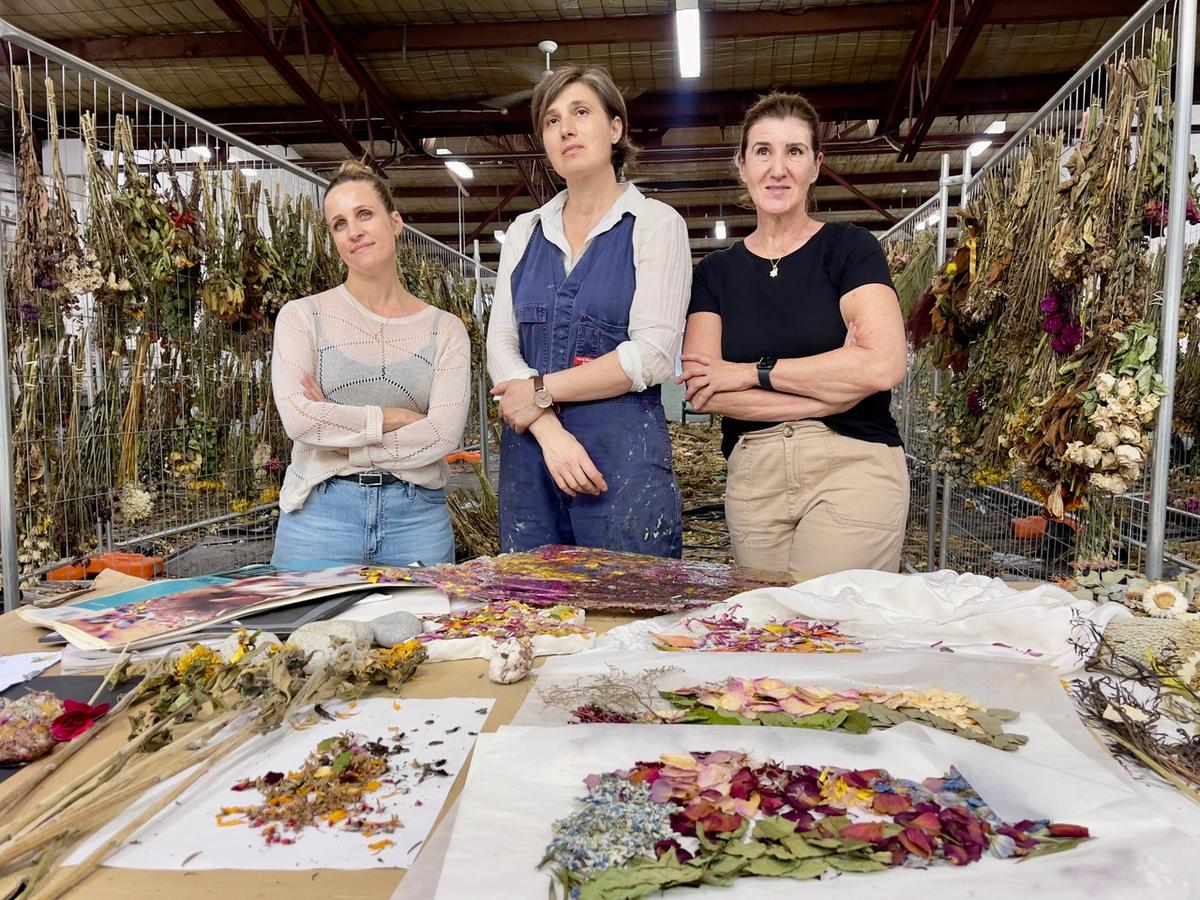
Nina Sanadze (centre) with volunteers working on the Bondi Beach Memorial Project. | Photo credit: Courtesy of Nina Sanadze
Imagining 2027
The care phase has come to an end. Soon, thousands upon thousands of pressed petals, dried leaves and cataloged seeds will be boxed up until the Sydney Jewish Museum reopens next year.
What the final monument will look like remains a mystery. “I imagine multiple rooms where the work happens slowly, where visitors pass through layers of material and meaning,” says Sanadze. Paintings from pigments extracted from petals. Installations incorporating handwritten messages left by mourners. An indoor garden grown from living and breathing seeds within the walls of the museum. Decomposed plant material is also not wasted. It will be composted and reused to create tiles, flooring and seating for the museum – literally embedding sadness into the architecture.
When the museum doors reopen, visitors encounter not only a monument but a constellation – rooms that ask them to move slowly, to look closely, to notice the shape of a petal, the curve of a dried leaf, the fragile resilience of a seed.
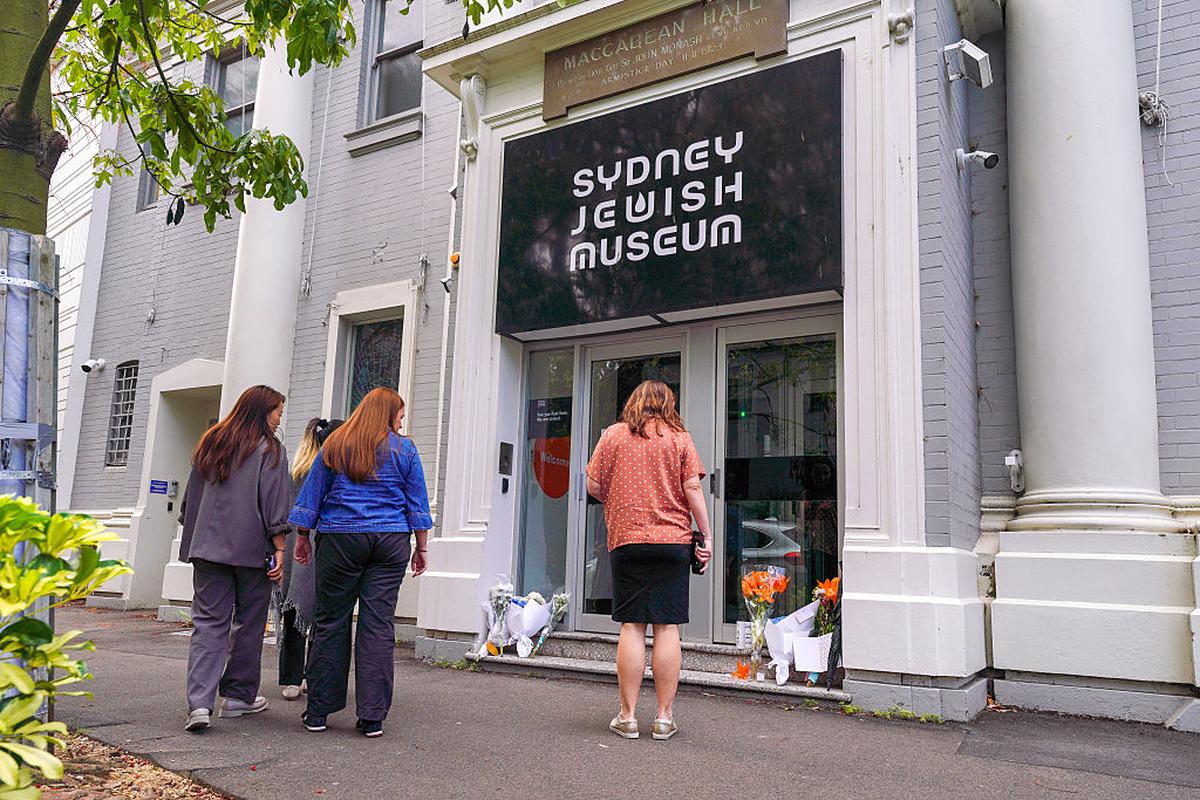
December 2025, a day after the Bondi Beach massacre, people gather at Sydney’s Jewish Museum to pay their respects. Photo credit: Getty Images
A garden as evidence
Sanadje believes that flowers communicate in a way that politics cannot. “Flowers are beyond words,” she said. “They remind us — quietly, persistently — that this is not right.” In the warehouse, species are still identified and color-coded. Trays of seeds patiently wait for regrowth. “There is nothing like a garden to give us hope for the future,” Sanadze said.
Visitors will see that every flower left at Bondi is important. Every gesture of mourning was respected. That which was obliterated was instead transformed. In this warehouse, care, not violence, has the last word.
The author is a senior journalist and editor, exploring the intersections of art, culture, gastronomy and travel in South Asia and beyond.