

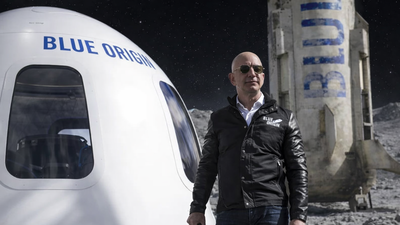
The recent failure of the Blue Origin mission has raised new questions about the timeline for NASA’s Artemis program, even though the space agency was not directly involved in the launch.
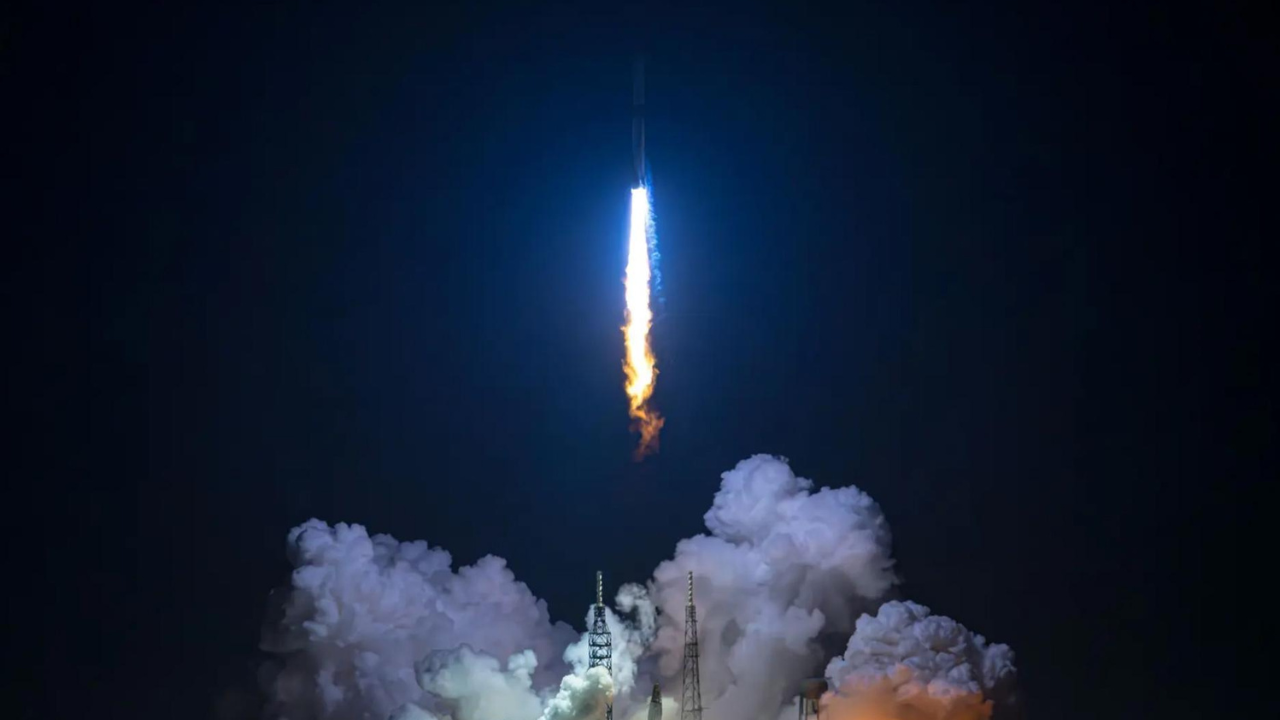
The company’s New Glenn Heavy rocket launched successfully but failed to place a commercial satellite into the correct orbit, ultimately resulting in the loss of the payload.
While this does not immediately derail NASA’s lunar landing ambitions, it introduces new uncertainties into an already complex and tightly scheduled program aimed at returning humans to the lunar surface later this decade.
What went wrong during Blue Origin’s mission to New Glenn?
The launch of New Glenn initially seemed flawless. The rocket lifted off from Cape Canaveral and its booster stage carried out a successful landing on a barge in the Atlantic Ocean.
However, the mission’s primary goal, to deploy a communications satellite produced by AST SpaceMobile, was not achieved.Post-launch data revealed that the satellite had been inserted into too low an orbit to continue operations. The company later confirmed that the satellite had indeed been lost. Such failures usually indicate problems during the upper stage combustion, where accurate speed and altitude are critical.
Although investigations are ongoing under the supervision of the Federal Aviation Administration, the rocket has been grounded pending further review.
Why is this important to NASA’s Artemis program?
Although NASA was not involved in this specific mission, the implications extend to its Artemis program. Blue Origin has been contracted as one of the providers to develop a human landing system capable of transporting astronauts from lunar orbit to the lunar surface.The company’s lander is expected to rely in part on New Glenn for future missions. Therefore, any delay in certifying the rocket or returning it to flight could slow down the development and testing of this lander. The Artemis missions are highly interdependent, with spacecraft, launch systems and landers needing to work in coordination. A delay in one item can affect the entire schedule.
The Artemis timeline is where Blue Origin fits in
NASA’s road map currently places the first manned lunar landing in the Artemis era in the latter part of the decade. The predecessor mission, Artemis III, is expected to rely primarily on systems developed by SpaceX, while Blue Origin’s lander is positioned to support later missions and long-term lunar operations.This means that the recent failure does not directly threaten the immediate landing attempt. However, it impacts the broader timeline and NASA’s long-term goal of establishing a sustainable human presence on the Moon. The agency’s strategy relies on multiple trading partners to reduce risk and improve resilience, an approach that becomes more fragile when one partner experiences setbacks.
Risk of loss of redundancy
One of the main reasons NASA chose multiple providers, including SpaceX and Blue Origin, was to avoid dependence on one company.
This redundancy is critical in complex programs where delays are common.If Blue Origin’s development timeline is delayed, NASA may become more dependent on a single provider. This increases the overall risks of the program. If delays occur elsewhere, whether in launch systems, spacecraft readiness, or spacesuit development, the absence of a fully prepared second provider may make it more difficult to maintain the planned schedule.
Investigation and the way forward
Failures of this type usually trigger extensive investigations, including root cause analysis, hardware redesign, and additional testing. The FAA’s involvement means the New Glenn plane will remain grounded until safety and reliability concerns are addressed.For Blue Origin, this represents a technical and reputational challenge. For NASA, this highlights the difficulty of implementing one of the most ambitious space exploration programs since Apollo.
While the Artemis Moon landing is still on track in principle, maintaining that timeline will depend on how quickly Blue Origin resolves the issues and resumes progress.As NASA continues its quest to return to the Moon, Artemis’ success will depend on the collective reliability of the ecosystem it supports, not any single mission. Blue Origin’s next steps will therefore be closely watched by industry and within the program as it seeks to define the future of human spaceflight.