An antiques auction selling chains related to the enslavement of African people in Zanzibar has been accused of “profiting from slavery”.
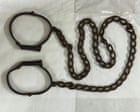
Neck irons from the Omani-Arab dominated trade among enslaved peoples in East Africa, which ended after African resistance and British pressure in the late 19th century, will go on sale in Scotland this weekend.
Auctioneer Marcus Salter, of Cheeky Auctions in Tain, Ross, said he wanted to see history confront the sale of a “delicate piece of art” and didn’t want to offend.
But Labor MP Bel Ribeiro-Addie, who chairs the All-Party Parliamentary Group for African Reparations, said trading in such goods meant people were “profiting from the slave trade”.
Nigel Murray, a retired solicitor in the Scottish Highlands, contacted the Guardian after seeing the chains advertised on Facebook and said “he’s not going to buy anything else” from the cheeky auction.
A set of shackles dating from 1780, valued at around £1,000, are among the items listed at the auction, which have been called “challenging history”.
Salter says he sells the chains for a dealer his father has owned for 50 years: “Anything that happens, the money is going to come from somewhere.”
He noted that if the object is donated to a museum, it can be “stored and never seen again” and that mahogany, associated with slavery, can be sold and used without controversy.
“I think it’s important to upset and offend, but also shock people into learning the whole truth,” Salter said. “There are certain things we’re not allowed to sell at auction. We can do that with the platform we sell them on. They consider the slave chains a historical artifact, so we can.
“People we’ve never met say they’re ostracizing us. There are people we’ve educated and we’ve educated them. There are others who disagree and never want to come.”
In 2024, antiques roadshow expert Ronnie Archer-Morgan refused to value an ivory bangle associated with slavery.
Ribeiro-Addy said of the chains: “I understand putting them in a museum, but the weird buying and selling of them is what people do when it comes to human remains – treating them as collector’s items, something to be cultivated rather than objects to be looked at in horror.
“Why would you sell it for profit? Unless you’re trying to re-enact the history of slavery by profiting from something that was used to cause pain and oppression. We’ve got people trying to make valid reasons for continuing to profit from the slave trade – that seems to me.”
Murray said the auction was “despicable”: “An auction is a way of selling enslaved people, and here you are auctioning off these chains.
“[Descendants of plantation owners] It makes me very angry to see people who make millions of pounds out of slavery, who make so much money out of it.”
Caecelia Dance, an associate at the London law firm Wedlake Bell, advises on the restoration of Nazi-looted art. Dance said she could not comment on the auction, but said there was “no specific law against” trading items linked to slavery.
She added that “public interest stewardship” — donation, sale or long-term loan to a museum with ties to affected communities — is the “ideal management way” of an object associated with slavery.
Dance said: “During the Nazi period it got to a point in the art trade where if there were signs that something might have been looted, nobody wanted to buy it.
“It’s probably only a matter of time before that moral framework extends to goods associated with slavery, because even if the sale is perfectly legal, you run the risk of harm. Public opinion will certainly shift in favor of restoration.”