

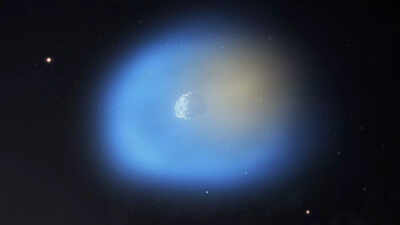
Astronomers have discovered something unusual in a comet passing through our solar system. 3I/ATLAS, the third confirmed interstellar visitor ever seen, appears to be filled with methanol, an alcohol you might find in a lab, not your drink.
Using the Atacama Large Millimeter/submillimeter Array (ALMA) in Chile, researchers reportedly measured methanol at levels much higher than those of hydrogen cyanide, a molecule typically found in comets.3I/ATLAS appears to be nothing like the comets we are used to. Its icy core and surrounding coma reveal chemical conditions that may indicate how planets formed in other solar systems. Experts say this could be a rare peek into the chemistry of alien planets, something scientists have been waiting decades to study.
The comet, which brightened as it approached the Sun, gave off clear signals that ALMA could detect.
Comet 3I/ATLAS: ALMA detected higher than expected levels of methanol
The numbers are amazing. In two separate observations, the ratio of methanol to HCN was reported to be approximately 70 and 120. This is huge compared to most comets from our system, where methanol is usually much less dominant. Nathan Roth, lead researcher and professor at American University, described it as being like taking a fingerprint from another solar system.
This footprint appears to be rich. Really rich.The ALMA Morita array, sometimes called the Atacama Compact Array (ACA), tracked the comet over several days in late 2025. As sunlight heated its icy surface, 3I/ATLAS released gas and dust. This created a glowing halo or coma around its core. By analyzing this fog, scientists were able to find out exactly what chemicals were present. Methanol has emerged, much more than anyone expected.
Comet 3I/ATLAS reveals methanol patterns not seen in Solar System comets
Interestingly, methanol behaves differently from other molecules in the coma. The hydrogen cyanide appears to come mostly from the nucleus, as in typical Solar System comets. On the other hand, methanol appears to be released from the nucleus and the tiny ice grains floating in the coma. These granules act like little comets, releasing methanol when sunlight hits them.It’s a strange thing. Some solar system comets do this, but seeing it in an interstellar body is new.
This would indicate that 3I/ATLAS formed or processed under conditions unlike anything here at home. The James Webb Space Telescope had already hinted at something strange, as it found carbon dioxide dominating the coma at greater distances from the Sun. Methanol adds another layer of mystery.
Comet 3I/ATLAS offers a glimpse into the chemistry of distant planets
Each interstellar visitor is a snapshot of a distant planetary system. 3I/ATLAS follows 1I/’Oumuamua and 2I/Borisov, both of which have generated significant scientific interest.
These objects may be rare, but each holds clues about how planets and comets formed across the galaxy. Seeing such a methanol-rich comet gives astronomers a chemical window to places we will never visit.3I/ATLAS observations also help improve models of cometary chemistry. It appears that different star systems may produce very different mixes of ice and organic matter. This could change the way we think about planetary formation, even suggesting that some systems are more “chemical cocktails” than the elegant solar system we know.