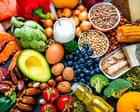
A large study conducted over two decades suggests that the Mediterranean diet reduces the risk of all types of stroke, in some cases by as much as 25%.
A diet rich in olive oil, nuts, seafood, whole grains and vegetables has previously been linked to many health benefits. However, there is limited evidence to date on how it affects the risk of all types of stroke.
the studypublished in Neurology Open Access, the journal of the American Academy of Neurology, shows an association but does not prove that the Mediterranean diet reduces the risk of stroke.
However, experts not involved in the research welcomed the findings and said there was “huge potential” to reduce a person’s chances of suffering a stroke. Worldwide, more than 15 million people experience a stroke each year. 5 million of them die and another 5 million are left permanently disabled.
In a study led by researchers from the US and Greece, the Mediterranean diet was associated with a lower risk of stroke overall, as well as ischemic stroke and hemorrhagic stroke.
Ischemic stroke occurs when blood flow to part of the brain is blocked and is the most common type of stroke. Hemorrhagic stroke is caused by bleeding in the brain.
“Our findings support mounting evidence that a healthy diet is critical to stroke prevention,” said study author Sophia Wang of the City of Hope Comprehensive Cancer Center in Duarte, California. “Because few large studies have examined this type of stroke, we were particularly interested in whether this finding applies to hemorrhagic stroke.”
The study involved 105,614 women in California, with a mean age of 53 years at the start of the study, who had no history of stroke.
Participants were given a score from zero to nine based on how closely they followed the Mediterranean diet. They received points for consuming more than the overall population average in certain categories – whole grains, fruits, vegetables, legumes, olive oil and fish – and if they drank moderate amounts of alcohol.
They also received points for consuming below-average amounts of red meat and dairy products. Overall, 30% of participants had scores of six to nine, the highest group, and 13% had scores of zero to two, the lowest group.
Participants were followed for an average of 21 years. After adjusting for other factors that affect stroke risk, such as smoking, physical activity and high blood pressure, those in the highest group had 18% fewer strokes than those in the lowest group.
They were 16% less likely to have an ischemic stroke and 25% less likely to have a hemorrhagic stroke, According to the study.
“Stroke is a leading cause of death and disability, so it’s exciting to think that improving our diet can reduce our risk of this devastating disease,” Wang said. “Further studies are needed to confirm these findings and help us understand the mechanisms behind them so we can identify new ways to prevent stroke.”
The study had limitations — it only looked at women, and participants reported their own diet data — but independent experts suggested the findings were important.
Nine out of 10 strokes are preventable, says Juliet Bouverie, chief executive of the Stroke Association, a charity, so there is “huge potential” to reduce a person’s chances of having one.
“Eating a Mediterranean diet has long been known to reduce the risk of cardiovascular disease, such as stroke,” she says. “We welcome how it has now been shown to reduce the risk of total, ischemic and hemorrhagic strokes.
“Hemorrhagic strokes, while less frequent, are more severe, so this study is reassuring to shed light on this complex yet poorly understood subtype.”