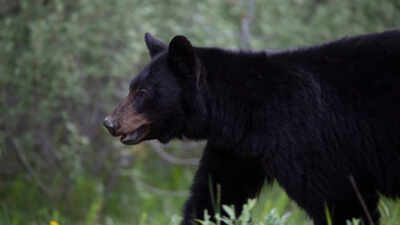
A 27-year-old Indian man died after being attacked by a black bear at a uranium mining site in Saskatchewan, Canada.This was considered an extremely rare fatal accident in the province according to CBC News.The attack occurred Friday evening near Nordby Lake, where the man was working on contract duty at the Zoo Bay Hotel operated by Vancouver-based UraniumX Discovery. The site is located about 850 kilometers northeast of Saskatoon.According to his brother, the man moved to Canada three years ago and was living in Penticton, British Columbia. His name has not been officially announced yet.
The attack occurred about 78 kilometers away near Lake Nordby.The company said in a statement that it assisted workers at the scene after the emergency arose.“This event was one of the emergency situations in which we were called for assistance,” the statement read.The company said it provided equipment and supplies to the crew working with the victim.“Our condolences to the family and colleagues of the person who was fatally attacked,” the company wrote.
One of the civilians at the site shot and killed the bear after the attack. The animal was transported to the Western College of Veterinary Medicine in Saskatoon for a necropsy. Investigators are expected to examine the bear’s health, physical condition and other evidence related to the incident.Fatal bear attacks in Saskatchewan are very rare, said Douglas Clark, a professor at the University of Saskatchewan’s School of Environment and Sustainability who specializes in human-bear conflict.“This is only the fourth incident in the county’s recorded history,” Clark said.“The last one was six years ago,” Clark said.“And you have to go a few years earlier before you find the following years in the record,” he added.The most recent fatal attack before that occurred in 2020, when 44-year-old Stephanie Bliss was killed near her family’s cabin north of Buffalo Narrows. Before that, two men died in separate bear attacks near Nipawin Provincial Park in 1983.Conditions this spring in northern Saskatchewan have increased risks for people working outdoors, Clark warned.“It’s a very mild spring,” he said.“There’s still a lot of snow on the ground up there,” he added. “That means any bears coming out of their dens will have a smaller hunt than usual.”He explained that with the limited food available after hibernation, bears travel greater distances in search of food.On the same day of the attack, authorities issued a public reminder that the bears were emerging from hibernation and advised residents and workers to take precautions in wilderness areas.Clark also urged people in bear-prone areas to carry bear spray. “It has proven effective against all species in North America,” he said.