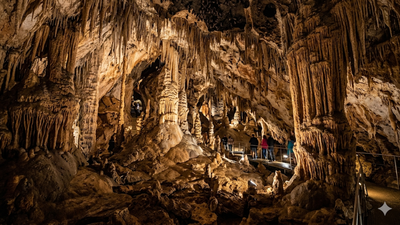
Another case study is the mysterious underground cave complex located in the southern part of Europe that has baffled archaeologists after scientists discovered some evidence suggesting that people used the cave system nearly 8,000 years ago but then disappeared without leaving any reason.
The mysterious cave site, linked to Neolithic rituals, human bones, underground tunnels and primitive burials, has once again become a point of discussion among archaeologists trying to unravel the history of ancient civilizations and cave studies. Scientists argue that the cave system was most likely not a dwelling, but rather a place where certain rituals took place, as human bones and other artefacts were found in its deepest recesses.
An 8,000-year-old cave system that has baffled archaeologists
This mystery involves the existence of large underground cave systems in various regions of modern Spain and southern France, with evidence of human activity dating back nearly 8,000 years discovered in archaeological excavations. One well-known example includes the Cueva de los Murciélagos cave system located in Andalusia, Spain, where well-preserved human remains and artifacts have been found in inaccessible areas within caves.
Archaeologists have discovered baskets made of woven plants, wooden tools, leather sandals, and even skeletons that survived due to the barren environment inside the cave. As reported in the study “First Evidence of Early Neolithic Archery from Cueva de los Murcielagos (Albuñol, Granada) Revealed by Combined Chemical and Morphological Analysis” published in the journal Nature, some of the items found in the cave are among the oldest basketry items in Europe, having been around for about 9,500 years. The discovery indicated that ancient Neolithic tribes frequently visited the perilous cave system despite the dangers associated with darkness, uneven surfaces and lack of oxygen.In the study, the researchers noted:“The exceptional preservation conditions of the cave have enabled the recovery of perishable materials, which are rarely found in prehistoric sites.” As researchers delved deeper into the cave, more strange discoveries emerged.
Why did the ancients venture deep into the earth?
One of the main concerns regarding prehistoric cave systems is why ancient tribes moved so deep into caves that it would be dangerous to enter. Scientists suspect that such caves may have had religious significance rather than practical use.In most subterranean cave systems, human skeletal remains have been found in isolated chambers where there was no sign of life. According to researchers who have studied Neolithic burials, caves symbolize portals to another world or sacred places related to rebirth and death.For example, at sites such as the Cueva de Nerja Cave in Spain and the Lascaux Cave System in France, traces of ancient drawings, tools and ritual materials used by ancient tribes are found in the deeper parts of the caves.
Some rooms in these cave systems require individuals to crawl through dark tunnel passages for a number of metres.According to Professor Bruno Paulestyn, a bioarchaeologist who has worked on Neolithic burial caves, caves were commonly associated with “complex funerary practices and symbolic behaviour” among ancient tribes.
Terrifying disappearance theories behind the underground mystery
The concept of people disappearing in these cave systems is based on finding isolated skeletons and bones without understanding why they died.
According to some scientists, cave collapse, lack of oxygen, or getting lost inside could be possible causes of their death.However, it has also been suggested that some people were left buried within these caves through rituals or even sacrifices. There is archaeological evidence from Neolithic caves suggesting that bodies may have been buried or even moved repeatedly back in time.Some caves show signs of having been entered multiple times as evidenced by torch soot marks and footprints preserved in hardened clay dating back thousands of years.
It is likely that children also participated in such expeditions, and that traversing these tunnels was very dangerous before the invention of artificial light sources.Cave systems had more significance than simply providing shelter because they held great symbolic value for ancient cultures.
Why does the mystery of the ancient cave still baffle scientists to this day?
There is a lot of intrigue when it comes to these secret mysteries because of how little knowledge we have regarding prehistoric belief systems.
An archaeologist can examine fossils, tools and formations, but there is a lot of mystery as to the reasons for undertaking these dangerous underground journeys.Today, surveying and DNA testing techniques allow scientists to trace the routes that early humans took within underground cave systems. However, the majority of it remains unexplored due to possible floods and collapsed caves.From a scientific point of view, caves are windows into understanding the emotional and spiritual side of early human life. For everyone else, it represents the terrifying truth that thousands of years ago, the first men willingly ventured underground, but not all of them returned.