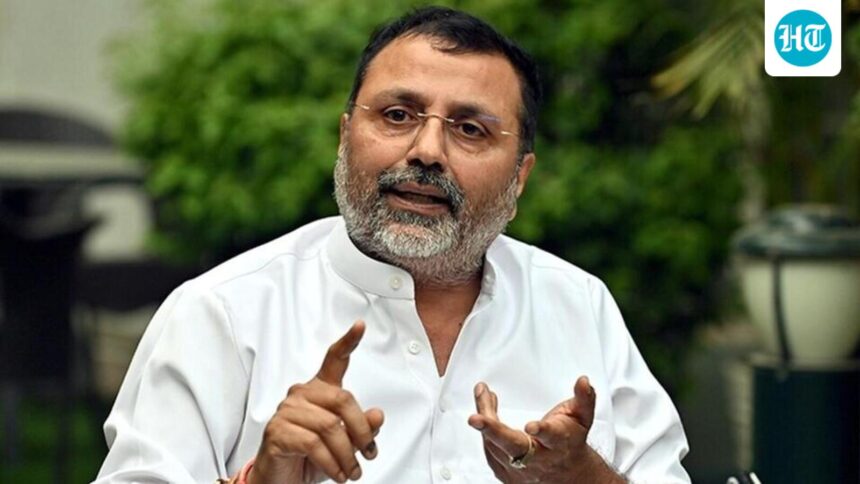
A parliamentary committee has suggested that features like ‘community feedback’ on

Community Feedback is a completely user-generated feature that allows users to add context within a misleading post.
The Parliamentary Standing Committee on Communications and Information Technology has proposed that the Ministry of Electronics and Information Technology (MeitY) direct platforms to disable “community feedback” or consider introducing a “publisher tax,” which experts see as obligations similar to the Australian News Media Bargaining Code, which requires platforms to compensate news publishers.
On (Translated from Hindi).
This has drawn sharp reactions from experts, opposition leaders and digital rights groups, who warn that it could have far-reaching implications for freedom of expression and platform liability in India.
However, MeitY has not received a formal recommendation from the parliamentary committee. A ministry official, who requested anonymity, said: “If we receive an official recommendation, we will consider it.”
HT has reached out to X and Dubey for comment. The report will be updated when a response is received.
The committee’s observations come on the back of proposed amendments to the Information Technology Rules, 2021, which seek to expand the government’s regulatory oversight to include user-generated content, including features such as community feedback, when it relates to news, politics or public policy.
As HT reported on April 10, these changes could place community feedback under the purview of the Ministry of Information and Broadcasting, which could allow authorities to order the removal of feedback, including those that add context to or challenge government officials’ claims.
The report has since sparked reactions from opposition parties. Karnataka IT Minister and Congress leader Priyank Karg posted on X, “Community feedback on
A Shiv Sena (UBT) MP wrote on
Experts have largely refuted the idea that a medium that allows community feedback on its platform can be treated as a publisher.
“Community feedback is user-generated and only surfaces algorithmically when it reflects an ideological consensus,” said Rohit Kumar, co-founder at public policy firm The Quantum Hub (TQH). Just because a medium chooses a specific algorithm to display a community note does not make it a publisher. If this logic were extended, no platform today would qualify as a pure medium, because they all rely on algorithms to curate and display content at scale.
“Instead of imposing publisher liability on intermediaries, a more appropriate regulatory trend should be the emerging ‘duty of care’ frameworks. These frameworks preserve the safe harbor for user content while putting the onus on platforms to design systems that mitigate clearly defined harms, with penalties for failure to do so. However, I don’t see there being any problem with the idea of community feedback per se. Given the volume of misinformation online, how can content be moderated?” Kumar added.
Dube’s post also attached an image of a document explaining the role of “intermediaries” in the Australian criminal justice system, which refers to trained professionals who assist witnesses in court, rather than digital platforms or social media services.
Digital rights advocacy group Internet Freedom Foundation (IFF) questioned the procedural and factual basis of Dube’s claim, noting that no parliamentary committee report before the House mentioned “community feedback.” She also noted that committee proceedings are usually confidential until they are formally introduced, and said the statement contained a “fundamental inaccuracy”, particularly in invoking the Australian News Media Bargaining Code, which “operates in a completely distinct field” and does not treat features such as “community feedback” as a publishing activity.
The IFF also argued that under Indian law, including the precedent set in Shreya Singhal v. Union of India, merely hosting or labeling user content does not strip platforms of the protection of intermediaries, warning that expanding this interpretation could have broader implications for freedom of expression online.
MeitY published the revised IT rules on March 30 and requested comments by April 14. However, following objections from industry and civil society following consultations on 7 April, the Ministry extended the timeline for the call for comments by two weeks, allowing comments from stakeholders until 29 April.