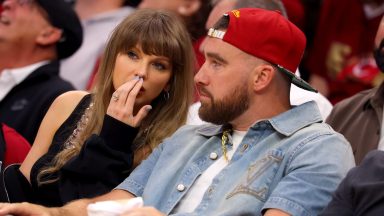
Taylor Swift and Travis Kelsey They’re getting married in New York City this summer, and another star has just confirmed the invitation. The guest list keeps leaking The venue rumors keep multiplying. Page six He has the receipts.
And the whole culture is obsessed with the wrong thing.
We’re fascinated by the magic, the seating chart, and the fantasy that when two wonderful, successful people finally find each other, love glides smoothly into the sunset. This is the part everyone wants to believe.
As a couples therapist, I look at a wedding of this size, and I don’t see a beautiful party. I see a biological pressure cooker. And I want to tell you what’s really going on downstairs, because the same dynamic is probably happening in your living room.
The hidden danger of a day that was supposed to be perfect
From cradle to grave, humans are an interconnected species, in my opinion. You are not a solitary creature who loves company. Your biology requires a basic attachment figure to feel safe in the world.
Your nervous system is constantly scanning your partner and asking two questions. Are you there for me? Am I satisfied with you?
In the honeymoon phase, the answer seems like a constant, effortless yes. I compare it to a dance battle. You see someone at a club, doing a flawless break-dance, you respond with a perfect moonwalk, and your nervous system immediately concludes that you’re made for each other.
But people mistake primary biological synchronization for the relationship itself. They believe that finding the perfect partner means the easy feeling will last forever.
Here’s the trap. When you’re planning the wedding of the decade, the subconscious expectation is that because everything looks flawless on the outside, you should feel completely safe on the inside. You should have arrived.
Biology doesn’t care about your guest list or your net worth. Anytime the expectation is that an event will go well, the inevitable human moment of separation becomes ten times harder. Your sensitivity to harm actually rises when risks are high, not low. This is the part no one warns you about.
Mango, Boomerang, and Waltz of Pain
I see this every Tuesday in my office in San Francisco. Brilliant innovators, CEOs and founders. They come in right before the wedding or right after a big event, devastated, and treat their relationship as a project they’re failing at.
They are masters at what I call mango description. They give me a logical, detailed breakdown of their partner’s flaws. Color, origin, texture, complete lecture. But describing mango is completely different from tasting it messy and brittle.
High achievers are afraid to taste the raw vulnerability beneath them. They want to fix the logistics. Timetable. Seller. They ignore the terrified nervous system that runs the show.
When the pressure reaches, the connection is easily broken. One partner, whom I call the “relentless lover,” feels a decrease in interest and protests with criticism or demands. They climb into the penthouse of the emotional apartment building, hit the ground running, and demand that their partner prove their love.
The other partner feels crushed by criticism. To escape the shame, they retreat to the basement. They shut up, think, and shut up. This is the reluctant lover, and quiet retreat often comes across as procrastination.
Then they get on the dance floor and begin the “Waltz of Pain.” one two three. Reach out, criticize, retreat, and defend. The harder one gets to a place, the deeper the other hides.
They both throw bouncing arrows at the same time. What you throw sparks your partner’s courage, and then it comes back and hits you in the face. Two people trapped in separate bubbles of suffering, each convinced that the other is the bad guy.
Disconnecting is a feature, not a bug
If you’ve ever wondered what version of this dance you and your partner would practice, you can figure out your relationship style in about three minutes. Most couples have no idea that their armband is a pattern until they see it written.
Back to Taylor and Travis. The gossip column will demand perfection. The first tense paparazzi photo, the first whispered argument, and the culture will label them a failure.
I want to offer a counter-reading, one rooted in a deep empathy for both. They are trying to build a secure bond within a global goldfish bowl where their every move is monitored and archived. They don’t get the luxury of a private rip off.
Breaking up is not a mistake in a relationship. It’s an advantage. Conflict is just biology doing its job.
If they quarreled, it does not mean that the fairy tale was a lie. It means they are important to each other. When your partner is this important, your nervous system becomes hypersensitive to any whiff of distance. If Travis seems distracted at the rehearsal dinner, Taylor’s body may be panicking about not making her a priority. If Taylor looks frustrated, Travis’ body may be signaling that he’s letting her down.
These protests and withdrawals are not malicious options. They are survival strategies. There are no bad guys here. Just two frightened humans in adult bodies using the only tools they had. By the way, the same biology that drives the science behind unrequited love is what drives wedding day panic.
What I would actually say to them on the couch
If Taylor and Travis were sitting in my office exhausted by expectations, blaming each other for the stress, the first thing I would do is stop the argument.
You cannot negotiate a seating chart when both nervous systems are screaming that you are under threat. You cannot find a cognitive solution to a limbic problem.
Then I’ll tell them what I tell each couple. You are the world’s leading experts on your partner’s problems. If you hosted a global conference tomorrow about your spouse’s shortcomings, you would be the keynote speaker. Your partner will lead the conference on your behalf.
Get off the platform. Turn the lamp inward.
We live in a culture that treats love like paper currency. People think they can print empty promises or organize a flawless public event and security will appear. Love doesn’t work that way. Love requires proof of action.
It’s the exhausting humility that burns calories to cross the bridge to your partner’s reality and repair it after the rupture. The wedding is the easy part. The fix is the relationship.
The no one toasts part
Stop demanding that love sound like a flawless pop song. Give the people you love, and yourself, the grace to stumble. The fairy tale is not the day when nothing goes wrong. The fairy tale is about two people choosing to return to the bridge, terrified, and walk across it anyway. This is an undertaking worth making. The wedding just announces that.
_________________________________________________________________________________
Figs O’Sullivan and his wife, Till, are San Francisco couples therapists, relationship experts at Stars and Silicon Valley, and founders of Empathi, who built Figlet, an AI-powered relationship coach trained in their clinical work.