


The 2026 IPL season was witnessing a surplus at its absolute peak.A record 27,450 runs were scored during the season – the most in IPL history. The teams posted an impressive run-rate of 9.88, another all-time high.
1,426 sixes were recorded, surpassing the previous record of 1,294 set just a year ago in 2025.This was also a 200+ degree season. As many as 65 rounds exceeded the 200-point mark. The chase became almost routine. Teams have chased more than 220 goals nine times this season alone; Before 2026, this had happened only five times in the previous 18 editions combined.
In total, 18 points of 200 or more have been chased this season – exactly double the number from 2025.Given these numbers, the final was supposed to be a running fest.Instead, it was anything but.Gujarat Titans blew their way to 155/8. Royal Challengers Bengaluru chased it down comfortably to retain the IPL title. There was drama over the occasion, but not over the recording.And it wasn’t the first time.Cast your mind back to 2024. This season has been defined by Sunrisers Hyderabad’s batting revolution.
Records were broken almost every week as results once considered impossible became commonplace. However, when the final arrived, SRH were bowled out for 113 – the lowest total in the history of an IPL final, and the Kolkata Knight Riders raced to the target in just 10.3 overs.Or take the 2022 final in Ahmedabad. Rajasthan Royals managed just 130/9 before Gujarat Titans returned home with seven wickets in hand.Which raises an interesting question.Are IPL finals generally low-scoring? Are they failing to reverse the batting trends that define the league stage?At first glance, the answer seems clear.For many years, the accepted wisdom was that the pressure of winning a title prevented goals from being scored. Bigger nerves. Larger servings. Batting more carefully. Tired courts at the end of a long tournament.But is this actually true?
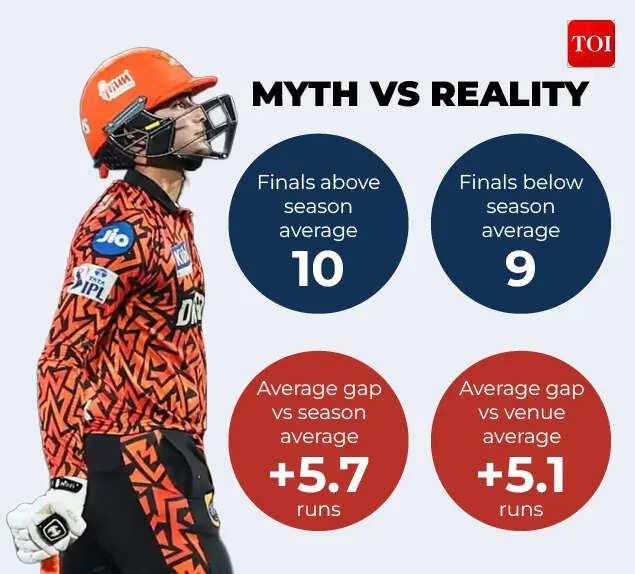
TOI Data Desk’s analysis of all 19 IPL finals between 2008 and 2026 suggests that the answer is more complex than conventional wisdom would have us believe.In fact, the numbers are the exact opposite of what most fans would expect.In all 19 Indian Premier League finals, the average final has produced more runs than the average match in the corresponding season.Here’s the kicker: 10 Finals scored above their season average, while nine finished below that.On average, IPL finals have scored 5.7 points more than the season average and 5.1 points more than the historical scoring average of the venue where they were played.In other words, the popular perception doesn’t really hold up when viewed across the entire history of the tournament.
However, our memories are selective.Low-scoring finals tend to be flat. Final 2024. Final 2022. Final 2026. These matches lead us to believe that finals are cautious affairs. But at the other end of the spectrum are the Indian Premier League (IPL) finals that have produced running fests.
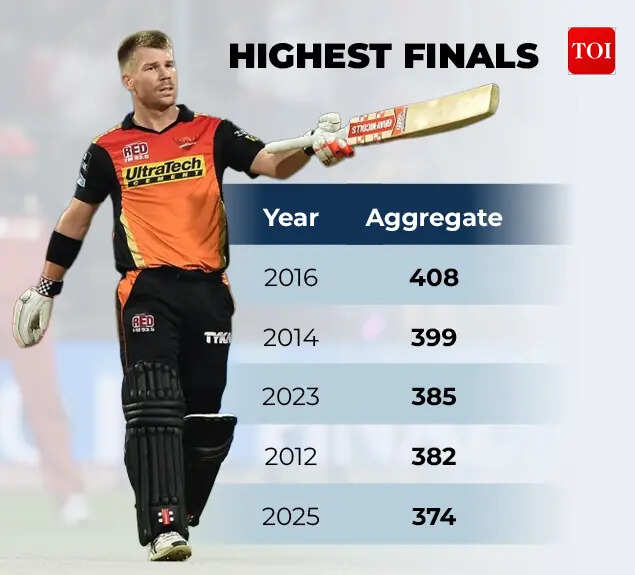
The 2016 final between RCB and SRH produced a total of 408 runs, which took RCB nine runs short of the target of 209 runs. The 2014 final produced 399 runs (PBKS 199/7, KKR 200/7).
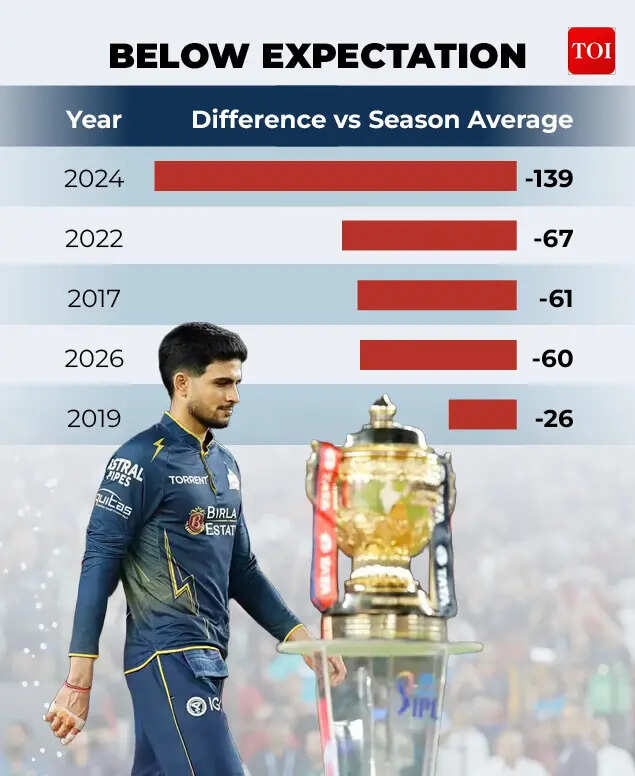
Delivered Resolution 2012 382 (CSK 190/3, KKR 192/5).All three matches were among the highest scoring games of their seasons.So, IPL finals are not defensive contests in nature. They simply produce a wider range of results than fans tend to remember.However, there is one trend worth paying attention to. When the focus shifts to the modern era, the picture changes slightly.Since 2018, ISL finalists have averaged about 20 points below the season’s scoring pace.Now, the sample size remains small – just nine finalists. But five of those nine finals ended in a below average season, and the four most underperforming finals in ISL history all belong to this period.The biggest final remains the 2024 final, which finished 139 rounds below the season average. It will be followed by 2022, 2017 and now 2026.This does not prove that the Indian Premier League finals have become low-scoring. But it suggests that modern finals may be less than the league games surrounding them.Why might this happen?One reason could be the quality of the bowling attacks. By the time the final arrives, only the strongest and most balanced teams remain.Preparation has also become more complex. Teams enter the finals armed with detailed match data, opponents’ tactics and weeks of analysis.
Then there is the pressure of the occasion itself. In a league game, you can put aside the top-tier collapse, and there’s always another game close by.
In the final, one bad or poor shot can end a season of hard work. This alone can make teams a little more cautious than they normally would be.Even a slight shift toward caution early in the innings can be enough to drag scoring rates below season norms.Together, they offer a plausible explanation for why the recent finals were different from the big bang seen during the league stages.The belief that IPL finals have always been low scoring is largely a myth. Over 19 seasons, the finals have produced roughly the same scoring levels as the competition itself – if anything, slightly higher.However, recent years tell a different story.From Sunrisers Hyderabad’s collapse for 113 in 2024 to Gujarat Titans’ 155 in the 2026 final, the title winners seem to be increasingly turning away from the run-festivals that define modern batting in the IPL.