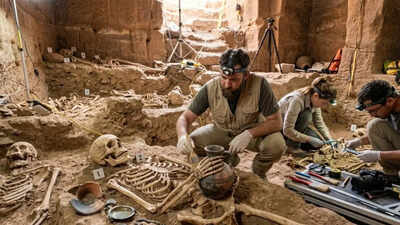
 Unlike most areas of the ancient city, which have been disturbed by thieves or natural forces over the centuries, this vault was found in an extremely rare and untouched condition. The discovery of these skeletons provides a transformative look into Nabataean burial customs, as the remains provide a unique and uncorrupted biological record.
12 Skeletons found in Petra Which reveals the secrets of ancient Nabataean life
The researchers made this discovery using ground-penetrating radar. As NPR reported, people have speculated for years that there were more rooms beneath the treasury, which followed the discovery of two tombs on the left side of the monument in 2003. To verify this, researchers turned to radar to check if there was a parallel on the right side as well. The radar picked up physical features similar to those found in known tombs.
With this evidence in hand, the Jordanian government agreed to conduct excavations.
The story of the Petra jug
The excavation team could not believe their eyes when they saw a ceramic jug held in the hand of one of the skeletons. As indicated by Warner Bros. Discovery reported that the treasury was the setting for the movie Indiana Jones and the Last Crusade, so finding a cup in this secret tomb was like witnessing “art imitating life.” Although the bowl holds great archaeological value, researchers pointed out how ironic it was to find a cup that resembled the cinematic “Holy Grail” where this famous scene was filmed.
A rare glimpse into the lives of desert architects
Dr. Chrisman described this discovery as a “time capsule” because they found the skeletons with their personal items still intact. This gives us a special opportunity to learn about the Nabataeans, who carved Petra out of sandstone but left few written records. The remains include men, women and children. Experts will test DNA and analyze organic sediments from the grave, hoping to discover more about how these ancient people lived, what they ate, and where they came from.
A huge shift in Petra’s archaeological record
This discovery is considered a huge shift in the archaeological history of Petra because, unlike most tombs in the region, which contain only scattered remains due to looting or reuse, this chamber contains 12 articulated bodies. Professor Richard Bates of the University of St. Andrews told NPR that by analyzing skeletal materials — including teeth and bones — researchers can now reconstruct the lifestyles, diets and health of the Nabataean people.
This level of preservation is expected to open up a view of their society that was previously inaccessible to scholars.