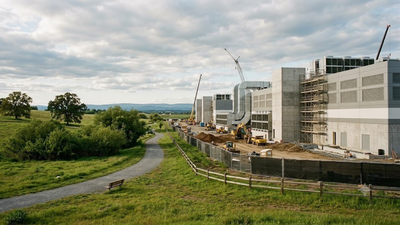
Park land donated by farmer becomes part of data center deal (AI image)
A nearly three-decade-old land donation in Taylor, Texas, has become the subject of a legal dispute after property originally intended for future parks for a data center project was sold.
The 87.97-acre parcel was donated in 1999 for a nominal fee of $10, with the deed stipulating that it should be held in trust for future use as parkland. After a series of transfers between nonprofits and public entities, the land was sold in 2025 to data center developer Blueprint for $10 million. City officials have cited the economic benefits of the project, while residents who object to the development say the original deed restrictions should be preserved.
From a $10 garden donation to a $10 million land sale
On July 7, 1999, descendants of local farmer TJ Bland conveyed approximately 87.97 acres to Texas Parks and Recreation for $10. The deed stated that the land “shall be held in trust for future use as parks” in Williamson County.Residents familiar with the property’s history said Bland wanted the land to serve as a recreational space for the local community. The language of the act has since become a key part of the legal dispute surrounding future use of the site.
The property changed hands several times after the original donation.In 2003, Texas Parks and Recreation transferred the land to the Williamson County Park Foundation. About a month later, the Williamson Park District Corporation transferred ownership to the city of Taylor.In 2008, the City of Taylor sold the land to the Taylor Economic Development Corporation (TEDC) for $15,000. The last transfer occurred in 2025, when TEDC sold the property to Blueprint for $10 million.The sequence of transfers is key to ongoing legal arguments over whether the original parks restriction is still enforceable.Blueprint plans to build a 135,000-square-foot data center on the property. Data centers house computer servers and networking infrastructure used to support cloud computing, online services, data storage, and artificial intelligence applications.The proposed facility is part of a broader increase in data center development across the United States as demand for digital infrastructure continues to grow.
Concerns raised by residents
Residents living near the site have expressed concerns about the potential impacts of the project on the surrounding area. Issues mentioned during public discussions include noise, electricity demand, water use and potential impacts on nearby property values.Some residents have also focused on the original purpose of the land, arguing that property donated for future parks should not be converted to another use.The opposition group participated in public meetings and took legal action to challenge this development.
Economic impact cited by officials
City officials said the project could generate nearly $30 million in tax revenue over the next decade.According to city estimates, about $20 million of that amount could benefit local schools. Officials also pointed to the broader economic impact associated with a major technology infrastructure project.The city stated that the site’s current zoning limits its ability to prevent proposed development.
Legal proceedings continue
Residents who object to the project have filed lawsuits seeking to block the development. Court decisions so far have generally favored the developer, allowing the project to continue moving through the approval process.Opponents appealed the case to the 3rd Circuit Court of Appeals in Austin. A key issue under review is whether the parks requirements contained in the 1999 document remain legally binding after subsequent transfers of ownership.The dispute has attracted attention because it concerns land that was originally donated with a specific condition for public use. The case also comes at a time when data center construction is expanding rapidly across the United States.The outcome of the appeal can help determine how similar deed restrictions are interpreted when transferring donated land between organizations and government agencies over long periods of time.