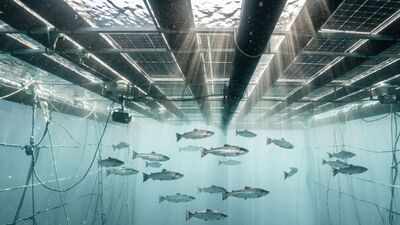
Floating solar panels have helped cut diesel use and created a haven for salmon (AI image)
A salmon farm off the coast of Chile has found an unexpected benefit after replacing diesel generators with floating solar panels. While the project was launched to cut emissions and reduce fuel use, the new system has also created a calmer and more protected environment, attracting thousands of salmon.The project was implemented at Mowi’s Huar Norte salmon farm in the Los Lagos area. The company has partnered with AKVA Group, Alotta Energy and Fjord Maritime to install a floating solar system above the fish pens, The Pulse reported. The aim was to reduce the farm’s dependence on diesel and improve working conditions on site.For many years, the marine farm relied on diesel generators to provide regular electricity.
Aside from generating carbon, they also created constant noise and vibrations in the water.Marine fish farms are usually located far from the electricity grid, making diesel generators the most feasible power source. Transporting fuel to remote locations increases operating costs and emissions, prompting companies to consider alternatives such as floating solar systems and battery storage.After installing the floating solar panels, diesel use decreased significantly.
Generators have also become quieter. Underwater noise and vibrations are also reduced, resulting in a quieter environment for the fish.The project brought together different companies with specific roles. AKVA Group built the floating pens, Alotta Energy supplied the floating solar system, and Fjord Maritime provided battery storage to manage the power supply.According to the companies, the hybrid solar system now meets about 57% of the farm’s electricity needs.
It also reduces the use of more than 36,000 gallons of diesel per year, reducing carbon emissions by approximately 386 tons per year. Lower demand for diesel also means fewer fuel delivery boats need to travel to the farm.While the main goal was to produce cleaner energy, the floating panels also changed the water conditions below. The panels cast shadows on the fish pens, providing them with shelter from direct sunlight and protection from predatory birds.The calmer environment, combined with clean conditions, has encouraged large numbers of salmon to congregate under the floating structures. Workers at the site say the fish have now made the shaded area beneath the panels their new home.Similar behavior was seen elsewhere, where cod also used shaded areas created by floating structures as shelter, the companies said.Alotta Energy has already tested similar floating solar systems in Norway, and is also operating what it says is the world’s northernmost floating solar power plant. At the Chile site, the company says the project has made operations cleaner and safer, while also bringing an unexpected benefit to marine life.
Will you support policies that promote renewable energy solutions in fisheries?
More than 3 thousand users shared their opinion today
More than 5 thousand users voted today
Share your opinion