

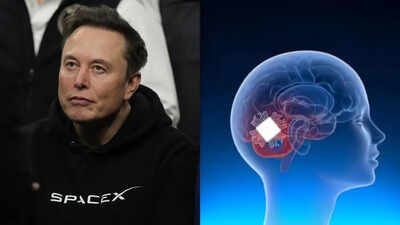
China has edged ahead of Elon Musk’s “Jesus-level technology” Neuralink in the race to commercialize brain-computer interface technology, approving what is described as the world’s first commercially available brain chip after successful clinical trials.The coin-sized implant, called NEO, has become the first surgically implanted brain-computer interface (BCI) device to clear clinical tests for commercial use, reports the New York Times.The device, developed by researchers at Tsinghua University in Beijing and Shanghai-based Neuracle Technology, is expected to enter mass production for China’s state-run healthcare system.The first version of NEO aims to help patients with spinal cord injuries and paralysis regain control of parts of their nervous system. But researchers, technology companies and investors see brain-computer interfaces as the beginning of a much larger shift in how humans interact with machines.The development comes as Musk’s Neuralink continues human trials in the United States but has not yet received broad regulatory approval for commercial use.
“Technology at Jesus level”
Brain-computer interfaces allow signals generated by the brain to be converted into digital commands that can control computers, devices, or prosthetics.
Musk has repeatedly touted the potential of technology to change people’s lives. Speaking via video link at an event in Israel this week, Musk said his company, Neuralink, does not get enough credit for its achievements.“I think regaining control for people with quadriplegia and restoring sight are very big deals,” Musk said. “It’s kind of what I would call Jesus-level techniques,” he added.Neuralink said its implants could eventually allow users to type, move a computer cursor, and operate devices using only their thoughts.Proponents of this technology envision a more ambitious future, where people can communicate digitally through thoughts or interact with machines without physical input.
How does the Chinese NEO body differ from the Neuralink company?
One reason analysts believe China has advanced more rapidly is the design of its NEO implant.
Unlike Neuralink’s N1 device, which requires electrodes to penetrate the brain’s cerebral cortex, the NEO is designed to be placed between the skull and the brain.Eight sensors are placed on the dura mater, the brain’s outer protective membrane, making the procedure less invasive. The implant picks up brain signals and sends them to nearby computers, where they are translated into digital commands.According to reports, 36 patients have already tested the device with positive results.
Researchers believe a less invasive approach may help reduce some of the medical risks traditionally associated with brain transplants, the newspaper reported.Experts say brain-computer interfaces could improve the lives of millions of people with neurological disorders, especially those that affect movement and speech. Potential applications extend beyond paralysis and spinal injuries to include conditions such as Parkinson’s disease, epilepsy, stroke and depression.However, technology has also raised concerns about privacy, security and safety. Griffith University cybersecurity expert Dr David Tuffley said the devices offer huge potential but also create new risks.“Brain transplants may seem miserable, but they are a promising part of neuroscience research,” he said. At the same time, he warned that the devices could “theoretically allow hackers to access sensitive neurological data, such as patients’ thoughts and memories.”“The hacking may also enable them to impair a patient’s cognitive functions, such as the ability to concentrate, or even manipulate motor signals to influence their range of motion,” he said.He added: “This is a scary prospect, especially if these devices become more common.” Despite the rapid progress, researchers also warn that brain transplants still face significant biological hurdles.The Neuralink N1 implant is currently being tested in nine patients.
One participant, Audrey Cruz, recently described the impact technology has already had on her life.“I tried writing my name for the first time in 20 years. I’m working on it,” she wrote on X. “It is humbling to know that my journey is helping Neuralink improve this technology, which could one day allow millions to control devices with their minds,” she added.