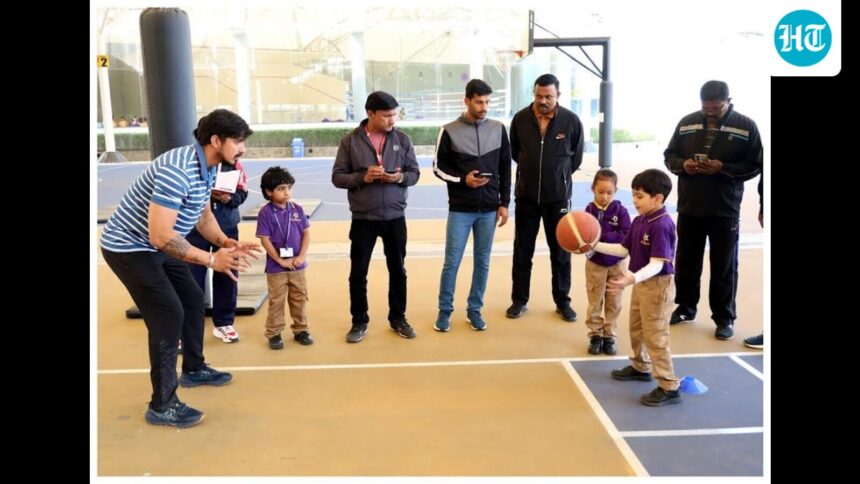
More than 93% of students enrolled in the Council for Indian School Certificate Examinations (CISCE) ‘Active CISCE’ program completed physical health and fitness assessments, with the council positioning the initiative as a major step towards integrating physical wellbeing into school education in line with the National Education Policy (NEP) 2020, the council said on Sunday.

Launched on July 15 last year, the program has covered over 3.12 million students from over 3,274 CISCE schools.
According to the board, 2.91 million students completed their assessments by April 30, 2026, which translates to a national completion rate of 93.34%. Evaluations of the remaining students are ongoing, the board said in a statement on Sunday.
The initiative evaluates age-appropriate physical standards. For students in grades 1 through 3, the focus is on developing basic movement skills, object control, and body management. While students in grades 4 to 12 are evaluated on speed, flexibility, muscular and cardiovascular endurance, abdominal strength and body composition. CISCE said it is also developing a separate battery of tests for children with special needs (CwSN).
A key feature of Active CISE is a physical fitness report card for each student, allowing schools and parents to track physical development over time. Parents can access detailed reports through a dedicated login facility.
Dr Joseph Emmanuel, Chief Executive and Secretary of CISCE, said: “Active CISCE represents our commitment to putting health, fitness and wellbeing at the heart of school education. We aim to create a culture of active living and create a national framework for monitoring fitness among young learners.”
He said the program would also help identify sports talent at an early stage and encourage students to pursue sports as a career.
He added that CISCE schools have produced athletes like Sania Mirza, Abhinav Bindra, Sourav Ganguly, Gurpreet Singh Sandhu, Sandesh Jhingan and Leander Paes.
“We aspire to nurture the next generation of Olympic champions and actively contribute to the country’s sporting mission,” he said.
The program will also create two national benchmarks — the School Health Index and the School Fitness Index — to provide an evidence-based picture of students’ physical health across districts and age groups, Emanuel said.
“The indicators are expected to support evidence-based interventions, strengthen school health programs and contribute to long-term policy development,” he said.
According to CISCE, early results show encouraging levels of balance, coordination and muscular endurance, but also highlight concerns around obesity, nutrition, body composition and increasingly sedentary lifestyles among students.
These indicators are expected to provide a baseline for long-term monitoring and early interventions, helping schools and policymakers address emerging health challenges.
To facilitate the implementation of the Active CISCE programme, schools were grouped into five geographical clusters covering all states, union territories and overseas schools “which enabled systematic coordination, capacity building and monitoring of progress across the network.”
David George Cyril, principal of St Jude’s School, Gorakhpur, said the active CISCE program encouraged schools to view physical fitness as an integral part of education.
“The program provides valuable insights into students’ well-being, promotes healthy lifestyles, and helps create a learning environment that prepares students not only for exams, but for life as well,” he said.