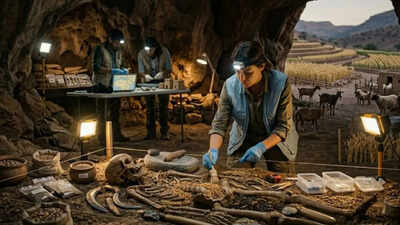
The Neolithic Revolution has sparked debate for years: Did it arise from local developments or through large-scale migration? Recent paleontological research, published in the journal Nature, sheds light on this.
The scientists examined DNA from Moroccan sites such as Kah Dhaa El Ghar, which dates back more than 7,400 years. The results show that agriculture in the Maghreb developed through different methods. European farmers likely crossed the Strait of Gibraltar by sea, indigenous people adopted new agricultural techniques, and pastoralists from the Levant arrived later. This combination of influences formed a genetic mix that underpins the contemporary Maghreb population, including the Berbers.
DNA found at Moroccan sites tells scientists about the origins of agriculture in North Africa
According to the study published in the journal Nature, this research revealed a major discovery: three different ancestral components met in the Maghreb about 7,400 to 6,300 years ago. Scientists have found people in Kaf under Laurel with ancestry closely related to early European farmers from Iberia. This result shows that agriculture was not just a widespread idea, but was in fact brought about by individuals who crossed the Mediterranean much earlier than we thought.
European immigrants brought agriculture, but DNA from the site of Ifri n Amr and Musa represents the original late Pleistocene/Paleolithic baseline. These people had purely local origins, but were already using pottery and agricultural tools. This suggests a “dual model”, where indigenous groups adopted Neolithic “packages” while maintaining genetic isolation for centuries before eventually assimilating.
How did Near Eastern shepherds reach Morocco?
As noted in the study published in Nature, about 1,000 years after the first farmers appeared, a third major genetic component arrived from the Levant (Near East) via the “Green Desert” corridor. This DNA, found in the remains of Skhirat al-Rawazi, is linked to the spread of pastoralism – the practice of herding sheep and goats. These groups traveled west through what is known as the “Green Desert”, eventually mixing with local populations and those of European descent.
This mixing created the mixed breed seen in later North African history.
How “Green Desert” determined regional lineage
The research shows that the unique genetic mix of the Neolithic is key to the ancestry of today’s North African population. This mix came from indigenous foragers, Iberian farmers, and Levantine pastoralists. When scientists compared ancient DNA with modern populations, they discovered that groups such as the Berbers still cling to this 7,000-year-old genetic “mosaic.” Although later events, such as the Roman, Vandal, and Arab expansions, changed the cultures in the region, the basic biological roots were mostly established during the African Humid Period (AHP).